- Reuters
- October 21, 2026
Pakistan Hockey League could be the lifeline the game desperately needs
-

- Muneeb Farrukh
- October 21, 2026
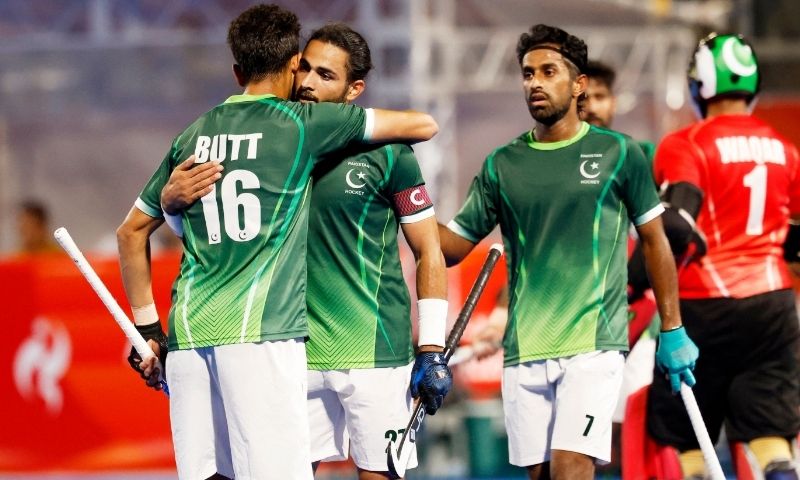
Pakistan is finally moving towards giving hockey its own league, much like cricket. But for a sport that has spent years grappling with financial insecurity, declining visibility and administrative uncertainty, the Pakistan Hockey League must be more than just another tournament. It needs to become a sustainable source of income for players and a platform to rebuild the sport from the grassroots up.
The Pakistan Hockey Federation (PHF), under its ad hoc president, Mohyuddin Wani, is targeting the first quarter of next year for the league’s inaugural edition, which is expected to be held in Lahore. Six to eight franchises are likely to compete, with private-sector partners expected to play a key role in financing and organising the tournament.
For Pakistan hockey, the prospect is encouraging. For its players, the league could bring much-needed financial stability and a welcome change in circumstances.
Pakistan hockey star Abdul Hannan Shahid believes the league is a step in the right direction, describing it as the need of the hour. He pointed out that Pakistani players feature for leading clubs around the world and are held in high regard internationally. Bringing that standard of hockey to domestic audiences, he believes, could help reconnect fans with the national game.
“If we show the same thing to our people in our country, and to our young generation, to all the Pakistan hockey fans who don’t watch us, this is the time when your interest will develop through this league, when you will see your national heroes in your country,” Hannan said.
His point goes beyond attracting spectators. Pakistan has produced players capable of competing at the highest level, but the domestic structure has struggled to provide them with consistent opportunities, financial security and the visibility their performances deserve. A well-organised league could help address all three shortcomings.
Pakistan hockey team coach Bob Veldhof also stressed the importance of domestic competition, particularly for younger players. A league would give emerging talent the opportunity to compete alongside established internationals and learn from experienced players in a competitive environment.
Hannan echoed that view, explaining that the presence of foreign players could make the competition a valuable learning experience for both junior and senior players. Exposure to international talent could raise standards at home while allowing local players to test themselves against different playing styles.
But the league’s biggest contribution could be financial.
For years, financial insecurity has been one of the most persistent problems facing Pakistan’s hockey players. Players receive daily allowances during camps and tournaments, but these payments do not offer the stability of regular salaries. Unlike their counterparts in countries such as Australia, India and New Zealand, Pakistan’s hockey players generally lack a comparable system of central contracts. Match fees are another potential source of income that remains largely absent.
Some players earn money through overseas leagues, while others hold departmental jobs that provide a degree of financial security. However, these opportunities are limited and not available to everyone. For many players, particularly those outside the established senior setup, building a sustainable career around hockey remains difficult.
A domestic league could create a much-needed income stream. If franchises invest in their squads, pay players fairly and operate under clear contractual arrangements, the benefits could extend beyond a handful of established stars. Younger players could gain paid opportunities, while a wider pool of domestic talent could begin to see hockey as a viable career rather than a pursuit sustained by personal sacrifice.
That outcome, however, will depend on how the league is structured. Player payments must be treated as a priority, not an afterthought. Contracts should be transparent, payments made on time, and financial safeguards put in place to protect players if franchises encounter difficulties. A competition that generates attention but leaves its participants struggling financially would fail to address one of the very problems it is meant to solve.
Sustainability is another concern. Pakistan has attempted to launch a hockey league before. The Max was introduced around four years ago, but the project was shelved before it could materialise. That experience is a reminder that announcing a league and successfully running one are two very different things.
This time, there are reasons for cautious optimism.
Wani, who also serves as federal secretary at the Ministry of Inter-Provincial Coordination, has the advantage of government backing. Since taking charge of the PHF earlier this year, he has also sought to bring private-sector sponsors into Pakistan’s hockey ecosystem. His efforts to involve commercial partners could help provide the financial and organisational support the federation has struggled to secure on its own.
Wani has acknowledged that the government cannot fund every sports federation indefinitely. He has argued that private investment is essential, particularly for a national sport such as hockey. Under the proposed arrangement, private partners would raise funds and invest in the league, creating opportunities for the federation and its players.
The direction is promising, but its success will depend on execution. Government support can provide institutional backing, but a league cannot rely indefinitely on public funding or the enthusiasm of a few individuals. It needs credible investors, commercially attractive teams, professional management and a business model capable of surviving beyond its inaugural season.
The PHF must also ensure that the league complements its wider development programme. A successful franchise competition should not become an isolated annual event that benefits only the most prominent players. Its reach should extend to emerging talent, with clear pathways for junior players to earn opportunities at the highest domestic level. Investment in grassroots hockey, coaching, facilities and women’s hockey must continue alongside the professional competition.
The challenge is to build a league that serves the sport, rather than asking the sport to serve the league.
There is no shortage of reasons to invest in Pakistan hockey. The national team endured years without qualifying for the World Cup, but its return to the tournament in 2026, after an eight-year absence, demonstrated that progress is possible. That achievement should be followed by structural reforms that give players the resources and opportunities to sustain their development.
The Pakistan Hockey League will not solve every problem facing the game. It cannot, on its own, replace central contracts, introduce match fees across the national setup or repair years of institutional neglect. Nor can it guarantee that audiences will return simply because franchises and foreign players are involved.
But it could be a meaningful starting point: a platform to generate revenue, reward players, expose young talent to high-level competition and bring the game back into public conversation.
The real test will come after the launch announcements and promotional events are over. Can the organisers secure long-term investment? Can they deliver a professionally run competition? Will players receive the financial rewards they have long deserved? And will the league create lasting opportunities for the next generation?
Pakistan hockey does not need another short-lived experiment. It needs a competition that can endure, a system that values its players and an investment model that gives the sport a future.
The proposed league offers an opportunity to begin building all three. Making it happen will matter far more than announcing it.