- WEB DESK
- October 25, 2026
Pakistan moves to diversify export markets amid Afghan border closure disruptions
-

- Zafar Ali
- June 2, 2026
ISLAMABAD: Pakistan’s trade with Afghanistan, Russia and Central Asian Republics (CARs) has declined sharply in the first nine months of FY2025-26 mainly due to the closure of the border with Afghanistan, officials told a meeting of the National Assembly Committee on Commerce on Tuesday.
The officials said that disruptions in regional corridors and geopolitical tensions also significantly impacted logistics and transit flows.
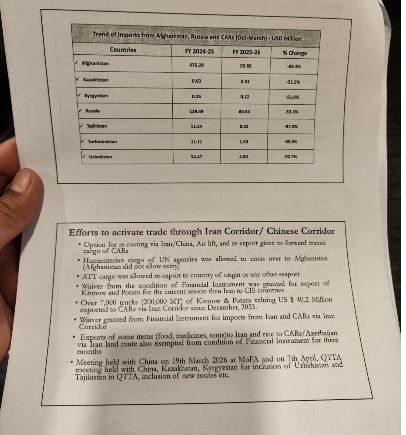
According to official data, imports from Afghanistan fell 88.3 per cent to $55.60 million in July-March FY2025-26 from $475.28 million a year earlier.
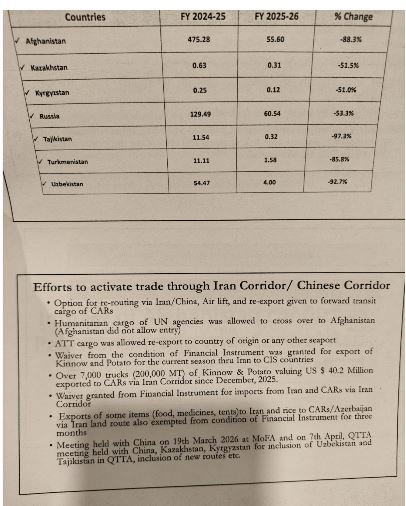
Similarly, imports from Tajikistan dropped 97.3 per cent, while imports Uzbekistan, Turkmenistan, Russia, Kazakhstan and Kyrgyzstan also recorded double-digit declines, reflecting reduced regional connectivity and disrupted trade routes.
Exports to the same region also contracted sharply, with overall exports to Afghanistan and CARs falling 68 per cent to $335.62 million, resulting in an estimated loss of $805 million in exports and transit earnings over seven months, the data showed.
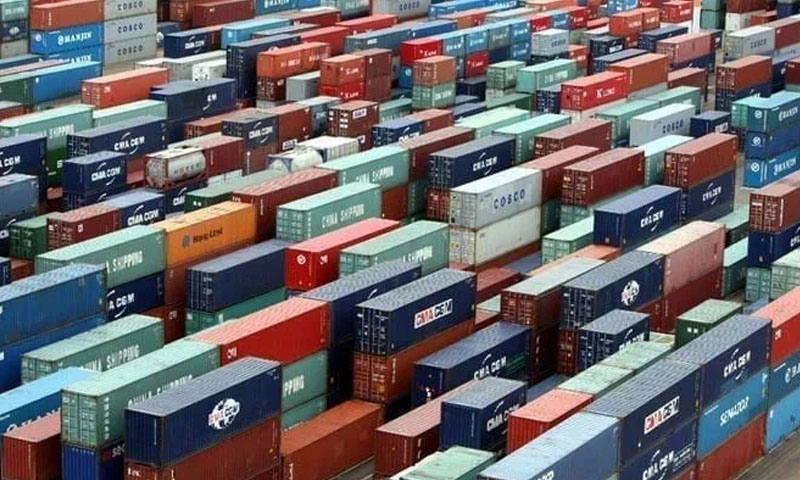
Officials attributed the decline to the closure of the Afghan border since October 11, 2025, which has stranded more than 7,500 transit containers at ports and border crossings and halted overland trade through the Afghan corridor.
The official data noted that Pakistan has lost exports of pharmaceuticals, cement, processed food, tractors and motorcycles, while transport operators have also faced significant revenue losses due to suspended transit trade.
They said that the government has now shifted focus towards alternative trade corridors, including routes through Iran and China, and air and sea re-routing options for Central Asian cargo.
Over 7,000 trucks carrying Kinnow and potatoes, worth $40.2 million, have been exported to CARs via the Iran corridor since December 2025, supported by waivers on financial instrument requirements for seasonal exports, the officials said.
Authorities have also allowed limited re-export of transit cargo, exempted select humanitarian shipments, and relaxed trade conditions for imports and exports through Iran and CARs for a defined period.
Separately, the officials said that diplomatic and coordination meetings have been held with China, Kazakhstan and Kyrgyzstan under the Quadrilateral Traffic in Transit Agreement (QTTA) framework to expand routes and include Uzbekistan and Tajikistan.
The data also highlighted broader disruptions in regional logistics due to geopolitical tensions affecting Iran and the Gulf region, where sea and air freight routes were disrupted and shipping costs increased.
According to documents, Pakistan’s trade with Gulf Cooperation Council (GCC) countries showed mixed trends.
Overall imports from GCC countries rose 2.9 per cent in July-April FY2025-26 to $13.57 billion, driven mainly by increases from Saudi Arabia, the United Arab Emirates and Oman, despite declines from Qatar, Kuwait and Bahrain.
Monthly data, however, showed volatility, with sharp fluctuations in March and April due to shifting logistics routes and recovery in shipping operations.
To mitigate disruptions, the officials said, the government has expanded freighter flight operations, reduced airport handling charges on exports, renegotiated air freight rates with GCC carriers, and diverted some shipping to regional ports in Oman and Saudi Arabia.
They said that a high-level committee has also been formed to assess the impact on global trade flows, while consultations with private sector stakeholders and GCC countries are ongoing.
Officials said that Pakistan is now focusing on diversifying export markets, reducing logistics costs through land and sea route optimisation, and expanding long-term shipping partnerships to stabilise regional trade flows.
You May Also Like