- Web Desk
- 51 Minutes ago
Pakistan Navy escorts vital oil convoy as Gulf conflict disrupts energy routes
-

- Web Desk
- 1 Hour ago
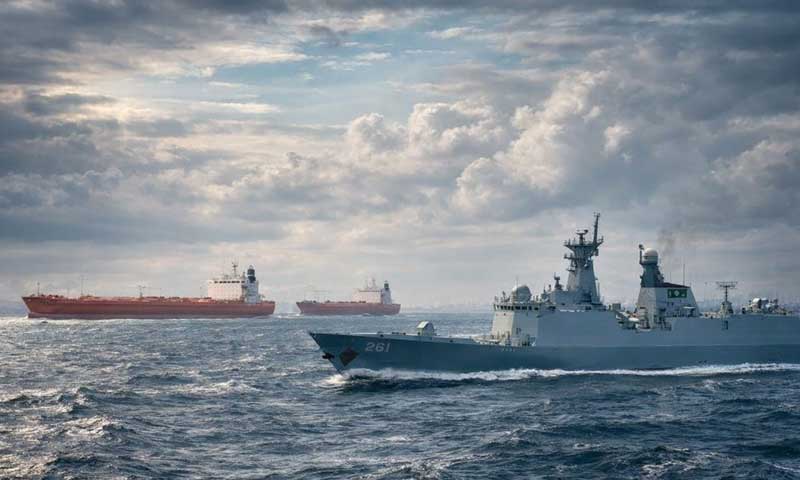
WEB DESK: As the shadow of Operation Epic Fury stretches across the Middle East, the Arabian Sea has shifted from a bustling trade artery into a precarious maritime corridor. With global oil supplies tightening and the reverberations of conflict echoing from the Gulf, the Pakistan Navy has stepped forward to secure a critical national lifeline. Under the mandate of Operation Muhafiz-ul-Bahr, naval forces have begun escorting vulnerable oil tankers through increasingly volatile waters, ensuring the country’s energy supply continues to flow.
According to Arab News, the atmosphere at Port of Karachi on Friday, 13 March 2026, was one of cautious relief as the first major convoy arrived under heavy naval guard. The tankers, carrying more than 110 million litres of fuel, represent far more than commercial cargo, they are the lifeblood of a country already operating under emergency conservation measures.
With a four-day working week introduced to preserve dwindling reserves, the safe arrival of the convoy is being viewed as a significant tactical success amid an increasingly uncertain regional environment.
A steel corridor amid the fog of war
The naval escort mission follows the turmoil unleashed on 28 February, when escalating tensions between United States and Iran began disrupting merchant shipping across the region. Pakistan’s response has been the establishment of what naval planners describe as a “steel corridor”, with frigates and long-range maritime patrol aircraft forming a continuous protective umbrella over Pakistani-flagged tankers.
By securing the Sea Lines of Communication across the North Arabian Sea, the Navy hopes to shield commercial traffic from the volatility spreading southwards from the Gulf. Yet the mission remains complex and fraught with risk as the conflict’s “fog of war” continues to obscure developments across regional waters.
Even as the escorted convoys reach Pakistani shores, the situation closer to the Gulf remains uncertain. The Strait of Hormuz has effectively become a no-go zone for many commercial vessels, and at least two Pakistani tankers are reportedly stranded within the Persian Gulf. Diplomatic channels are currently being engaged in efforts to secure their safe passage, while the Navy maintains heightened patrols along Pakistan’s coastal approaches.
For the moment, attention remains fixed on the “liquid gold” already en route. Each successful docking offers a brief but vital reprieve from the spectre of a deepening energy crisis.
The home front: Fuel, Frugality and Frigates
The sight of grey warships escorting towering oil tankers has provided a measure of reassurance to a public facing tightening restrictions. On land, however, the severity of the shortage is becoming increasingly evident. Authorities have introduced a series of emergency conservation measures, including reduced commercial hours and temporary school closures, in an effort to stretch national fuel reserves.
This dual strategy military protection at sea and strict austerity at home illustrates the delicate position Pakistan finds itself in as a neutral state situated on the edge of an expanding geopolitical confrontation.
You May Also Like