- WEB DESK
- November 24, 2026
‘Pakistan on my shoulder’: Zeeshan Ali embarks on historic space journey as Shenzhou-24 lifts off
-

- WEB DESK
- November 25, 2026
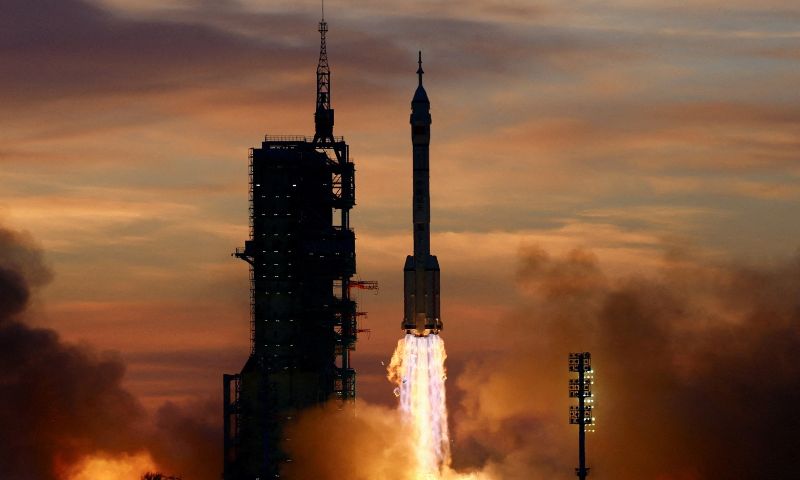
ISLAMABAD: Pakistan’s Muhammad Zeeshan Ali embarked on a historic journey into space on Wednesday morning as China’s Shenzhou-24 spacecraft successfully lifted off from the Jiuquan Satellite Launch Centre in the Gobi Desert in northwestern China, marking a new chapter in Pakistan’s space exploration ambitions.
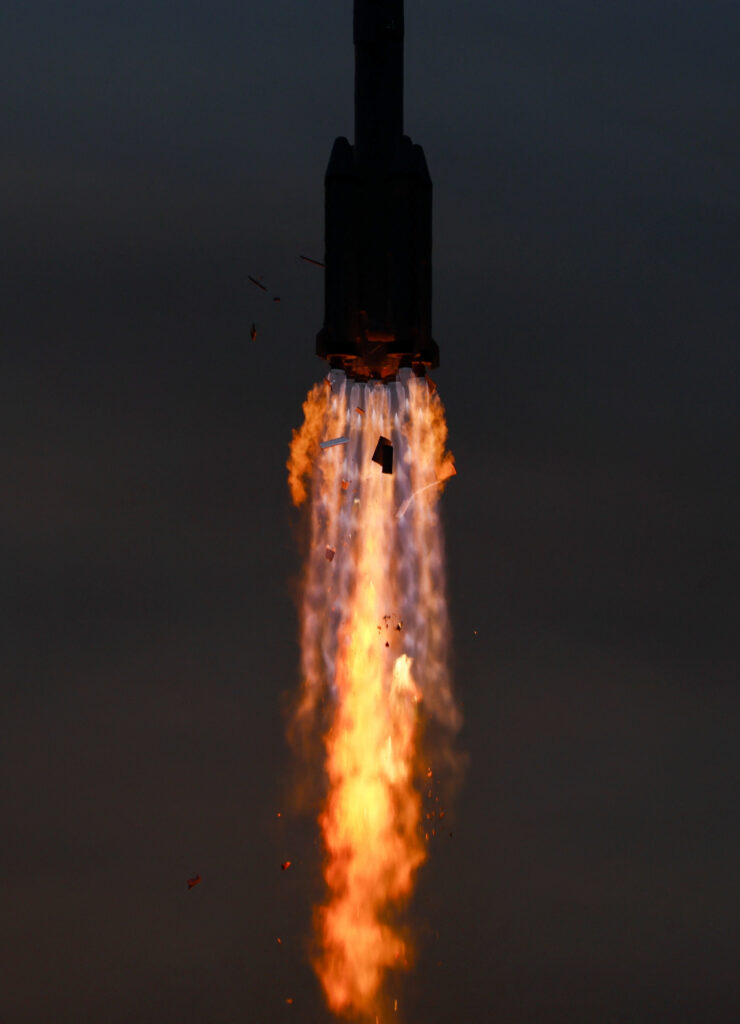
The spacecraft, carrying the 40-year-old Pakistani pilot and two Chinese astronauts, lifted off aboard a Long March-2F rocket at 8:18am Beijing time (5:18am Pakistan Standard Time).
Ali is set to become the first Pakistani to reach Earth’s orbit and the first foreign astronaut to board China’s Tiangong space station. He is accompanied by Chinese mission commander Tang Hongbo and flight engineer Wu Yi.
The Chinese Space Station also confirmed the successful launch in a post on X, announcing that the three astronauts were on their way to Tiangong.
“For the first time, an international astronaut is joining a Chinese crew on a mission to the Chinese Space Station,” it said, accompanying the announcement with Pakistani and Chinese flags.
Smooth journey towards Tiangong space station
The mission appeared to be progressing smoothly following lift-off, with all three astronauts appearing calm inside the spacecraft, according to the BBC‘s live coverage of the historic launch.
The crew subsequently removed their face masks, indicating that the pressure and air quality inside the spacecraft were relatively stable, it was reported at 5:43am Pakistan time.
Chinese authorities estimate that the spacecraft will take approximately three and a half hours from launch to dock with the Tiangong space station, putting its expected arrival at around 8:48am Pakistan time.
Meanwhile, the three astronauts of the Shenzhou-23 mission, who have been in orbit since May this year, were seen following Wednesday’s launch via a livestream aboard the space station as they awaited the arrival of their counterparts, according to footage from Chinese state broadcaster CCTV.
Chinese state news agency Xinhua had earlier reported that the spacecraft, carrier rocket and launch site systems were in good condition following the mission’s final joint rehearsal.
‘I carry the name of Pakistan on my shoulder’
Speaking to reporters on Tuesday, a day before the historic launch, Ali reflected on the significance of representing his country in space.
“I’m not flying for myself. I carry the name of Pakistan on my shoulder,” Ali said.
The Pakistani astronaut also spoke of carrying the hopes of millions of Pakistanis with him on his maiden spaceflight and encouraged children watching the mission to look towards the skies and pursue their dreams.
Ali underwent seven months of intensive training in Beijing to prepare for the mission. Besides preparing for the demands of human spaceflight, Ali took intensive Chinese-language classes, learnt Chinese songs, read Chinese poetry, practised calligraphy and played table tennis, Reuters reported.
Speaking in Mandarin during Tuesday’s press conference, Ali recited a line of Chinese poetry, drawing parallels between its meaning and his experience of astronaut training.
“It’s like my daily training. Day after day, reaching new heights,” he said, according to the Associated Press (AP).
Ali also expressed hope that Pakistan-China cooperation in space exploration would expand beyond a single mission, eventually leading to more joint spaceflights and missions to the Moon and Mars.
Pakistani and Chinese flags fly as astronauts receive rousing send-off
Hundreds of people gathered to bid farewell to the three astronauts ahead of Wednesday’s launch, with Pakistani and Chinese flags visible among the crowds, the BBC reported.
Spectators gathered near the launch site with their cameras and mobile phones raised to capture the historic moment as the sun rose over the Gobi Desert.
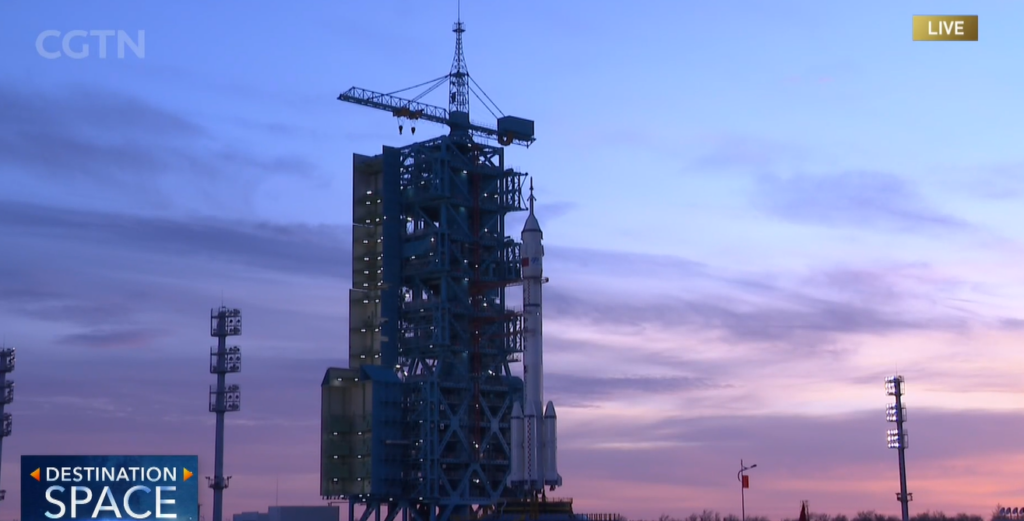
Footage broadcast by CCTV showed the skies changing from shades of indigo and navy to soft pink in the minutes leading up to the launch. Inside the spacecraft, all three astronauts were seen repeatedly reviewing their manuals as they made their final preparations for lift-off.
The launch also drew an outpouring of excitement and national pride on social media, with viewers following the live broadcast on X celebrating Pakistan’s entry into human orbital spaceflight.
The live chat filled with Pakistani and Chinese flags, heart emojis and messages celebrating the longstanding friendship between the two countries.
Several viewers wished the three astronauts a safe journey, posting messages of “God speed” and “Go safe”, while others expressed excitement at witnessing the historic moment unfold in real time.
What will Zeeshan Ali do in space?
Ali will serve as a payload specialist during the mission and is expected to spend between five and 10 days aboard the Tiangong space station, conducting scientific experiments, Reuters reported.
According to AP, the Pakistani astronaut will participate in four joint scientific research projects in biotechnology and materials science, including an experiment involving photosynthetic microorganisms in space.
He will also participate in routine onboard operations during his stay at the space station.
The China Manned Space Agency (CMSA) said Ali would return to Earth aboard the Shenzhou-23 spacecraft, which has been docked at Tiangong since May.
A new chapter in Pakistan-China space cooperation
Ali’s participation in the mission follows an agreement signed in February 2025 between Pakistan’s Space and Upper Atmosphere Research Commission (Suparco) and the CMSA for the selection and training of Pakistani astronauts.
Ali and fellow Pakistani astronaut Khurram Daud were selected in April this year to undergo training in China, with Ali eventually chosen for the historic spaceflight.
Prime Minister Shehbaz Sharif met the two astronauts in April, congratulating them on their selection and expressing hope that the mission would further strengthen bilateral relations.
The mission also marks a milestone for China’s space programme, with Beijing opening its crewed spaceflight programme to international astronauts as part of its broader ambitions in space exploration, which include landing astronauts on the Moon by 2030.
According to Reuters, China is promoting Tiangong as a hub for international scientific cooperation at a time when the NASA-led International Space Station faces possible retirement by 2030.
For Pakistan, Ali’s mission represents its first participation in human orbital spaceflight, opening avenues for scientific research in orbit, astronaut training and further international cooperation in space exploration.
“For the first time, an international astronaut is joining a Chinese crew on a mission to the Chinese Space Station,” it said, accompanying the announcement with Pakistani and Chinese flags.
You May Also Like

- WEB DESK
- November 24, 2026
Govt cuts diesel price by Rs4, petrol by Re1 per litre
- WEB DESK
- November 24, 2026