- Web
- 6 Hours ago
Pakistan seeks diplomatic resolution as Saudi-UAE tensions spill into Yemen
-

- Web Desk
- Jan 02, 2026
WEB DESK: Pakistan has declared its active pursuit of a diplomatic resolution to the escalating dispute between Saudi Arabia and the United Arab Emirates over Yemen, positioning itself as a mediator between two of its most vital Gulf partners. The call for restraint underscores Islamabad’s delicate balancing act and its push for regional dialogue amid a significant rupture in the coalition that has long fought Yemen’s Houthi rebels.
The comments, representing Islamabad’s most definitive statement on its mediating role since the crisis began, came from Foreign Office spokesperson Tahir Andrabi during his weekly briefing. “We have been advocating peace and diplomacy to reach a solution. So, this is part of our exchanges that is taking place between our leadership and the leadership in Riyadh and Abu Dhabi,” Andrabi stated. He emphasised that Pakistan is engaging both nations to encourage de-escalation and is championing a “Yemeni-led, Yemeni-owned political process” through multilateral forums, including the United Nations Security Council and the Organisation of Islamic Cooperation.
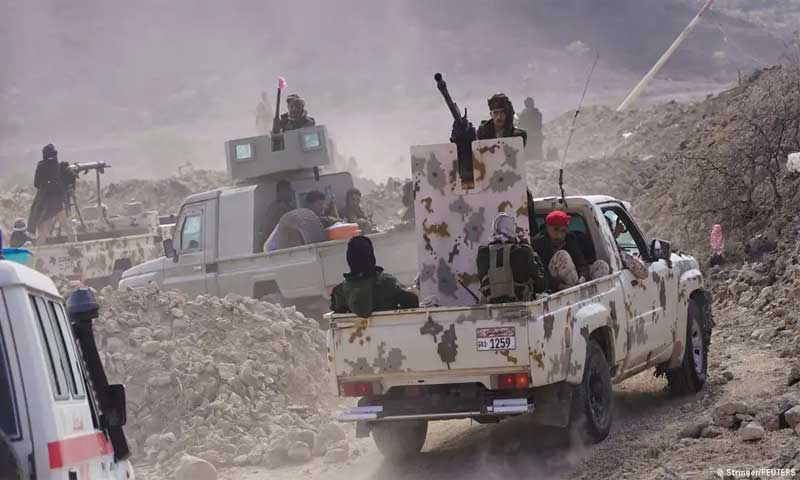
The urgency of Pakistan’s diplomatic outreach follows a dramatic flare-up on December 30th that brought longstanding Saudi-UAE rivalries into the open. Tensions peaked when the Saudi-led coalition conducted airstrikes on the southern Yemeni port of Al-Mukalla, targeting what it claimed were weapons and armored vehicles recently unloaded from Emirati ships and destined for the UAE-backed Southern Transitional Council (STC), a separatist faction. Footage broadcast in Saudi Arabia purported to show surveillance of the shipment’s delivery.
A Coalition Fractures: Airstrikes and a “Voluntary” Withdrawal
The Saudi foreign ministry issued a sharply worded statement, labeling the UAE’s actions “highly dangerous” and declaring the STC’s advances a direct threat to the kingdom’s national security. “The Kingdom stresses that any threat to its national security is a red line, and the Kingdom will not hesitate to take all necessary steps and measures to confront and neutralise any such threat,” it warned. Riyadh also backed a demand from Yemen’s internationally recognized Presidential Leadership Council (PLC) for Emirati forces to leave the country within 24 hours.
In response, the UAE announced a “voluntary” withdrawal of its remaining counterterrorism personnel from Yemen, citing “recent developments and their potential implications for the safety and effectiveness” of their mission. The UAE’s defence ministry, in a statement on X, firmly rejected Saudi accusations, asserting, “The shipment in question did not contain any weapons, and the vehicles unloaded were not intended for any Yemeni party.” Abu Dhabi also denied pressuring the STC, stating it “condemns the claims made regarding the exertion of pressure or direction on any Yemeni party to carry out military operations that affect the security of the sisterly Kingdom.”
The fallout within Yemen was immediate. Rashad al-Alimi, head of the Saudi-backed PLC, announced a 90-day state of emergency and formally annulled a security pact with the UAE. However, STC members within the PLC rejected the move, warning it risked “dragging Yemen into new confrontations.” On the ground, the aftermath of the Mukalla strike was one of localized devastation. Resident Abdullah Bazuhair described the terror inflicted on his family, with windows blown out and glass covering his home. “The strikes were unacceptable to God,” he told AFP.
Pakistan’s Delicate Diplomacy in Motion
Against this volatile backdrop, Pakistan’s diplomacy has been carefully calibrated. Prime Minister Shehbaz Sharif met with UAE President Sheikh Mohamed bin Zayed Al Nahyan on December 30th in Rahim Yar Khan during the Emirati leader’s private visit. While officially focused on bilateral ties, the meeting was widely interpreted as an urgent plea for de-escalation. A day later, PM Sharif held a phone call with Saudi Crown Prince Mohammed bin Salman, completing a round of high-level contacts with both sides.
Pakistan’s role is fraught with high stakes. Both Saudi Arabia and the UAE are key economic partners and home to millions of Pakistani expatriates. Historically, Pakistan has maintained a neutral stance on intra-Gulf disputes, advocating for Arab unity. The current crisis, however, presents a direct challenge to regional stability and threatens to further fracture the Yemeni political landscape, complicating any future peace process. Andrabi framed Pakistan’s involvement as that of a “mediator and a facilitator,” driven by a spirit of bringing “peace and prosperity for Yemen and for the brotherly people of Yemen.”
Regional Ripples: Markets, Rivalries, and an Uncertain Future
The tensions sent immediate, though measured, ripples through regional financial markets. Gulf equity indexes mostly closed lower, with Dubai’s main share index falling 2% in its biggest daily decline since June. In contrast, oil markets showed surprising resilience. Brent and West Texas Intermediate crude futures saw only modest gains, suggesting traders viewed the geopolitical risk as contained for the moment. Analysts noted that perceptions of a well-supplied global market were likely capping prices, with one analyst predicting a downward trend in early 2026 due to a “growing oil glut.”
The open dispute lays bare a rivalry that has been simmering for years, extending beyond Yemen to other arenas like Sudan. It marks a profound shift from 2015, when the two nations stood together to lead a military coalition against the Houthis. Now, with the UAE having largely withdrawn its conventional forces years earlier to focus on supporting southern separatists and counterterrorism, its strategic divergence from Saudi Arabia’s focus on defeating the Houthis has become an open breach.
Despite the forceful statements and military action, a source close to the Saudi coalition suggested diplomacy was not off the table. “The coalition was forced to do that. All diplomacy efforts met deaf ears,” the source told AFP. “Diplomacy is still an option to stop any further escalation.”
It is into this fragile opening that Pakistan is now stepping. Its challenge will be to leverage its historic relationships to encourage dialogue between Riyadh and Abu Dhabi, while also navigating the complex internal Yemeni conflict where the goals of the Saudi-backed PLC and the UAE-backed STC are increasingly irreconcilable. The path forward is perilous, but Pakistan has signaled its commitment to trying to forge a diplomatic solution, seeking to prevent a wider regional confrontation and chart a course back towards a negotiated peace for Yemen. The success or failure of this effort will be a critical test of Islamabad’s diplomatic influence in the Gulf.
You May Also Like