
- Web Desk
- 1 Hour ago
Pakistan set to be enchanted by this year’s final supermoon
-

- Web Desk
- Dec 03, 2025
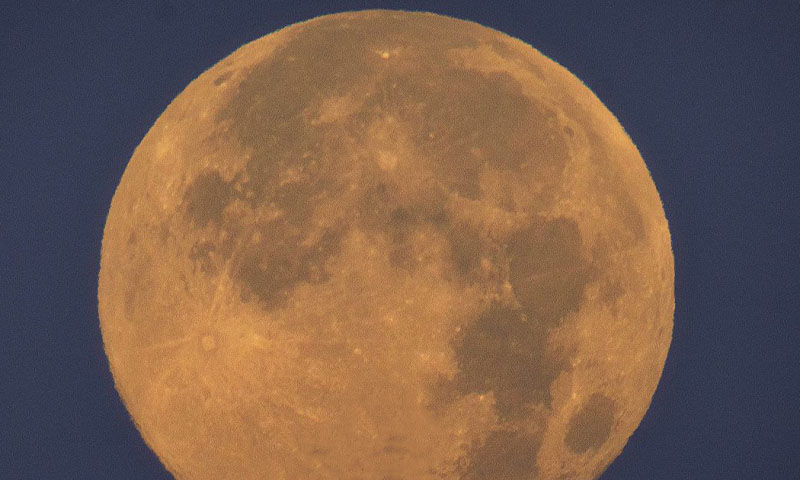
WEB DESK: The sky is about to put on a celestial show you won’t want to miss. On the night of December 4-5, the last supermoon of 2025 will grace the heavens, promising a spectacle of luminous wonder.
This December “cold moon” will rise with a hypnotic glow, visible across the country, shimmering larger and brighter than a typical full moon. Thanks to its intimate dance with Earth at perigee, it will appear a breathtaking 7.9 per cent bigger and 15 per cent more radiant than usual. The peak of this lunar allure will reach 99.8 per cent brightness at 4:15 AM on December 5, while moonrise on December 4 at 4:58 PM PST will already offer an intoxicating preview at 99 per cent brilliance.
Though slightly less “super” than November’s showstopper, December’s moon will still dazzle admirers, hovering a mere 357,218 km from Earth. In the crisp night air, its silver light will bathe the landscape, a vision so mesmerising it needs no telescope or fancy equipment, just your eyes and a heart open to the magic of the cosmos.
This is Pakistan’s final chance this year to witness one of nature’s most seductive spectacles. Clear skies are all you need. Come evening, prepare to be spellbound.
SUPERMOON IS NOT ALL THAT DECEMBER HOLDS
This month is shaping up to be an exciting month for stargazers, with a series of remarkable celestial events expected to light up the night sky in addition to the supermoon.
On December 7, a rare conjunction of the Moon and Jupiter will occur. During this event, the two celestial bodies will appear unusually close in the sky. If skies are clear, the spectacle will be visible to the naked eye without any telescope.
Astronomers say interstellar comet 3I/ATLAS will make its closest approach to Earth on December 19, coming within roughly 274 million kilometers. While still a vast distance, the comet’s visit is scientifically significant, as it originates from beyond our solar system. Observers with telescopes of 30 centimeters or larger will be able to catch a glimpse, though experts stress it poses no threat to Earth.
You May Also Like