- Web
- 32 Minutes ago
Pakistan sounds alarm on melting glaciers, calls for climate justice at COP30
-

- Web Desk
- Nov 16, 2025
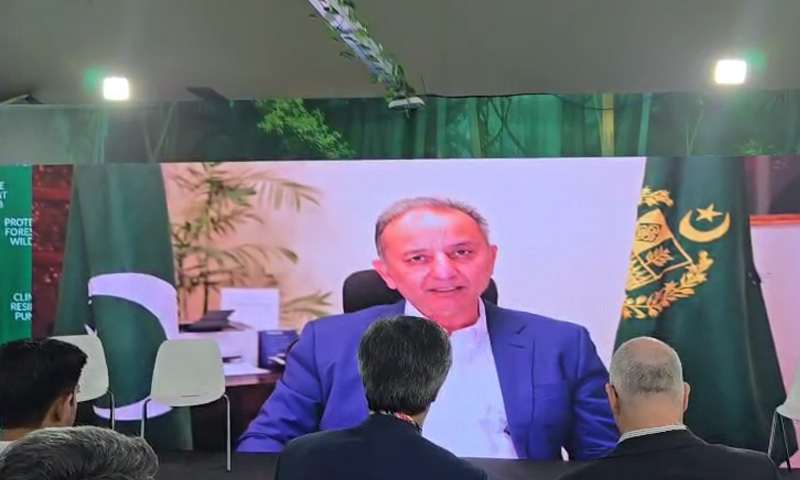
BELÉM: Pakistan placed the global cryosphere crisis at the center of climate discussions at COP30, as Federal Minister for Climate Change and Environmental Coordination Dr Musadik Malik delivered a forceful video address during a high-level side event on “Cryosphere Adaptation & Disaster Risk Reduction.”
The session, hosted by Pakistan’s Ministry of Climate Change and Environmental Coordination in partnership with the International Centre for Integrated Mountain Development (ICIMOD), brought together regional leaders, multilateral organisations, and climate experts to highlight the growing threats facing mountain communities across the Hindu Kush Himalaya (HKH).
Dr Malik warned that accelerated glacier melt, driven by rising global temperatures, is placing millions in South Asia at risk. Calling the HKH region the “white rooftops of the world,” he said that Pakistan alone is home to 13,000 glaciers, the largest concentration outside the polar regions. These glaciers feed the Indus River system, which underpins the country’s food security, ecosystems, and economy.
“The rate at which these glaciers are melting is unprecedented,” he cautioned, citing increasing incidents of Glacial Lake Outburst Floods (GLOFs) that have already caused devastating losses in vulnerable mountain areas.
The minister also linked the cryosphere emergency to global climate injustice. “70 per cent of the world’s carbon emissions come from just ten countries, and these same countries receive 85 per cent of global green finance,” he said. “The cryosphere crisis is fundamentally an issue of justice and rights.”
Dr Malik urged high-emitting nations to fulfill their responsibilities in supporting adaptation and resilience efforts for countries on the frontlines of climate change. He called for greater political attention to cryosphere protection in COP30 decision-making and affirmed Pakistan’s continued leadership on climate action, including through its updated Nationally Determined Contributions (NDC 3.0).
The event featured contributions from deputy ministers of Türkiye and Azerbaijan, the Director General of ICIMOD, and senior representatives from Nepal, Bhutan, UNESCO, UNDP, and the Asian Development Bank, reflecting a growing international consensus on the need to safeguard mountain ecosystems and the communities that depend on them.
You May Also Like