- Web
- 1 Hour ago
Pakistan to hold 5G spectrum auction in early February, IT Minister says
-

- Syeda Masooma
- Dec 24, 2025
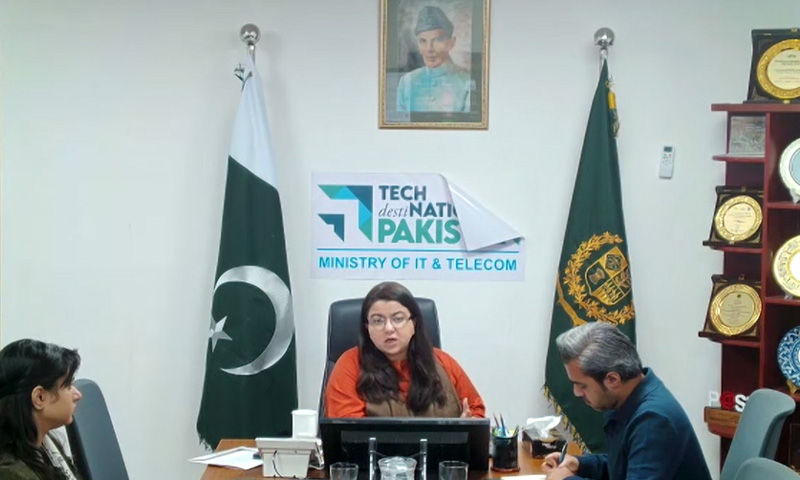
ISLAMABAD: Pakistan is edging closer to the introduction of 5G technology, with the federal cabinet expected to approve the long-awaited 5G spectrum auction today. Once approved, the move will formally set the stage for the country’s transition to next-generation mobile connectivity.
According to officials, recommendations for the auction, including the auction model and minimum pricing, have already been submitted to the cabinet. Final details will be confirmed following approval. Federal Minister for IT Shiza Fatima said that key decisions related to the auction will be formalized once the cabinet gives its nod.
Authorities plan to offer six frequency bands, providing a total of 600 MHz of spectrum. After approval, an official information memorandum will be issued immediately, enabling telecom operators to participate in the auction within 40 to 45 days. The auction is expected to be completed before February 15 and will be conducted openly, with media present to ensure transparency.
Pakistan’s three major mobile service providers are expected to take part, while foreign companies will also be eligible to submit bids. The spectrum bands up for auction include 2600 MHz (with 194 MHz of prime spectrum), 700 MHz, 1800 MHz, 2100 MHz, 2300 MHz and 3500 MHz. The Pakistan Telecommunication Authority (PTA) will prioritize the 2600 MHz and 3500 MHz bands, aiming to auction more than 300 MHz of spectrum overall.
The IT minister has said the auction will be held in Pakistani rupees, and that the government has ensured that other recommendations from the industry have also been incorporated in the latest terms and conditions. She also said that as opposed to the previously prevalent sentiment of Zong being the only company to have actually thrown in their hat in the 5G auction, this time around the entire industry is not only willing, but also eager to buy 5G spectrum.
However, she said that the service requirements for winning bidders will be significantly more stringent than in previous auctions. “The aim of the government is to focus on the quality of service,” she added. A portion of the auction proceeds will be reserved for reinvestment in the telecom sector to help improve service quality.
She noted that Pakistan currently lacks 5G infrastructure, meaning it will take around six to seven months after the auction for services to be rolled out. Initial deployment will begin in five cities, four provincial capitals and the Islamabad Capital Territory, with efforts to improve overall network quality starting within weeks of the auction.
Addressing broader connectivity challenges, the minister said that fiber-optic networks remain the best solution for improving internet quality. Right-of-way charges have been removed to accelerate fiber expansion, while internet availability along highways is being strengthened with major contributions from the Universal Service Fund (USF), which has received significantly increased government funding this year.
On the commercial outlook, officials said that while 100 MHz of spectrum was previously auctioned and 60 MHz acquired, this time around if over 50 per cent of the available spectrum in this auction is acquired, it will be considered a success. She said that the delays so far have been caused by merger-related bottlenecks in the telecom sector have now been resolved, clearing the way for the auction.
The minister highlighted the sector’s economic contribution, noting that telecom companies have generated approximately Rs 1.5 trillion in taxes and investments over the past five years, while improved internet penetration is expected to inject an immediate estimated $4 billion to Pakistan’s GDP.
Experts say at least 100 MHz of spectrum is required for effective 5G services, and pricing will be kept competitive to encourage investment. Each band will carry a separate base price to ensure fair participation.
Media reports indicate that commercial 5G services are expected to launch in 2026 in major cities including Islamabad, Lahore and Karachi. Service quality targets are planned to rise from 4 Mbps in the first year to 25 Mbps over time, alongside annual installation of new towers and increased fiberization, marking a significant boost to Pakistan’s digital infrastructure and connectivity landscape.
Finally, the Ufone-Telenor merger earlier this year is going to massively aide in the process for the IT industry to finally adapt and incorporate the 5G services in their portfolio.
You May Also Like