- Web Desk
- 28 Minutes ago
Pakistan’s appetite for scrap drives ship recycling
-

- Web Desk
- Jan 19, 2026
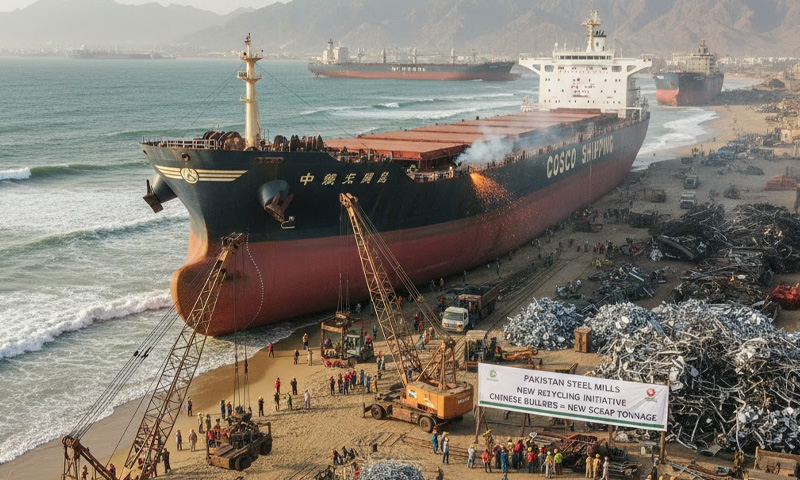
Pakistan’s growing demand for scrap material is making waves not just in the shipping industry but also in the global recycling economy. Over the past week, two Chinese-owned bulk carriers, including Guangzhou Seaway International’s 1996-built Sheng Le C, were sold to recycling yards in Pakistan and India. While major shipbreaking hubs worldwide continue to acquire vessels ranging from aframax tankers to French ropax ferries, the deals highlight a key trend: Pakistan is willing to pay a premium to secure scrap tonnage, signaling strong domestic demand for raw materials.
This appetite extends beyond metal. Pakistan is increasingly eyeing plastic recycling as a strategic economic and environmental opportunity. Modeled on carbon credits, plastic credits allow companies to offset their plastic footprint by funding verified collection and recycling projects. While some multinational companies remain skeptical, Pakistani officials see a broader potential: transforming recycling into a market-driven industry that can boost exports, create jobs, and position Pakistan as a regional hub for sustainable waste management.
Dr Musadik Malik, Pakistan’s climate minister, highlighted a shift from “extended producer responsibility” to “extended consumer responsibility,” arguing that low-consumption countries like Pakistan should not bear the disproportionate burden of global plastic waste. By creating a Global Plastic Fund, marketplace for verified plastic credits, high-consumption nations can fund recycling projects in Pakistan, enabling the country to process waste, support local labor, and generate revenue from materials that would otherwise be discarded.
Industry analysts say the convergence of scrap steel and plastic recycling markets could mark a turning point for Pakistan’s environmental and economic policy. With premium prices for ship scrap and an emerging plastic-credit market, Pakistan is not only feeding its industries but also positioning itself as a leader in circular economy solutions in South Asia, proving that sustainability and trade can go hand in hand.
You May Also Like