- Web
- 6 Minutes ago
Pakistan’s defence pact secures Saudi neutrality in Iran-Israel conflict
-

- Web Desk
- Mar 06, 2026
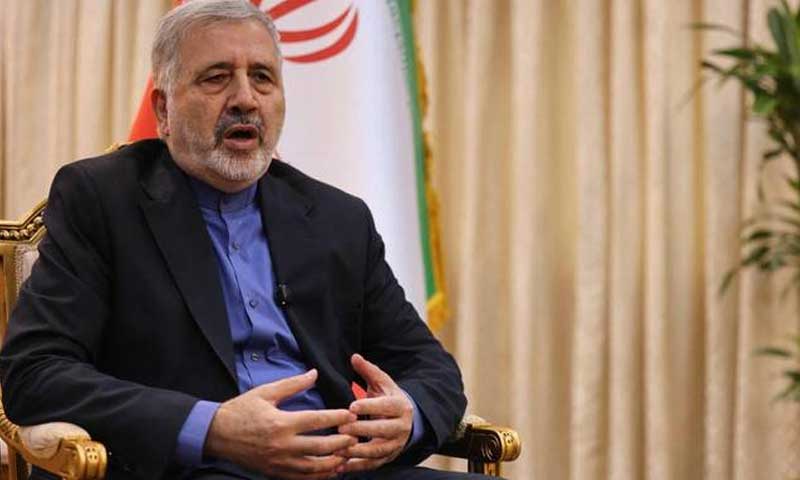
WEB DESK: In a notable diplomatic development amid the intensifying tensions involving Israel, the United States, and Iran, Tehran’s Ambassador to Saudi Arabia, Alireza Enayati, has publicly expressed appreciation to Riyadh for refusing to permit its territory or airspace to be used for military operations against the Islamic Republic. The acknowledgement underscores a rare moment of diplomatic restraint in a region increasingly strained by military posturing and strategic rivalries.
The development is being widely linked to the growing influence of the Strategic Mutual Defence Agreement (SMDA) concluded between Pakistan and Saudi Arabia late last year. The agreement, designed to formalise defence cooperation and safeguard Saudi sovereignty, has emerged as an unexpected stabilising mechanism at a time when fears of a broader Middle Eastern conflict remain acute.
According to Middle East Eye, Speaking from the Iranian embassy in Riyadh, Ambassador Enayati commended the Kingdom’s decision to maintain neutrality, describing it as a move that had effectively “closed the door” on the possibility of a wider regional confrontation. His remarks signal a cautious diplomatic opening between Tehran and Riyadh, despite the continuing volatility across the Gulf.
Pakistan’s diplomatic balancing act
Diplomatic sources indicate that the position adopted by Saudi Arabia was not solely the result of bilateral deliberations but followed a period of intense mediation led by Islamabad. Ishaq Dar, Pakistan’s Deputy Prime Minister and Foreign Minister, recently indicated that Pakistan’s strategic deterrence and security assurances played a critical role in shaping the outcome.
Under the framework of the SMDA, Pakistan is formally committed to the defence of Saudi sovereignty. This arrangement, analysts suggest, created a dual layer of reassurance in the current crisis. On one hand, Tehran was reportedly cautioned that any retaliatory strikes against Saudi territory would risk triggering a collective military response under the agreement. On the other, Pakistan is believed to have facilitated assurances from Riyadh that no foreign power including Israel or the United States would be permitted to utilise Saudi bases or airspace for offensive operations against Iran.
The diplomatic balancing act has drawn considerable attention across the Gulf. While several regional states continue to grapple with the fallout of missile and drone exchanges linked to the broader confrontation, the Saudi-Iranian frontier has remained notably calm.
These arrangement reflects a new form of strategic neutrality, one that blends deterrence with mediation. By reinforcing Saudi Arabia’s non-participation in military operations while simultaneously deterring attacks on the Kingdom, Pakistan has positioned itself as a pivotal security intermediary in the Gulf.
It offers a measure of insulation from a conflict that threatens to engulf the wider Middle East. For Tehran, it provides reassurance that the Kingdom will not serve as a launch point for external military pressure.
As tensions between Israel, the United States, and Iran continue to simmer, the Pakistan–Saudi strategic partnership appears to have carved out a rare diplomatic buffer zone. Whether this fragile equilibrium can endure remains uncertain, but for the moment it has helped prevent the conflict from expanding further across one of the world’s most volatile regions.
You May Also Like