- Web
- 58 Minutes ago
Pakistan’s strategic clout takes centre stage at Munich security conference
-

- Web Desk
- Feb 16, 2026
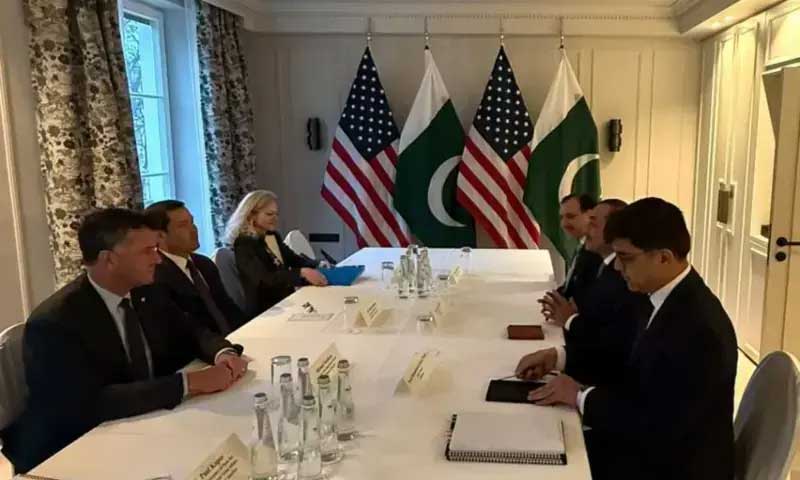
WEB DESK: Pakistan’s strategic relevance was firmly in focus at the 62nd Munich Security Conference, where high-level engagements underscored Islamabad’s continuing weight in global and regional security deliberations. Held in Germany from 13 to 15 February, the gathering convened world leaders, senior diplomats and military officials against a backdrop of shifting geopolitical alignments.
Pakistan’s Chief of Defence Staff and Chief of Army Staff, Field Marshal Asim Munir, led a series of substantive meetings on the sidelines of the conference. Among them was a discussion with US Secretary of State Marco Rubio, focusing on regional and global security dynamics, counter-terrorism cooperation and broader strategic coordination. Pakistan’s military media wing, the Inter-Services Public Relations (ISPR), stated that the talks were aimed at reinforcing bilateral ties and addressing shared security challenges.
Field Marshal Munir strengthens International ties on security and defence
Field Marshal Munir also held consultations with a range of European and international counterparts. These included German Interior Minister Alexander Dobrindt, Chancellor’s foreign and security policy adviser Gunter Sautter, Germany’s Chief of Defence Carsten Breuer, Brazilian Chief of the Joint Staff Renato Rodrigues de Aguiar Freire, and Lebanese Armed Forces Commander Rodolph Haykal. Discussions centred on contemporary security threats, expanding defence cooperation and advancing peace through multilateral engagement.
US Envoy praises Pakistan’s role in regional and global diplomacy
In parallel remarks, US Ambassador to the United Nations Mike Waltz highlighted Pakistan’s pivotal role in Washington’s regional and global diplomacy. He pointed to Islamabad’s participation in multilateral initiatives, including the unanimous establishment of the United Nations Security Council’s “Board of Peace” in coordination with partners such as the United Kingdom and France.
Waltz further stressed Pakistan’s involvement in fostering networks among Muslim-majority nations including Türkiye and Indonesia aligning with broader American engagement efforts. He referenced President Donald Trump’s outreach to regional partners, naming Pakistan among key states engaged in dialogue.
In a pointed acknowledgement of South Asia’s strategic sensitivities, Waltz stressed Pakistan’s importance in mitigating nuclear escalation risks, citing the enduring volatility surrounding Kashmir and India–Pakistan tensions. His remarks reflected long-standing US concerns regarding strategic stability in the region.
Collectively, the engagements signalled Islamabad’s active positioning as a significant stakeholder within international security forums. According to the ISPR, the visit was intended to consolidate defence ties and broaden cooperation with partner countries on pressing security matters.
Set against the conference’s overarching theme of navigating an evolving global order, Pakistan’s presence at Munich reinforced its standing as a consequential actor in counter-terrorism, regional stability and multilateral diplomacy.
You May Also Like