- Web Desk
- 48 Minutes ago
Pakistan’s strategic mediation in the Middle East
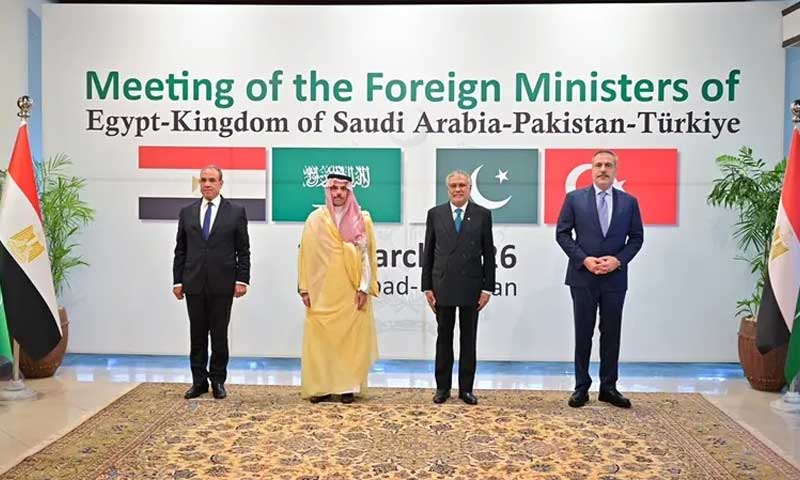
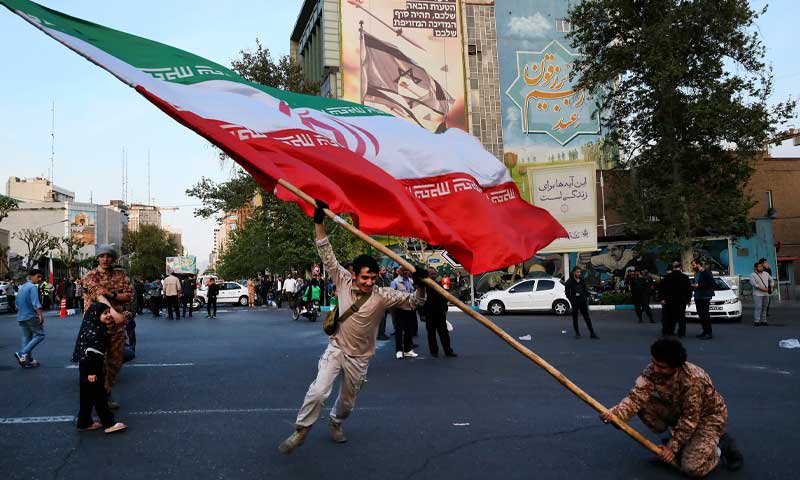
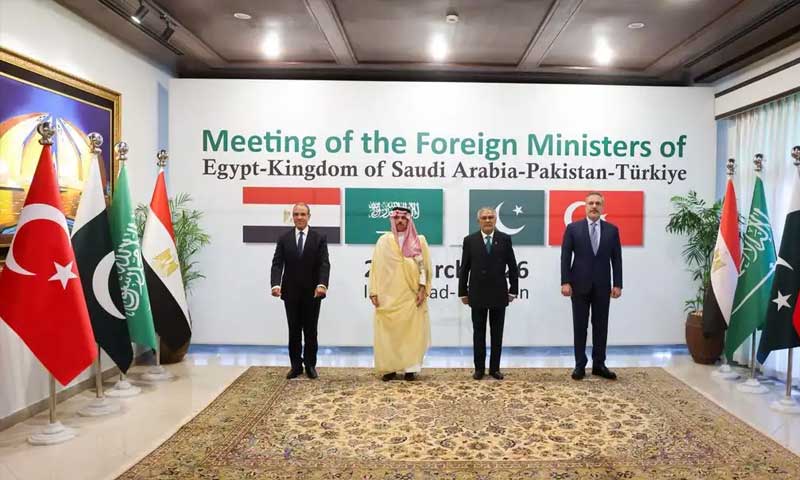
Pakistan’s recent moves in the ongoing US-Iran conflict, which escalated in late February 2026 with US and Israeli strikes, reflect a pragmatic move from its historic position of “cautious neutrality” towards active mediation. The motivation for this is driven by core national security interests rather than ideological affinities. The fact that Pakistan is making overtures to host talks, carrying a reported 15-point US proposal to Iran, and organising a quadrilateral meeting of foreign ministers involving Saudi Arabia, Türkiye, and Egypt in Islamabad on March 29-30, 2026, reflects a pragmatic approach to manage the situation in the unstable multipolar Middle East.
The Iran-US mediation track: Geography, Ties, and Self-Interest
Pakistan’s role as mediator is facilitated by its geographical position. Pakistan and Iran have a 900-kilometer border, with considerable portions in the unstable Balochistan region, which has seen threats from cross-border extremist groups like Jaish al-Adl. A total breakdown in Persian Gulf relations would directly impact Pakistan’s energy security (Iran has historically been an important, if intermittent, supplier) and create instability in its western provinces, including increased Balochistan insurgency activity.
Pakistan has fraternal historical and cultural ties with Iran, given its Shia and Sunni demographics, historical anti-Soviet cooperation in Afghanistan, and periodic border management agreements. However, it is also a Major Non-NATO Ally (MNNA) of the US since 2004. Recent reports confirm that Pakistan’s officials, including Prime Minister Shehbaz Sharif and Foreign Minister Ishaq Dar, have been in contact with both Iran and the US, carrying US communications, including on issues like sanctions relief, nuclear and missile limitations, Strait of Hormuz access, and proxy group controls, and expressing readiness to host US-Iran indirect or direct talks in Islamabad.
From a military point of view, this is not altruism but conflict de-escalation in deterrence by denial. A larger conflict risks the environment of the China-Pakistan Economic Corridor (CPEC), which relies in part on Gulf shipping routes.
From the perspective of Pakistani defense planners, mediation is an opportunity to gain strategic importance for Washington without significant cost, especially in light of the pivot to Asia without offending Beijing, which is Pakistan’s main economic and military ally. Success, partial or otherwise (such as humanitarian corridors or local ceasefires), would reinforce Pakistan’s status as a “pivotal state” in being able to bridge gaps beyond those which larger powers can address.
The challenges are considerable, however. Iran’s response has been lukewarm, and Washington under President Trump has sent mixed signals. There is also an “Indian factor” in terms of its alignment with Israel and its potential to take advantage of Pakistan’s distractions.
The quadrilateral alignment: A middle-power ‘Stabilization Axis’
The March 2026 meeting of foreign ministers of Pakistan, Saudi Arabia, Türkiye, and Egypt in Islamabad represents another level of organisation in this pivot. This is not an alliance but an informal middle-power grouping with the objective of conflict de-escalation in the Iran conflict, Red Sea/Gulf security, and regional stabilization. This is an extension of prior informal talks, such as in Riyadh, and represents Islamabad’s attempt to engage other Sunni-majority states.
The presence of Saudi Arabia and Egypt gives financial weight, strategic depth in the Gulf/Red Sea, and Sunni influence in the Middle East. Alliances in this region would secure Pakistan’s historic security relationships with Saudi Arabia, including troop deployment in the past, and would make Pakistan an important player in strategic waterways.
Türkiye adds a defense industry component, which is particularly significant for Pakistan. Pakistan and Türkiye have developed their strategic cooperation in unmanned aerial vehicles (UAVs) with Turkish drones Bayraktar TB2 and Akıncı already in service in Pakistan, with advanced talks for setting up a combat drone assembly facility in Pakistan, including stealth/long-endurance drones, as well as Kizilelma technology transfer. Cooperation in naval platforms, such as MILGEM-class corvettes with local construction in Karachi Shipyard, is also an area of cooperation. This cooperation would provide diversification for Pakistan from sole reliance on China or the West, including in developing asymmetric warfare capacities such as drone warfare for effective deterrence.
This ‘Stabilization Axis’ would, therefore, act as a force multiplier. It would bypass the stalemate in all other international organisations (OIC, Arab League, or UN) by using the common interest in preventing escalation, securing economic lifelines, and asserting collective Muslim world leadership in a multipolar world order. For Pakistan, this would mean a significant increase in diplomatic weight beyond the conventional military balance.
Domestic and strategic payoffs
This assertive foreign policy posture would achieve several internal payoffs for Pakistan:
• Economic Security: Regional tensions would directly affect the viability of CPEC Phase 2 industrial zones, energy projects, and connectivity to Central Asia/Middle East.
• Strategic Autonomy: Through these multiple poles of influence – the U.S. as the MNNA, China via the CPEC/BRI route, the Gulf States, and Türkiye, Islamabad is hedging against the threat of ‘alignment pressure.’ This strategic approach minimizes the threat of coercion by any one power and positions Pakistan as a mediator whose value lies in the strength of its relationships and the strength of its nuclear umbrella and large standing army.
The military leadership in Pakistan, headed by Field Marshal Asim Munir, has been quite visible in these outreach programs. This is because the military has always been the de facto decision-maker in Islamabad.
Risks and the ‘How Far’ Question
There are risks and the question of ‘how far’ Islamabad can go in this new role. The ability of Pakistan to act as a mediator depends on its own economic strength and ability to deal with the threat of peripheries – the militancy in Balochistan and the threat of opportunistic actions by India in the eastern sector. The metrics for success in this scenario will be incremental reduced tensions, resumption of navigation in the Strait of Hormuz, and confidence-building measures. The question of overreach and the extent to which Islamabad can go without alienating either side Tehran if it is perceived to be too close to the U.S. or Washington if it is perceived to be too soft on Tehran will be critical.
In the multipolar Middle East with the overall strategic dynamics of the region tilted towards the process of ‘retrenchment’ and ‘proxy fatigue’ and the rise of the ‘middle power’ in the region, the path that Islamabad is taking is in complete conformity with the ‘middle power’ theory. The ‘Calculated Pivot’ that Islamabad is taking is a rational approach in the context of the Middle East and the Islamic world in the 21st century.
You May Also Like