- Aasiya Niaz
- 1 Hour ago
Parliament flags online risks to minors as cybercrime complaints surge
-

- Web Desk
- Jan 17, 2026
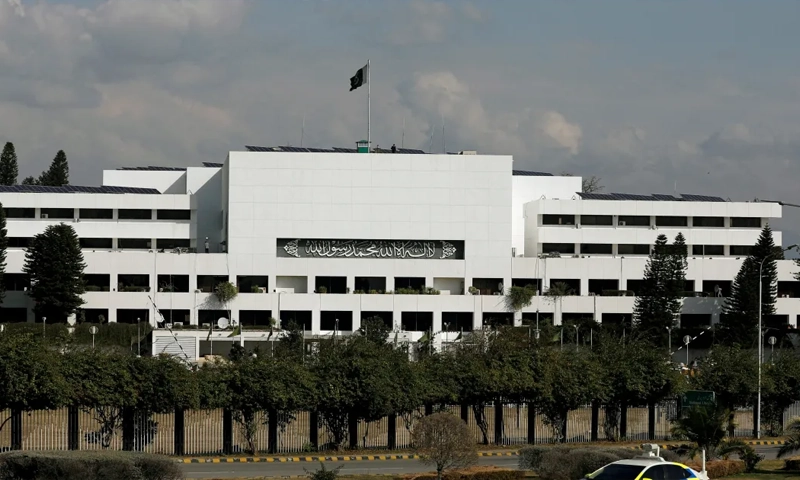
ISLAMABAD: Lawmakers in both houses of parliament on Friday sounded the alarm over the growing dangers of unregulated social media use by minors and a sharp rise in cybercrime, urging coordinated safeguards, legal reforms and stronger enforcement.
Senate pushes safeguards for under-18s online
The issue of children’s exposure to social media was raised in the Senate through a calling-attention notice moved by a group of senators, prompting calls for structured oversight rather than ad hoc bans.
Presiding over the sitting, Sherry Rehman proposed the formation of a special committee to draft protections for under-18s in consultation with the ministries of information technology, interior, education and law, alongside provincial governments and parliamentary parties. She said the proposal would be placed before Senate Chairman Yousaf Raza Gilani for a final decision.
Senators backing the motion warned that most social media platforms were designed for adults and exposed minors to inappropriate content, harassment and exploitation. They cited recent cases involving young influencers to argue that unchecked access could have severe consequences.
The House was urged to consider a comprehensive legal framework that could include age-verification mechanisms, parental supervision tools and clearer platform responsibilities. Some senators called for limits on platforms such as TikTok and Instagram for under-18s, as well as tighter scrutiny of VPN use by minors.
Others cautioned against sweeping bans. While pointing to international examples, such as age-based restrictions introduced abroad—Senator Rehman said social media also had educational value and that any response should be balanced and evidence-based.
National Assembly flags spike in cyber fraud
In the National Assembly, lawmakers focused on the rapid increase in cybercrime, describing how fraudulent messages and impersonation scams were affecting ordinary citizens.
Members drew attention to fake traffic challans, bogus banking alerts and messages falsely attributed to educational institutions or mobile companies. In several instances, they said, people who responded to such messages later found themselves entangled in serious legal trouble, including accusations of blasphemy or anti-state activity.
The House was told that the National Cyber Crime Investigation Agency (NCCIA) received more than 150,000 cybercrime complaints over the past year, with a majority linked to financial fraud. Officials said over a thousand suspects had been arrested and that telecom operators had been directed to tighten SIM issuance procedures.
Minister of State for Interior Talal Chaudhry said reforms were under way to strengthen the NCCIA, adding that cybercrime was not a uniquely Pakistani problem but a global challenge requiring constant capacity-building and coordination.
Call for coordination and public awareness
Across both chambers, lawmakers stressed that tackling online harm—whether to children or the wider public—required a whole-of-government approach. Education authorities were urged to expand counselling and digital literacy in schools, while law enforcement agencies, including the Federal Investigation Agency, were encouraged to deepen cooperation with regulators and technology firms.
Several speakers called for a broader national conversation on digital safety, warning that without timely intervention, vulnerable groups—particularly teenagers and first-time internet users—would remain exposed to evolving online threats.
The debates ended with a shared message from both houses: technology policy must move faster than the risks it seeks to manage, and piecemeal responses will no longer suffice.
You May Also Like