
- Web
- 3 Hours ago
Pentagon contradicts White House’s claim on “imminent threat” from Iran
-

- Web Desk
- Mar 02, 2026
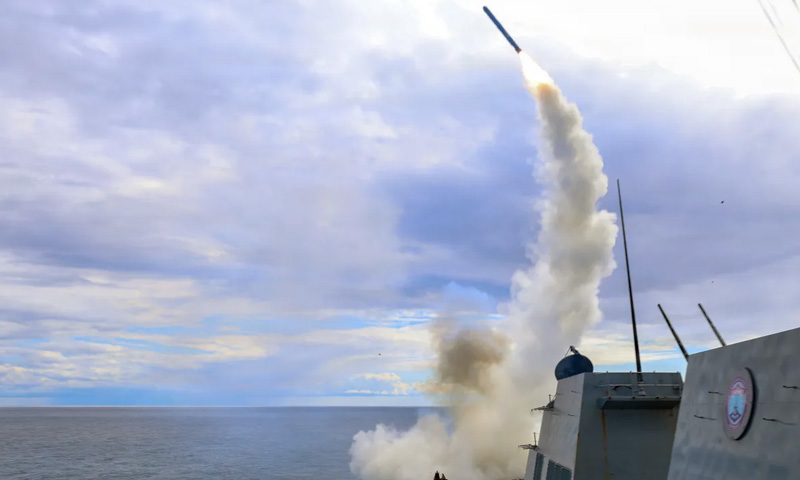
In a startling development, the Pentagon reportedly told congressional staff on Sunday that Iran had no immediate plans to attack US forces or bases in the Middle East unless provoked by Israel – directly contradicting the White House’s claim that Tehran posed an urgent, preemptive danger to American personnel, CNN reports.
The briefing, which lasted over 90 minutes and included staff from both parties on several national security committees, apparently offered no concrete evidence to back the administration’s justification for striking Iran, according to multiple attendees.
Early Saturday, the United States and Israel launched a series of coordinated attacks across Iran in what was dubbed “Operation Epic Fury,” prompting retaliatory strikes by Iran on US bases in the region.
These events represent a major escalation following recent nuclear negotiations between Washington and Tehran, dramatically raising the risk of a broader regional war. Notably, Iran had repeatedly denied pursuing nuclear weapons and had been engaged in diplomatic talks with the US only days before to avoid conflict.
The Pentagon’s disclosure now challenges the legal and political basis of the administration’s decision to carry out one of the largest US military operations in recent memory. Without evidence of an imminent threat, the strikes—which have already produced the first American casualties from Iranian retaliation – could face serious constitutional and legal scrutiny.
CONFLICTING ACCOUNTS
Administration officials told reporters Saturday that the strikes were launched to preempt missile attacks by Iran that could have caused massive US casualties. Yet, sources told CNN there was no intelligence supporting that claim, with Pentagon briefers instead citing longstanding threats from Iran’s ballistic missile program and proxy forces.
According to Politico, the CIA had been quietly cultivating contacts with Iranian officials for several weeks, and intelligence gathered influenced the timing and location of the strikes that killed Supreme Leader Ayatollah Ali Khamenei and other senior figures. While the White House claimed diplomacy was President Trump’s first choice, they argued Iran “refused to engage meaningfully.”
US Central Command said the strikes focused on locations that “posed an imminent threat,” such as air defense, drone, and missile sites, but did not provide evidence of a time-sensitive danger to US troops. Meanwhile, CNN reports that long-range precision munitions are being expended rapidly and will continue until the US and Israel are confident they have air superiority over Iran.
REACTIONS
Senate Intelligence Vice Chair Mark Warner, briefed on the situation, said he had seen no proof that Iran was preparing a preemptive strike against the US, adding that the president had “started a war of choice.”
Democratic Senator Andy Kim of New Jersey told Politico: “This is an example of the president deciding what he wanted to do, then asking the administration to find arguments to justify it.”
Republican Rep. Brian Mast of Florida said on Sunday Morning Futures that congressional Democrats’ response was troubling, warning they might try to limit the president’s authority to defend against Iran’s so-called imminent threat.
White House spokesperson Dylan Johnson defended the Pentagon briefing, emphasizing its 90-minute session with bipartisan staff. Meanwhile, Foundation for Defense of Democracies CEO Mark Dubowitz praised the strikes as unprecedented in targeting Khamenei, Soleimani, and Iran’s nuclear, missile, and terror infrastructure.
WHAT NEXT
Top US officials, including Secretary of State Marco Rubio, Defense Secretary Pete Hegseth, Joint Chiefs Chair Gen. Dan Caine, and CIA Director John Ratcliffe, are scheduled to brief the House on Tuesday, with a Senate briefing also planned.
You May Also Like