- Web Desk
- 16 Minutes ago
Persistent barriers: Why women’s voices remain muted in Bangladesh’s political arena
-

- Web Desk
- Feb 02, 2026
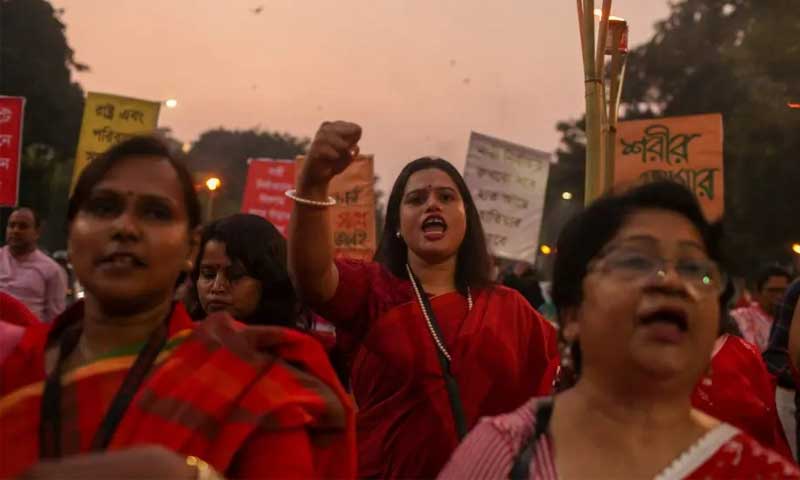
WEB DESK: With Bangladesh’s crucial parliamentary elections just days away on February 12, a troubling pattern persists: women’s voices are largely absent from candidate lists, raising fresh questions about gender equity in the neighbour’s evolving political landscape.
According to ANN, out of nearly 2,000 candidates contesting the 300 general seats, only around 78 are women roughly 3.9 to four percent of the total field. More than two-thirds of constituencies have no female contender at all, while over 30 of the 51 participating parties, including the influential Jamaat-e-Islami, have nominated zero women. Even the Bangladesh Nationalist Party (BNP), a major player, has fielded fewer than 10 female candidates, falling well short of its reform commitments.
This low representation stands in sharp contrast to women’s numerical strength as voters they form nearly half of the electorate, around 62 million out of 128 million registered voters. Yet parties appear reluctant to back them in competitive races, often citing cultural conservatism, a lack of “electability,” or the high-stakes demands of funding and patronage networks that favour male candidates.
Many of the women who are running owe their place to family ties: nearly a third are wives, daughters, or relatives of prominent male politicians, underscoring how access to power remains dynastic rather than merit-based for female aspirants.
From the Streets to the Sidelines: Post-Uprising Exclusion
The irony is stark following the 2024 student-led uprising that toppled long-time Prime Minister Sheikh Hasina. Women and young girls played visible, courageous roles in street protests demanding justice and reform. Images from those months showed schoolgirls in uniforms holding placards, women marching with fists raised, and crowds demanding accountability. Yet in the post-uprising transition, that momentum has not translated into greater political inclusion.
Reform efforts under the interim government and the National Consensus Commission fell short. The July 2025 National Charter urged parties to nominate at least 5 per cent women for general seats a modest target with a longer-term goal of 33 per cent but compliance has been patchy at best. Legal provisions for 50 reserved seats for women exist, filled indirectly through party lists, but critics argue this creates a “ceiling,” channelling women into symbolic roles rather than competitive ones.
Online and offline backlash has compounded the barriers. Women who speak out face intensified digital harassment, moral policing, and character assassination tactics that parties often view as electoral risks, deterring them from fielding more female candidates.
For Pakistanis watching closely, the situation echoes familiar challenges: despite constitutional quotas and women’s active roles in movements, entrenched patriarchal attitudes, party gatekeeping, and resource disparities continue to limit direct electoral power. Bangladesh’s experience serves as a reminder that democratic transitions alone do not automatically dismantle gender biases in politics.
As Bangladeshis head to the polls, the low number of women candidates highlights an unfinished aspect of the revolution. True democratic renewal will require not just fair elections, but deliberate steps to ensure that half the population can contest and win on equal terms. Until then, the ballot risks remaining a space where women’s agency is celebrated in the streets but sidelined in the halls of power.
You May Also Like