
- WEB DESK
- October 6, 2026
Pete Hegseth says US prepared to resume strikes on Iran if talks fail
-

- Zoya Anwer
- May 30, 2026
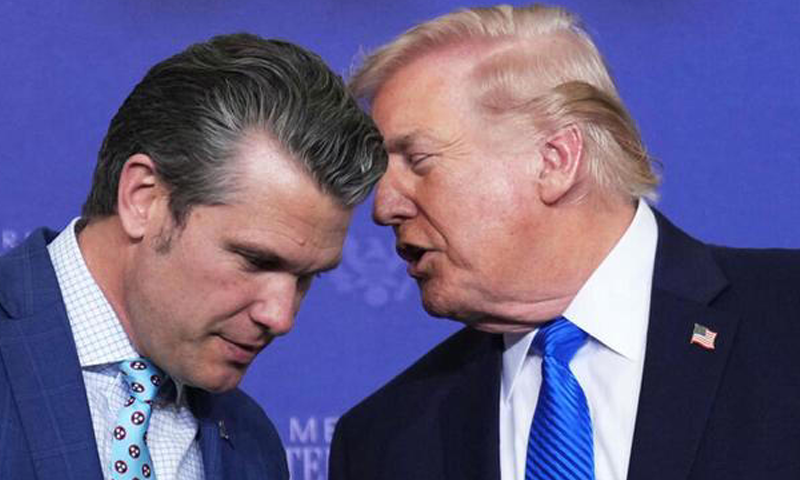
SINGAPORE: US Defence Secretary Pete Hegseth said on Saturday that Washington remains prepared to launch fresh military action against Iran if ongoing negotiations fail to produce an agreement, while stressing that the United States possesses the resources and capabilities to sustain such operations if required.
Speaking at the Shangri-La Dialogue security summit in Singapore, Hegseth said the US military was fully equipped to restart attacks should diplomatic efforts break down.
“Our ability to resume operations, if necessary, remains intact,” he said, adding that American military stockpiles and deployments around the world placed the country in a strong strategic position.
His comments came as US and Iranian negotiators continued efforts to overcome key disagreements that have prevented a broader settlement aimed at ending months of conflict and reducing tensions in the region.
Hegseth also rejected suggestions that Washington’s focus on the Middle East had weakened its commitment to the Asia-Pacific. He said the United States was capable of managing multiple security challenges simultaneously and was rapidly expanding its defence production capacity.
“We can handle more than one challenge at a time,” he said, noting that the US was significantly increasing weapons and munitions production to support military plans across different regions.
The Pentagon chief said President Donald Trump remained committed to securing a diplomatic outcome and was seeking an agreement that would prevent Iran from acquiring a nuclear weapon.
The remarks follow Trump’s announcement on Friday that he would convene a meeting in a secure room at the White House to make a final decision on a proposed framework to end the Iran conflict. The proposal would extend a ceasefire that has been in place since early April for another 60 days, allowing negotiators additional time to pursue a permanent settlement.
The war commenced by the United States and Israel on February 28, has resulted in thousands of deaths, primarily in Iran and Lebanon, while also disrupting global energy markets. Concerns over shipping through the Strait of Hormuz have contributed to higher energy prices and broader economic uncertainty worldwide.