- WEB DESK
- November 3, 2026
Petroleum minister hints at ‘good news’ on fuel prices
-

- WEB DESK
- November 3, 2026
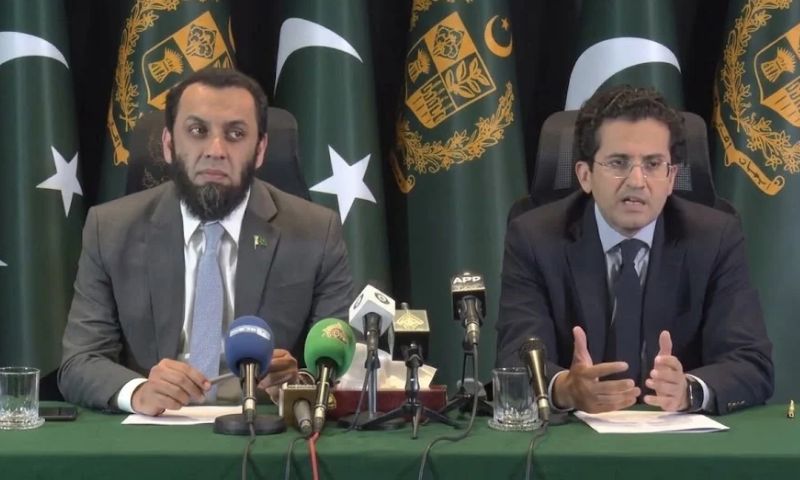
ISLAMABAD: Petroleum Minister Ali Pervez Malik on Tuesday hinted at a possible reduction in petroleum prices, saying people would soon hear “good news”.
Speaking at a press conference alongside Information Minister Attaullah Tarar, Malik said the government had so far provided subsidies worth Rs1,300 billion to the people.
He also said the government had received complaints about liquefied petroleum gas (LPG) being sold at prices ranging from Rs600 to Rs700, warning of challenges in meeting demand ahead of the winter season.
Malik said Pakistan’s annual LPG demand stood at around 2.4 million tonnes, or 6,500 to 7,000 tonnes per day, while domestic production amounted to 2,000 to 2,500 tonnes daily.
He said nearly half or more of the country’s LPG supplies had previously arrived through the western border, but disruptions had affected this source. The remaining supplies were imported through two terminals operated by Engro and SSGC LPG, which have a combined storage capacity of around 14,000 tonnes.
Malik said some market players had sought to exploit supply constraints and charge consumers higher prices, adding that the government had received complaints about LPG prices reaching Rs700-800 per kg in different cities.
He said the government was working to ensure adequate gas supplies during the winter, particularly in December and January, when demand typically rises.
The government would try to provide piped gas to households during the three main meal times, while LPG would be needed for other domestic requirements and for consumers not connected to the gas network, he added.
Malik said the government was also considering importing LNG, even at higher prices, to meet demand through the piped gas system.
He acknowledged that Pakistan lacked adequate investment in energy infrastructure, including storage facilities, refineries and LPG handling capacity.
The minister said the global LPG transportation system had increasingly shifted from pressurised vessels to refrigerated and cryogenic cargoes, but Pakistan lacked the infrastructure to handle larger vessels and store their cargoes.
He said Prime Minister Shehbaz Sharif was overseeing work on a broader energy security framework to address these shortcomings.
On LPG pricing, Malik said Saudi Aramco announced a monthly contract price for propane and butane, which served as a benchmark for the market. The Oil and Gas Regulatory Authority (OGRA) subsequently issued price notifications based on that benchmark.
He said that the government plans to open Pakistan’s liquefied petroleum gas (LPG) market to greater competition, end the existing allocation and quota system, and establish a fund to provide subsidised fuel to low-income households.
Malik said the government would encourage public and private sector companies to import LPG at competitive prices and ensure that the benefit was passed on to consumers.
He said Pakistan now met around 70 per cent of its LPG requirements through imports, while domestic production accounted for the remaining demand. The country’s reliance on imports had increased over the years as energy needs grew, making the existing pricing mechanism inadequate to cover the cost of bringing imported LPG into the country.
Malik said the Saudi Aramco contract price for LPG had risen from $540 per tonne in March to $756 per tonne in the latest revision, prompting the Oil and Gas Regulatory Authority (OGRA) to update its prices accordingly.
He said the government had decided to introduce competition in the sector so that companies could import fuel at the lowest possible cost and make it available to consumers at fair prices.
Under the proposed arrangement, state-owned companies, including Pakistan State Oil (PSO), Sui Southern Gas Company (SSGC) and Pakistan LNG Limited, would be encouraged to procure LPG through government-to-government and business-to-business agreements.
He said the companies had already made progress in this regard, adding that private sector importers would also be encouraged to bring in LPG to increase supplies and competition.
The minister said the companies importing LPG would publish a monthly breakdown of costs on their websites, including the Saudi Aramco benchmark price, import premium, freight charges and other costs, as well as the price at which the product would be supplied locally.
Malik said the move was aimed at bringing transparency to the pricing mechanism and allowing consumers to understand how LPG prices were determined.
He also announced plans to end the existing quota and allocation system for locally produced LPG, alleging that it had enabled a cartel-like arrangement through which billions of rupees went to a limited number of players.
Under the new system, domestic LPG producers would be directed to sell their output in lots of five to 10 tonnes through auctions. The auction results would be made public, with the process overseen by the companies’ boards, the petroleum secretary and the OGRA chairman.
He said the auctions would ensure transparent distribution among OGRA-licensed operators and eliminate the practice of seeking quotas and allocations through influence.
Protection for low-income consumers
The minister said the government was also working on a mechanism to shield vulnerable households from higher LPG prices as the market shifted towards import-parity pricing.
He said the 10 per cent quota reserved under the LPG policy for hard areas had not been distributed transparently in the past. State-owned companies would now be required to procure this share from producers and distribute it fairly among designated districts in consultation with provincial chief secretaries.
Malik said the government would also establish a price stabilisation fund and a vulnerable protection fund using additional revenue generated through the auction mechanism.
Under the proposed arrangement, domestic producers would receive the benchmark free-on-board (FOB) price, while the additional amount generated through auctions would be channelled back into the two funds.
The government would use the funds to provide LPG at subsidised rates to eligible households, with the beneficiaries identified in consultation with the Benazir Income Support Programme (BISP) and provincial governments, he added.
The minister said the government wanted to ensure that the benefits of lower-cost imports and increased competition reached consumers, while assistance was directed towards those who needed it most.
You May Also Like
- Reuters
- November 3, 2026
Trump says US will stop $4bn funding to Israel at end of 2026

- WEB DESK
- November 3, 2026