- WEB DESK
- August 27, 2026
PIMS fire discussed as IHC hears prisoners’ pleas for private treatment
-

- Farah Mehjabeen
- August 27, 2026
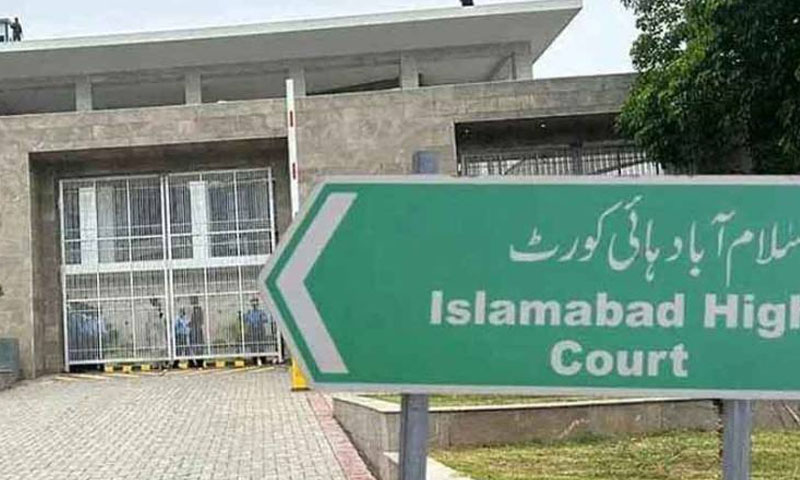
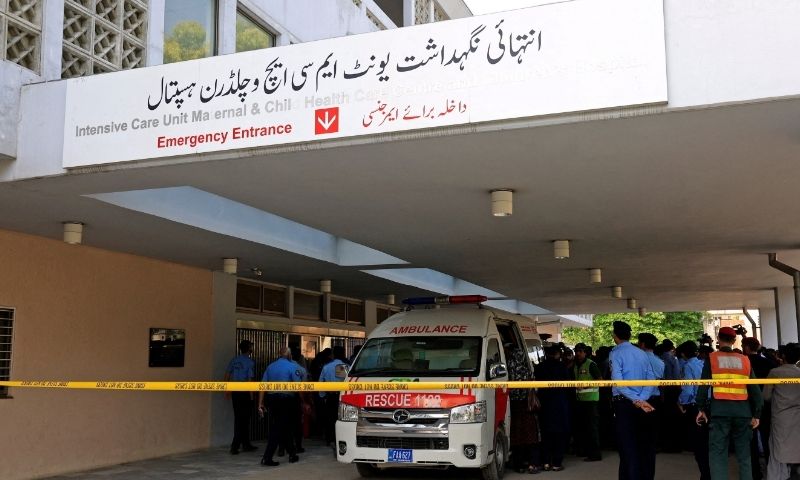
ISLAMABAD: The deaths of 14 newborns in a fire at the Pakistan Institute of Medical Sciences (PIMS) featured prominently during an Islamabad High Court (IHC) hearing on Thursday as the court considered petitions by three prisoners seeking treatment at private hospitals.
Justice Muhammad Asif was hearing petitions filed by prisoners Owais Altaf, Ilyas Khan and Muhammad Ismail, who have sought relief similar to that granted to PTI founder and former prime minister Imran Khan for private medical treatment.
Islamabad Advocate General Naveed Malik, Punjab Advocate General Barrister Zafarullah and jail officials appeared before the court, where reports concerning the three prisoners were also submitted.
During the hearing, Justice Asif questioned the adequacy of medical care available to prisoners and referred to the PIMS tragedy while discussing the government’s responsibility to ensure proper healthcare.
“Our situation is that 14 children died yesterday,” the judge remarked, referring to the fire that killed newborns at the hospital.
He questioned how people could be expected to seek treatment if adequate facilities were not available even at a major hospital such as PIMS.
“Such incidents must be prevented; this is the government’s responsibility,” Justice Asif told the Islamabad advocate general.
Barrister Zafarullah said there was no defence for what had happened at PIMS, describing the incident as deeply distressing.
“There is no explanation for yesterday’s incident. My head bowed in shame over what happened,” he said.
Justice Asif also expressed concern that the incident had occurred at a hospital in Islamabad, the federal capital, and questioned how people could seek medical treatment in such circumstances.
Imran Khan’s treatment order cited
The lawyers representing the prisoners then relied on an August 18 Supreme Court (SC) order concerning Imran Khan to argue that similar relief should be available to other inmates.
One of the petitioners’ lawyers said the case before the high court involved an under-trial prisoner and that the SC had granted relief in the case of a convicted prisoner.
He said the SC had ordered that Imran Khan be shifted to Shifa International Hospital within two days and read the apex court’s order before the IHC.
According to the lawyer, the SC order appeared to establish that the prison rule requiring inmates to be treated at a government or civil hospital was not binding in such circumstances.
The lawyer said the prisoner seeking relief had applied to the superintendent of Adiala Jail for specialised treatment. The superintendent, however, had told him that under the rules, prisoners could only be shifted outside the jail to a government hospital.
“The rules specifically mention a civil hospital,” the lawyer said.
He acknowledged the difficulty faced by jail authorities, saying allowing every prisoner to demand treatment at a private hospital could place an additional burden on the national exchequer. However, he maintained that the SC’s August 18 order remained in force and that the high court was bound to implement the apex court’s decision.
“We respect the SC’s decision,” the lawyer said, arguing that the order had also taken the prisoner’s wishes into account.
“If the wishes of one prisoner are being accommodated, why can the same facilities not be provided to an ordinary prisoner?” he asked.
He also said he was willing to bear the cost of treatment at a private hospital himself.
The lawyer further alleged that authorities were unwilling to allow ordinary prisoners to receive treatment at private hospitals, while doctors from private hospitals were being called into the jail to treat inmates.
Prisoner with internal bleeding seeks private treatment
The court was told that one of the prisoners was suffering from internal bleeding, which his lawyer described as a condition related to thalassaemia.
“How long has this patient been in jail?” Justice Asif asked.
The lawyer replied that the prisoner had been incarcerated for six months and had been taken to hospital several times for treatment.
He said the prisoner was suffering from internal bleeding in the large intestine, creating a potentially life-threatening situation. The lawyer requested that the inmate be shifted to a private hospital, arguing that appropriate medical facilities had to be provided and that jail authorities would be responsible if adequate treatment was not ensured.
He again referred to the SC’s August 18 order, saying it remained operative.
Justice Asif, however, pointed out that the SC case cited by the lawyer was still pending.
Muhammad Ismail’s medical condition
Another petitioner, Muhammad Ismail, appeared through his lawyer via video link.
The lawyer said Ismail was an under-trial prisoner who had been in jail for six months and suffered from a heart condition. He further told the court that the lower part of Ismail’s body was not functioning properly and that the prisoner was unable to walk.
According to the lawyer, the superintendent of Adiala Jail had rejected a request for treatment without consulting a doctor.
“Is the jail superintendent also a doctor?” Justice Asif asked. The lawyer responded that the superintendent might have received relevant education.
Two issues before court
Punjab Advocate General Zafarullah told the court that the three petitions concerned two issues, medical treatment and video calls. Justice Asif asked what a prisoner suffering from an illness was expected to do if he required treatment outside the jail.
Zafarullah said that if the law permitted such treatment, the prisoner’s request would be accommodated.
He also defended the availability of medical expertise at PIMS, saying some of the country’s most senior office-holders received treatment there.
“PIMS has some of the best doctors,” he said, adding that an incident could happen anywhere.
The judge’s remarks, however, linked the debate over prisoners’ access to healthcare with the broader questions raised by the PIMS fire, including whether major public hospitals had adequate facilities to protect and treat vulnerable patients.
The three petitions also raise the wider question of whether the facilities and concessions granted to individual prisoners under specific court orders can be extended to ordinary inmates facing serious medical conditions.