
- Web
- 1 Hour ago
PM announces AI training for millions as Pakistan enters global tech race
-

- Web Desk
- Feb 09, 2026
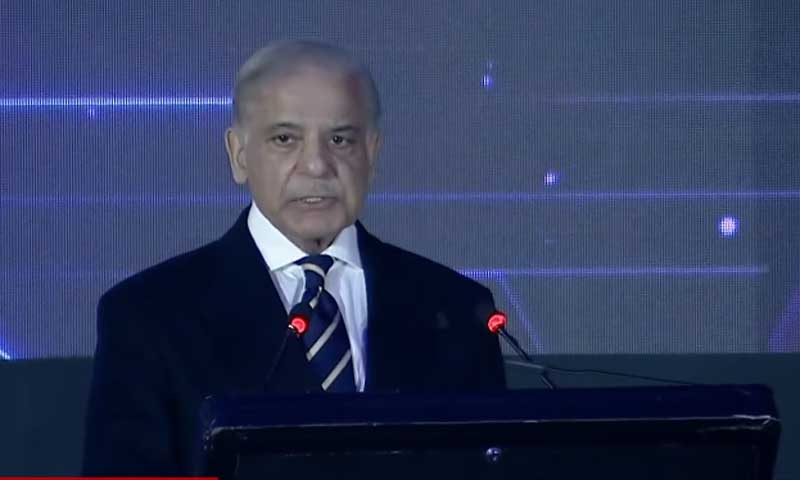
ISLAMABAD: Prime Minister Shehbaz Sharif on Monday said Indus AI Week marks a turning point for Pakistan’s technological future, with the potential to transform the country’s digital landscape and position it as a credible global partner in artificial intelligence and emerging technologies.
Addressing the inaugural session, the prime minister said Pakistan was moving forward with collective resolve and renewed enthusiasm, stressing that the country was now prepared to enter the global AI arena. He noted that while artificial intelligence offers immense opportunities for economic growth and innovation, it also presents complex challenges that must be addressed through careful planning, regulation and capacity building.
AI central to Pakistan’s future growth
PM Sharif said AI had become a defining force of the modern era and that equipping Pakistan’s workforce with advanced skills was no longer optional but essential. “Preparing our people with modern knowledge and technical expertise is the need of the hour,” he said, adding that the government was committed to ensuring inclusive access to digital education and training.
Highlighting the demographic advantage, the prime minister noted that nearly 60 percent of Pakistan’s population of around 240 million comprises youth. He said this demographic reality places a responsibility on the state to invest heavily in skills development so young people can compete in a rapidly evolving global economy.
As part of this effort, he announced that one million non-IT professionals would be trained in artificial intelligence, while 1,000 fully funded PhD scholarships would be awarded to students specialising in AI and related fields. These initiatives, he said, aim to build a strong pipeline of local talent and reduce reliance on foreign expertise.
Lessons from Punjab’s digital reforms
Recalling his tenure as chief minister of Punjab, Shehbaz Sharif said several landmark initiatives were launched to strengthen education, healthcare and youth development, with a particular focus on information technology. He said these included the provision of laptops to meritorious students, the establishment of e-libraries, and the creation of technology-driven learning environments.
The prime minister said Punjab also witnessed the launch of the country’s first Safe City project and the establishment of Pakistan’s first IT university in Lahore, which laid the foundation for technology-led governance and innovation.
He added that digitisation of land records was another major reform that ensured transparency, curbed corruption and improved service delivery. “Reforms in land records eliminated malpractice among revenue officials and restored public trust,” he said, noting that the introduction of e-stamp papers further contributed to an increase in national revenue.
Security, transparency and economic efficiency
PM Sharif said technology-driven reforms were also extended to trade and border management. He said modern scanners and equipment had been installed at ports to curb smuggling and enhance transparency, adding that these measures strengthened revenue collection and economic governance.
He said the government was focused on ensuring that technological progress reaches beyond urban centres. Efforts are underway, he added, to extend digital infrastructure and training programmes to rural areas so youth across the country can benefit from modern knowledge and skills.
Vision 2025 and the road to the Fourth Industrial Revolution
Federal Minister for Planning, Development and Special Initiatives Ahsan Iqbal, speaking on the occasion, said the launch of Indus AI Week comes at a critical juncture, as artificial intelligence has emerged as one of the most pressing needs of the modern era.
He said Pakistan was placed on the path of digital development under the leadership of former prime minister Nawaz Sharif, with sustained investment in science, technology and IT. According to the minister, Vision 2025 played a pivotal role in prioritising the IT sector and preparing Pakistan for the Fourth Industrial Revolution.
Iqbal highlighted that the issuance of 3G and 4G licences significantly expanded digital connectivity across the country, enabling greater access to online services, innovation and entrepreneurship. He added that dedicated centres for IT, artificial intelligence and allied fields were established to strengthen institutional capacity.
Building self-reliance in advanced technologies
The planning minister said a National Cyber Security Centre was also set up to counter emerging digital threats and enhance national resilience. The objective behind establishing such centres, he said, was to achieve self-reliance in advanced technologies and reduce dependence on external expertise.
He described Indus AI Week as an important platform for fostering innovation, collaboration and awareness in emerging technologies, adding that it reflects the government’s long-term commitment to building a digitally empowered and future-ready Pakistan.
Both leaders stressed while AI offers transformative benefits, its responsible adoption requires foresight, investment and strong institutional frameworks. Indus AI Week, they said, signals Pakistan’s intent to embrace technological change and position itself meaningfully in the global digital economy.
You May Also Like