
- WEB DESK
- October 25, 2026
PM reviews implementation of National Tariff Policy 2025-30
-

- Sadia Basharat
- June 4, 2026
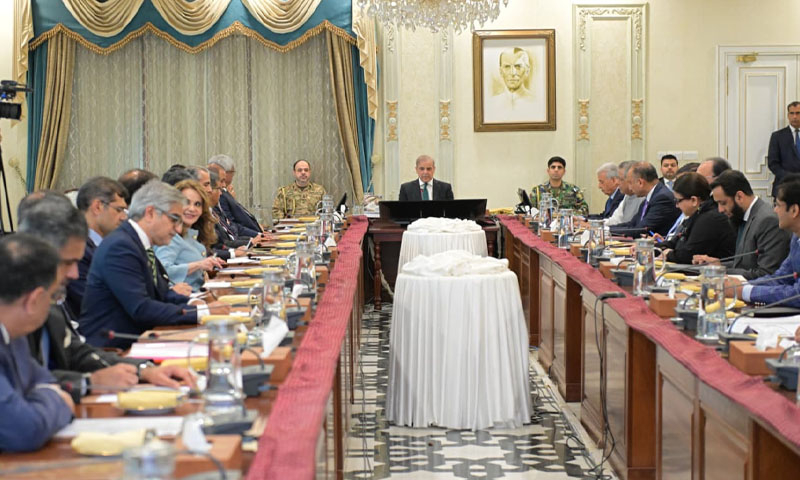
WEB DESK: Prime Minister Shehbaz Sharif on Thursday chaired a high-level meeting to review the implementation of the National Tariff Policy 2025-30 and the country’s overall economic growth strategy, reiterating that achieving export-led growth remained the government’s foremost priority.
During the meeting, the prime minister emphasised the importance of an active and transparent National Tariff Commission, describing it as essential for promoting industry, trade and investment in the country.
He directed the commission to play a proactive role in facilitating investors and industrialists and called for institutional reforms based on international best practices.
The premier also underscored the need to modernise the commission through the use of advanced technologies, including information technology and artificial intelligence, to improve efficiency and transparency.
Tariff reforms to support economic growth
Officials briefed the meeting on the implementation of the National Tariff Policy 2025-30, under which tariffs across various sectors will be reduced in phases to support export-oriented economic growth.
According to the briefing, duties on reefer containers and semi-trailers will be abolished to encourage the development of the logistics sector and improve supply chain efficiency.
The policy also envisages a reduction in customs duties on specialised vehicles and machinery to support growth in the construction industry.
The participants were informed that these measures were aimed at enhancing competitiveness, reducing business costs and creating a more favourable environment for investment and industrial expansion.
Relief for Pharmaceutical Sector
The meeting was further informed that customs duties on raw materials used by the pharmaceutical industry, particularly those required for the production of cancer medicines, would be eliminated under the new policy framework.
Officials said the move would help lower production costs, improve the availability of critical medicines and strengthen the domestic pharmaceutical sector.
The meeting was attended by Deputy Prime Minister and Foreign Minister Ishaq Dar, Law Minister Azam Nazeer Tarar, Climate Change Minister Musadik Malik, Economic Affairs Minister Ahad Khan Cheema, Finance Minister Muhammad Aurangzeb, Petroleum Minister Ali Pervaiz Malik, Minister of State for Finance and Railways Bilal Azhar Kayani, Special Assistant to the Prime Minister Haroon Akhtar, and other senior government officials.