- Farah Mehjabeen
- October 26, 2026
PM seeks business community’s input to boost export-led growth
-

- WEB DESK
- September 8, 2026
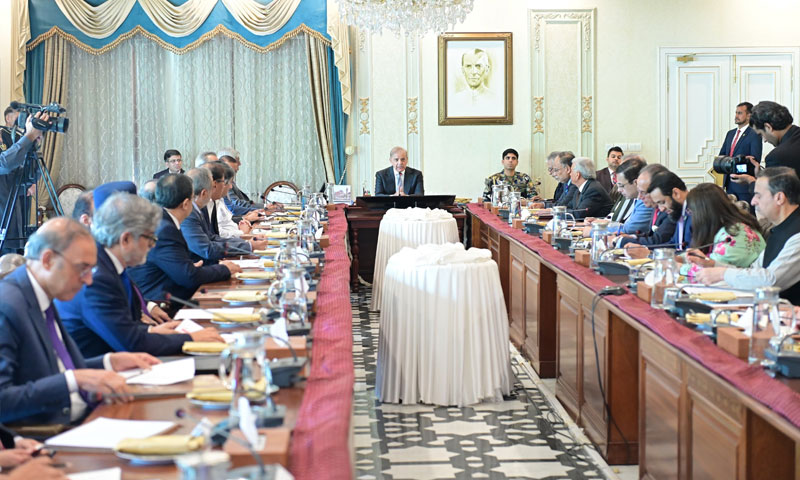
ISLAMABAD: Prime Minister Shehbaz Sharif on Tuesday welcomed proposals from leading businessmen and industrialists to promote export-led economic growth and directed authorities to review an extension of the super tax exemption for exporters.
The prime minister made the remarks during a meeting with a delegation of prominent business leaders at the Prime Minister’s House, where he discussed measures to promote exports, industry and investment.
The delegation included prominent businessmen and industrialists including Mian Muhammad Mansha, Arif Habib, Saqib Shirazi, Atif Bajwa, Muhammad Ali Tabba, Musadaq Zulqarnain, Umar Saeed, Samad Dawood and others.
Welcoming the delegation, the prime minister said the meeting was aimed at consulting the business community on ways to promote export-led economic growth.
He thanked business leaders for their proposals during the budget-making process, saying several of their recommendations had been incorporated into the budget.
Shehbaz said the government was taking measures to promote business activity and improve the ease of doing business, while reducing energy costs remained among its key priorities.
He also expressed his resolve to strengthen the recently established Trade Facilitation Board as an effective institution for promoting trade and welcomed proposals from the business community to improve its performance and scope.
The prime minister said the Special Investment Facilitation Council had provided investors and the business community with a simplified platform offering facilities through a one-window operation.
He said work was also under way on a regulatory guillotine to reduce unnecessary regulatory burdens on businesses, simplify rules and regulations and lower compliance costs.
The prime minister said significant progress had been made in digitising the Federal Board of Revenue, adding that the tax authority had collected Rs800 billion through enforcement measures during the last fiscal year.
While macroeconomic conditions had improved significantly due to the efforts of the government’s economic team, he said further work was needed at the microeconomic level to ensure that the benefits of economic recovery reached the people.
Shehbaz said the government was focusing on training a workforce according to the needs of industry so that young people could acquire skills aligned with market requirements.
He also directed relevant authorities to take immediate steps to address the business community’s problems and ordered a review of extending the super tax exemption for exporters.
The delegation was briefed on government measures aimed at improving the economy and promoting business, trade and industry.
Officials told the meeting that port charges had been reduced and operational capacity at the country’s ports improved. Work was also under way on upgrading the M-10 motorway and the Pipri Freight Corridor to improve connectivity between Karachi’s ports and the rest of the country.
The meeting was also informed that construction of the M-13 motorway between Kharian and Rawalpindi would reduce travel time between Lahore and Islamabad, while the upgrading of Pakistan Railways would improve infrastructure and speed up the transportation of commercial goods.
Officials said government measures had contributed to a record increase in the country’s IT exports. The government was also providing training to one million people in information technology and artificial intelligence, the delegation was told.
The meeting was further informed that measures were being taken to promote small and medium-sized enterprises and increase their participation in the export sector, while financing facilities were also being expanded for SMEs.
Business leaders welcomed improvements in macroeconomic stability and expressed confidence in the government’s economic reforms and policy measures.
You May Also Like