- Web Desk
- 9 Minutes ago
PM Sharif, Iran’s Pezeshkian discuss ceasefire, future negotiations
-

- Web Desk
- 6 Minutes ago
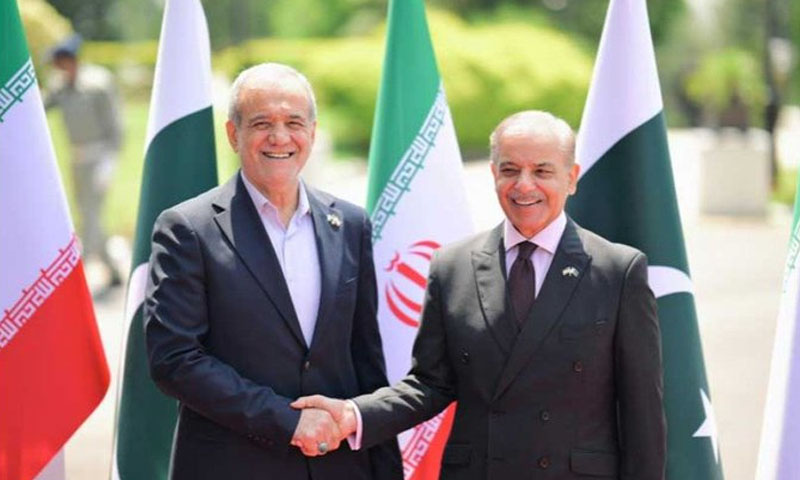
ISLAMABAD/TEHRAN: Pakistan’s Prime Minister Shehbaz Sharif held a telephone conversation with Iranian President Masoud Pezeshkian on Wednesday, during which the two leaders discussed the ceasefire and the formal launch of negotiations, according to Pakistan’s foreign ministry sources.
During the call, Prime Minister Sharif congratulated the Iranian president on the ceasefire, sources said.
The two leaders also discussed the evolving regional situation and the need to move forward with formal talks, the sources added.
President Pezeshkian appreciated Pakistan’s efforts in facilitating the ceasefire and diplomatic engagement, according to the sources.
Prime Minister Sharif also praised Iran’s leadership for agreeing to open the Strait of Hormuz and expressed gratitude for the move, the sources said.
During the conversation, the Iranian president referred to the upcoming visit of Iran’s parliament speaker as part of the negotiation process, sources said.
President Pezeshkian welcomed talks aimed at achieving lasting peace, expressing hope that the discussions would yield positive results, according to the sources.
Iran’s parliament speaker Mohammad Bagher Ghalibaf and US Vice President JD Vance are expected to lead their respective delegations at high-stakes talks in Islamabad on Friday, as a fragile ceasefire between Washington and Tehran opens a narrow window for diplomacy.
Iran’s state news agency ISNA reported that Ghalibaf would head Tehran’s negotiating team, while Vance is likely to represent the United States, marking a rare high-level engagement between the two sides after weeks of escalating hostilities.
The talks follow a two-week ceasefire announced earlier after US President Donald Trump said he would halt military action against Iran following conversations with Prime Minister Shehbaz Sharif and Pakistan’s military chief Field Marshal Syed Asim Munir.
The truce, contingent on Iran ensuring safe passage through the Strait of Hormuz, has eased fears of a wider regional war and allowed diplomatic efforts to gain momentum.
Iran is expected to table a broad 10-point proposal during the Islamabad talks, covering not only its nuclear programme and regional security concerns but also the lifting of primary and secondary US sanctions imposed over the past four decades, according to ISNA.
The negotiations are likely to test whether both sides can move beyond the immediate ceasefire toward a more durable agreement, with deep mistrust still overshadowing relations.
Trump said he believed China had played a role in bringing Iran to the negotiating table, although Beijing has not provided details of its involvement. China’s foreign ministry said it welcomed the ceasefire and had consistently called for an immediate halt to hostilities and a return to political dialogue.
The ceasefire has drawn broad international support, with countries including France, Saudi Arabia and China praising Pakistan’s mediation efforts in helping secure the agreement.
You May Also Like