- Web Desk
- 18 Minutes ago
President Zardari summons joint Parliament session on March 2
-

- Web Desk
- Feb 26, 2026
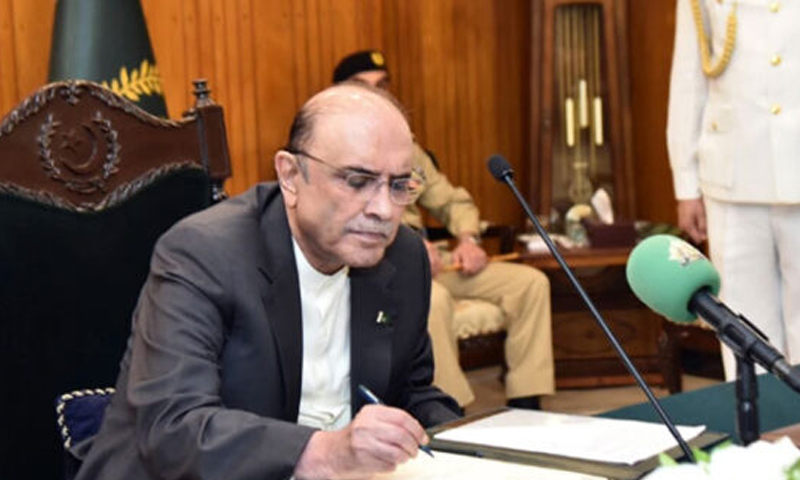
WEB DESK: President Zardari has convened a joint session of Parliament on March 2, marking the formal commencement of the new parliamentary year.
A notification issued by the National Assembly Secretariat stated that the session has been summoned under Article 54(1), read with Article 56(3), of the Constitution. Both Houses will meet at Parliament House in Islamabad at 10:30am on Monday.
Earlier, a message posted on the Presidency’s official X account had announced that the president approved the summary to convene the session and indicated it would begin at 3pm. However, the National Assembly Secretariat later revised the timing to 10:30am in its official notification.
The joint sitting is part of a longstanding parliamentary tradition held at the start of each parliamentary year. Under Article 56 of the Constitution, the president is required to address both Houses at the beginning of the first session of the year.
This will be President Zardari’s ninth address to a joint sitting in his capacity as head of state. In his speech, he is expected to lay out key national priorities, underscore the importance of democratic continuity and constitutional supremacy, and discuss strategies for sustainable economic growth.
The address is also likely to touch upon regional and international developments, as well as the country’s ongoing efforts to combat terrorism.
Political observers anticipate that President Zardari may adopt a firm tone toward the government. In recent weeks, he has publicly expressed concerns over certain policy decisions and has indicated dissatisfaction over what he described as insufficient consultation with coalition partners, including the Pakistan Peoples Party (PPP).
His reservations were evident when he recently returned several significant bills without granting assent, despite their passage by both Houses of Parliament.
The upcoming session is expected to provide important signals regarding the evolving dynamics between the presidency and the government, as well as the broader political direction for the year ahead.
You May Also Like