
- Web Desk
- September 18, 2026
PTI protest: Naqvi says no one will be allowed to ‘storm’ Islamabad after IHC verdict
-

- WEB DESK
- September 18, 2026
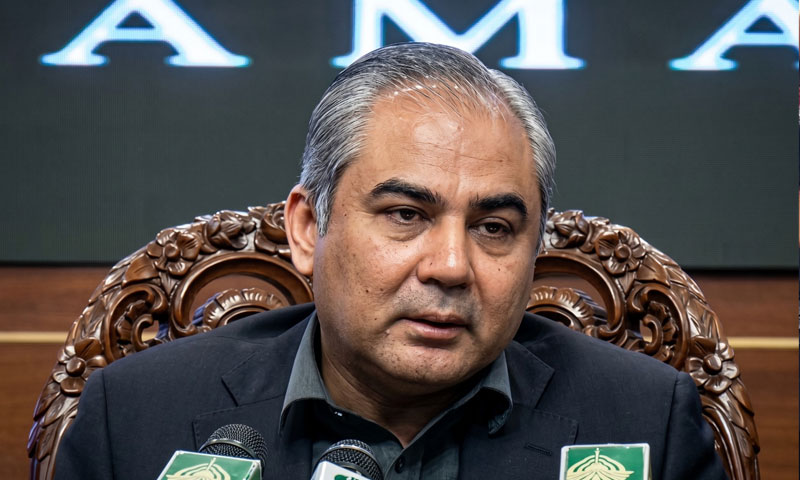
ISLAMABAD: Interior Minister Mohsin Naqvi on Friday warned that organisers of any protest in Islamabad would be held responsible if anyone died during the planned demonstrations, as he urged political leaders to reconsider attempts to march on the federal capital in light of a recent Islamabad High Court (IHC) judgement on protests.
Addressing a press conference in Islamabad, Naqvi said law enforcement agencies had been clearly directed to take legal action against anyone violating the court’s judgement and to prevent them from entering the federal capital.
“If anyone tries to come out and violates the Islamabad High Court judgment, we will first legally approach the court for contempt proceedings and, secondly, stop them by every possible means,” he said.
The remarks came after the Islamabad High Court issued its detailed judgment in a case concerning the Pakistan Tehreek-e-Insaf’s proposed September 27 protest and long march, demanding the release of party founder Imran Khan and calling for what it describes as the supremacy of the Constitution.
The court observed that political parties have a constitutional right to peaceful assembly and political dissent, but their right to protest is subject to the Constitution and the law.
It stressed that a balance must be maintained between the right to political protest and the fundamental rights of other citizens, including their rights to life, liberty, dignity, freedom of movement and access to hospitals, educational institutions and courts.
The court also held that any activity resulting in a violation of citizens’ fundamental rights would amount to a violation of the Constitution, with those responsible liable to face legal action in accordance with the law.
Naqvi said political parties had the right to protest but should hold demonstrations in their own cities and areas rather than attempt to shut down the federal capital or “attack” another province.
“There is no justification for planning to shut down the federal capital or going to another province in this manner,” he said.
The interior minister said the government was also discussing rules of engagement for law enforcement personnel, noting that weapons had been used against security forces during previous protests and that the authorities had suffered significant losses.
He said law enforcement personnel were being given “very clear” rules of engagement, adding that they would respond if attacked.
Naqvi also referred to the deadly blast in Kohat, saying the country was already fighting terrorism in Khyber Pakhtunkhwa.
He urged political leaders to focus their efforts on combating terrorism rather than mobilising people, collecting funds and arranging transport for protests.
Naqvi said political parties should reconsider plans for protests in light of the terrorist attack in Kohat, where security forces and civilians were among those killed and injured.
Naqvi said the court’s directions were intended to protect the rights of Islamabad residents, including their access to hospitals, educational institutions, businesses and other essential services.
He said past protests had resulted in disruption to government operations and the movement of citizens, arguing that such disruption could isolate the federal capital from the rest of the country.
The interior minister said the Constitution protected citizens’ fundamental rights, including freedom of movement and peaceful assembly, but maintained that political activity had to remain within the framework of the law.
Government machinery
Naqvi said the court had specifically addressed the question of government machinery being used for political protests.
He said provincial chief secretaries and police chiefs would be responsible for ensuring that government resources, vehicles, personnel and other machinery were not used to facilitate a march towards Islamabad.
The IHC had earlier sought affidavits from the Khyber Pakhtunkhwa chief secretary and inspector general of police confirming that government machinery would not be used for the PTI’s Sept 27 protest.
The court subsequently directed provincial authorities to ensure compliance with its orders and instructed the Islamabad administration and Ministry of Interior to protect citizens’ constitutional rights.
Naqvi said officials who violated their oath of office by facilitating activities contrary to the court’s directions could face consequences.
“Whether it is me, Talal Sahib or anyone else sitting in this seat, it is our duty to protect life and property,” he said, referring to the responsibilities of the interior minister.
Protest or confrontation?
Naqvi drew a distinction between political rallies and what he described as groups arriving in the capital equipped for confrontation.
“Political rallies and processions happen, and political activity continues, but there is a difference between political gatherings and groups coming fully equipped,” he said.
He maintained that political parties could hold demonstrations, but argued that attempts to shut down the federal capital or enter it in violation of the law would not be permitted.
Naqvi also warned that the organisers of a protest would bear responsibility for any loss of life.
“I will repeatedly say that, God forbid, if even one life is lost, those responsible will be the organisers who are bringing this group together,” he said.
He urged opposition leaders to reconsider plans for the protest, saying political confrontation would not benefit them and could cause economic and social disruption.
“There are many sensible leaders in the opposition,” Naqvi said, expressing hope that they would reconsider their position following the court’s judgment.
Call for talks
The interior minister also urged the opposition to resolve political disputes through dialogue, saying Prime Minister Shehbaz Sharif had repeatedly offered talks in parliament.
He said the government remained willing to discuss political issues but would not accept attempts to resolve them through confrontational street mobilisation.
Naqvi said the government had finalised its preparations and that law enforcement agencies from the provinces and the federal government were ready to implement the court’s directions.
He said the authorities would not allow the kind of disorder that had occurred during previous protests.
Naqvi says peaceful protests allowed but govt will enforce IHC order
Answering a question, Naqvi said the government would continue to keep the doors open for political dialogue but maintained that there was no legal justification for holding the planned protest in Islamabad after the Islamabad High Court issued its detailed judgement.
Responding to another question, Naqvi said Prime Minister Shehbaz Sharif had repeatedly offered talks from the floor of the National Assembly and that he had reiterated the offer because it had already been made several times.
“After the Islamabad High Court order, there is no justification and no legal permission for this,” he said, adding that the detailed judgment should be read by all concerned so there was no confusion about its implications.
Asked whether the government would make further efforts to hold talks with the PTI leadership and whether it expected the planned demonstration to remain peaceful, Naqvi said peaceful political protest was a right, but stressed that it had to remain peaceful.
“I am still in favour of peaceful protest, but it should be peaceful,” he said, adding that political parties could hold demonstrations in their own provinces.
Naqvi says minimum disruption to Islamabad residents
Responding to concerns over the placement of containers and road closures ahead of the planned protest, Naqvi said he was personally against putting up containers but that security and law enforcement agencies sometimes required them as an option.
“I am personally against putting up containers. I have said this once or twice before as well that they should not be put up,” he said.
However, he said the government had to take such measures when security agencies insisted that the option should remain available to them.
Naqvi apologised in advance to Islamabad residents for the inconvenience and said the government would try to minimise disruption.
“If they protest, we have to secure Islamabad, and for that we will have to put up blockades,” he said. “But we will try to keep them to the minimum possible.”
He said the Red Zone and its buffer zones could create difficulties when sealed, but the authorities would try to minimise the inconvenience to residents.
No request received for protest, says Naqvi
Asked whether the government had received an application seeking permission for the protest and whether protesters would be allowed to stay at a designated location if they reached Islamabad, Naqvi said there was no question of granting permission.
“There is no question of an application,” he said.
Naqvi said Punjab and other law enforcement agencies had been consulted and were working together, adding that he did not believe there were any gaps in the arrangements.
“All of them were together, and I do not think there is any gap or any issue anywhere,” he said. “Hopefully, you will see all of them working together.”
Naqvi clarifies ‘one SHO away’ remark
Asked about the deteriorating law and order situation in Khyber Pakhtunkhwa and his earlier comment that the situation in Balochistan was “one SHO away” from being resolved, Naqvi said the remark had been taken out of context.
He asked journalists to watch the complete clip of his earlier press conference, saying he had immediately clarified that the comment was being made symbolically.
“I said that this is ‘one SHO away’ and then said in the next sentence that I was saying it symbolically,” Naqvi said.
He said the complete clip showed that he was referring to the strength of law enforcement agencies and that the intervening clarification had been omitted when the remark was circulated.
On the situation in Khyber Pakhtunkhwa, Naqvi said it was the responsibility of the provincial government to improve law and order in the province, focus on the issue and provide the necessary time and resources.
“That is their first and foremost responsibility,” he said.
Law enforcement ready, says interior minister
Asked whether Islamabad police had sufficient capacity to deal with the planned PTI long march, Naqvi said the capital police had to protect a large number of sensitive installations and diplomatic facilities.
He said Islamabad Police had to provide security to the President’s House, Prime Minister’s House, the Diplomatic Enclave, police stations and other important locations.
“When you take people out from all the police stations, Islamabad Police do not have more than two, three or four thousand personnel,” he said. “You cannot provide security with 3,000 people.”
He said the government therefore brought together other law enforcement agencies to supplement Islamabad Police.
Naqvi said a security meeting had been held and expressed confidence that the law enforcement agencies would work together to handle the situation.
“We have full confidence that our law enforcement agencies will work together and handle this situation very well,” he said.
Naqvi says medicine containers released after brief stoppage
Responding to a question about reports that police had stopped containers carrying medicines and whether this amounted to putting the lives of residents of the twin cities at risk, Naqvi rejected the characterisation.
He said police personnel could not immediately know what was inside the containers and released them after the drivers informed them that they were carrying medicines.
“They do not have buttons in their eyes to look inside and know whether there are medicines or not,” he said.
Naqvi said the containers had been stopped briefly and released within roughly half an hour to 45 minutes after the drivers provided the relevant information.
He added that the containers had already been released before he was informed about the matter.
“I had told the authorities to release them, but before I said so, they had already been released,” he said.
Naqvi also urged journalists to verify such details before reporting that citizens’ lives had been put at risk.
Naqvi leaves Imran’s hospital transfer to court
Asked whether the government could face contempt proceedings for not complying with a court order regarding the transfer of PTI founder Imran Khan to Shifa International Hospital, Naqvi said Islamabad administration had already submitted a detailed response to the court.
He said the matter was currently before the court and should be decided by the judiciary.
“As far as Shifa Hospital is concerned, I think Islamabad administration has submitted a detailed response to the court and the case is currently before it,” he said.
Naqvi said the government was concerned about Imran Khan’s health and treatment, adding that he did not think even his own supporters could be more concerned about ensuring that he received proper treatment.
He said security reasons for the decision had also been provided in the administration’s response.
“The court should decide that matter,” Naqvi said.
You May Also Like
- WEB DESK
- September 18, 2026
JI steps up anti-levy campaign, announces Islamabad arrival date

- WEB DESK
- September 18, 2026