
- WEB DESK
- November 11, 2026
Lahore tops global pollution ranking for third consecutive day as Punjab defends anti-smog strategy
-

- WEB DESK
- November 11, 2026
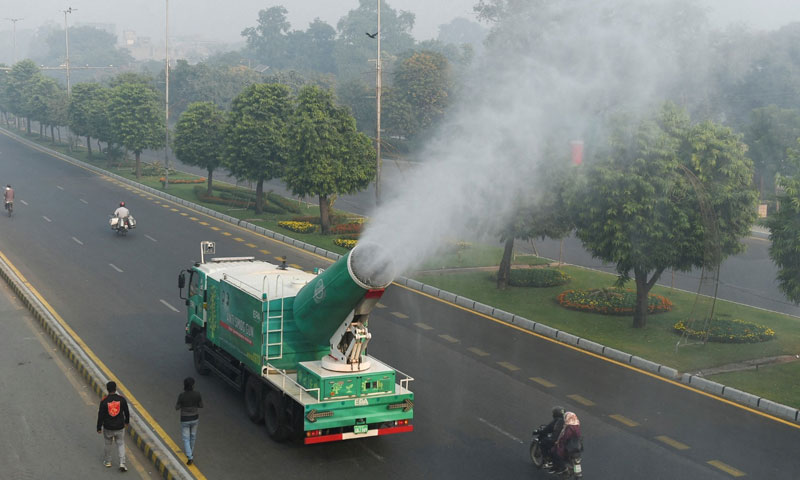
LAHORE: Punjab Senior Minister Marriyum Aurangzeb defended on Wednesday the provincial government’s anti-smog measures, claiming Lahore’s air quality has improved by 64% since 2023, even as the provincial capital remained the world’s most polluted major city for a third consecutive day.
According to IQAir’s live global ranking, Lahore was ranked first among the world’s most polluted major cities at 5pm on Wednesday, with an Air Quality Index (AQI) of 242. India’s capital New Delhi was second, with an AQI of 194.
Aurangzeb, who also holds the environment protection portfolio, said the government was treating air pollution as a scientific and public health issue rather than a political one.
She said Lahore’s average AQI in Gulberg had been kept below 300, compared with 2,024 recorded in the area on November 11, 2024.
Aurangzeb said Punjab had established an Environmental Protection Force comprising 1,000 personnel, equipped with vehicles, enforcement equipment, body cameras and thermal drone cameras to monitor pollution and ensure year-round implementation of environmental regulations.
She added that more than 9,000 industrial units across the province had installed environmental control systems, allowing authorities to monitor industrial emissions through live surveillance.
The minister said over 14,000 brick kilns had been converted to zigzag technology, while violations were being monitored through a digital identification system. She maintained that authorities were now focusing on enforcement, with action taken against industrial units and kilns found violating environmental regulations.
Aurangzeb further said Punjab had installed 81 internationally standardised industrial air-quality monitors, with the number expected to reach 100 by December. Data from the monitoring network, satellite imagery from NASA and wind-direction information were being integrated through the Punjab Climate Watch platform, she added.
On tackling agricultural emissions, the minister said farmers had been provided 10,045 super seeders at a 60% government subsidy to discourage crop-residue burning.
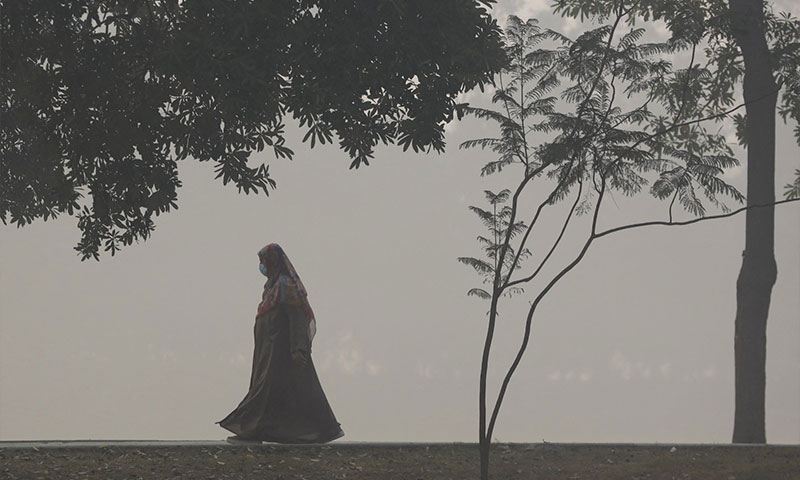
A woman walks wearing a mask amid smog and air pollution during the early morning in Lahore, November 11, 2026. — REUTERS
She said wheat sowing had been completed across 1.1 million acres using the machinery, while 187 balers were collecting rice straw for industrial use.
Aurangzeb also claimed that satellite fire alerts had declined by 24% despite an increase in rice harvesting, while fire alerts per 100,000 acres of harvested rice had fallen by 31%.
She said more than 650,000 vehicles had received fitness certificates through 40 private workshops, adding that vehicle emissions, industrial pollution, brick kilns and agricultural burning were among the factors being addressed under the provincial strategy.
Cross-border pollution debate
The minister’s remarks come amid renewed debate over the sources of Lahore’s deteriorating air quality after Pakistan blamed pollution drifting from neighbouring India following Diwali fireworks.
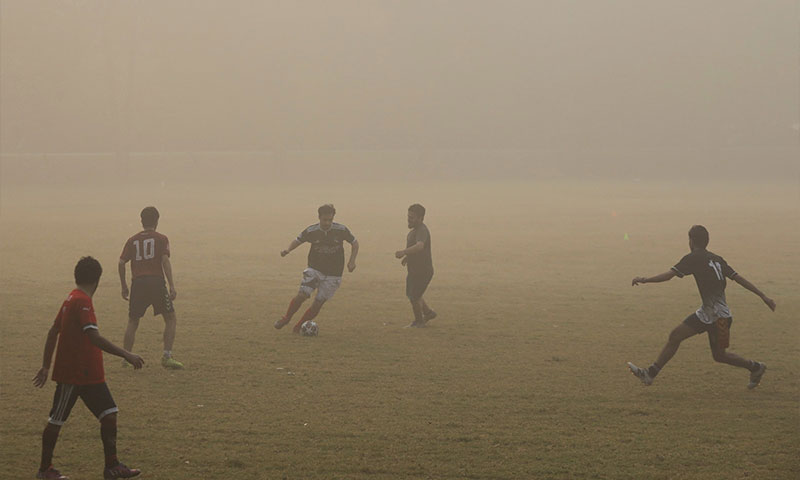
Men play football amid smog and air pollution during the early morning in Lahore, November 11, 2026. — REUTERS
On Tuesday, Aurangzeb attributed the deterioration to pollutants carried across the border by light winds and air currents from India in the aftermath of Diwali celebrations, according to Reuters.
She said the critical smog period ran from October to December, with November 1-15 being particularly important because of seasonal and meteorological conditions.
The minister urged residents, particularly children, elderly people and those sensitive to air pollution, to avoid unnecessary outdoor exposure and follow health advisories.
She also advised citizens to keep vehicle and household windows and doors closed during periods of severe smog, stressing that clean air was a shared responsibility.
You May Also Like
- Reuters
- November 11, 2026
India blocks 129 websites on fake court orders, police launch probe

- AFP
- November 11, 2026
