
- Web
- Feb 15, 2026
Punjab govt’s plan to equip hospital staff with bodycam raises privacy concerns
-

- Web Desk
- Jan 13, 2026
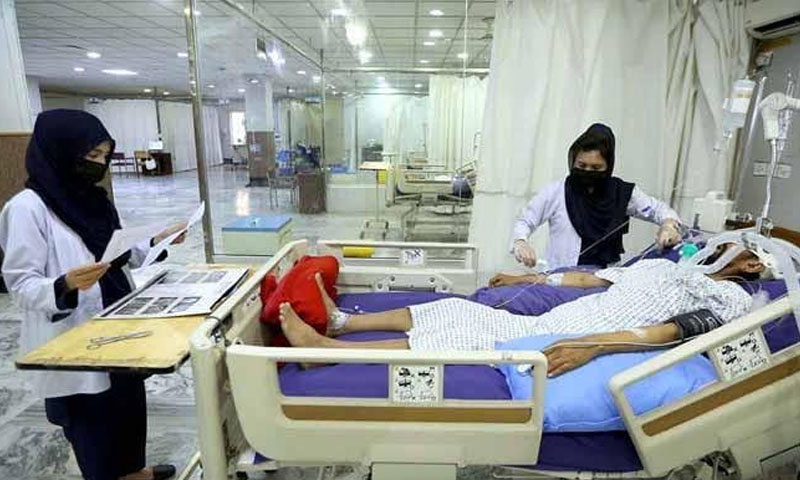
LAHORE: The Punjab government has decided to equip paramedical staff including nurses working in public hospitals with body cameras, a move that has sparked widespread concerns over patient privacy and workplace implications.
According to initial reports, the policy will cover nurses, ward boys, pharmacy staff and security personnel. The government has also decided a ban on mobile phone use during duty for doctors and nurses.
The government says these measures are being introduced in response to public complaints regarding administrative issues, corruption, and security concerns.
Over the past years, multiple incidents have been reported in which patients or their families clashed with doctors and hospital staff.
Why body cameras?
However, doctors and paramedical staff have expressed serious concerns about the government’s decision, questioning its effectiveness and potential consequences.
Many professionals said the government should reconsider the policy and look for alternative solutions to improve hospital administration rather than relying on surveillance technology.
Punjab Secretary for Specialized Health Azmat Mahmood told the BBC that body cameras were being introduced because some hospital staff were referring patients to private hospitals for profit or demanding money for certain services in public hospitals.
“Considering this underlying issue, we decided to use body cameras for guards, pharmacy staff, nurses, ward boys, and cleaning staff,” he said.
On concerns about violating patient privacy, he clarified that cameras would be deployed for nurses last, and privacy-sensitive cases would be addressed through appropriate safeguards.
“We will learn from the experience with other staff and make improvements where needed,” he said.
He also noted that most of the staff covered by body cameras are managed by third-party contractors, who will bear the cost and responsibility for camera use. He did not provide clarity on how recorded videos or duty mobile phone use by doctors would be handled.
Doctors raise privacy and practical concerns
Punjab Young Doctors Association General Secretary Dr Haseeb criticized the decision, saying: “There is no example anywhere in the world where all nursing staff are required to wear body cameras. The government did not consult any stakeholders before making this decision to understand its potential drawbacks.”
He said that body cameras could affect patient privacy and make doctors and nurses overly cautious or anxious while performing duties, especially new doctors.
“There are many other ways to monitor hospital staff. Imagine a nurse wearing a body camera while attending to patients in vulnerable conditions — sensitive procedures like dressing wounds or examining children will be recorded. Who will see this footage? Where will it be stored? This is a fundamental concern that should have been addressed before implementing this policy,” he said.
Dr Haseeb suggested that instead of cameras, the government should improve administrative processes, limit the number of attendants per patient, and focus on both patient and staff safety. “Body cameras could make interactions worse, as patients confront doctors first. Recording these moments could create more conflicts,” he warned.
Staff perspective
Nurse Khalida, who has worked in a Lahore government hospital for several years, expressed discomfort with the idea of wearing a body camera.
“I have handled labour rooms, inserted catheters, conducted chest X-rays, and cleaned wounds in sensitive areas. Imagine recording all of this — how would that feel? Monitoring already exists through daily reports and team supervision. Wearing a camera would be extremely uncomfortable, especially for female staff,” she said.
Private hospital concerns
Mohammad Waleed, owner of a private hospital in Lahore, highlighted the sensitivity of patient privacy.
“If such measures are implemented in private hospitals, it will create significant problems. Patients frequently object to security cameras because of privacy concerns. Millions of patients visit public hospitals — where will these recordings be stored, and how can we guarantee they won’t leak? Even Safe City footage sometimes leaks,” he said.
Waleed also warned that corruption in hospitals, such as staff referring patients to private labs or hospitals, cannot be addressed by cameras alone. “This system is difficult to regulate through surveillance. Body cameras may only serve as a temporary show of control,” he added.
You May Also Like