- Reuters
- August 27, 2026
Qatar PM heads to Tehran to revive Iran-US talks
-

- Reuters
- August 27, 2026
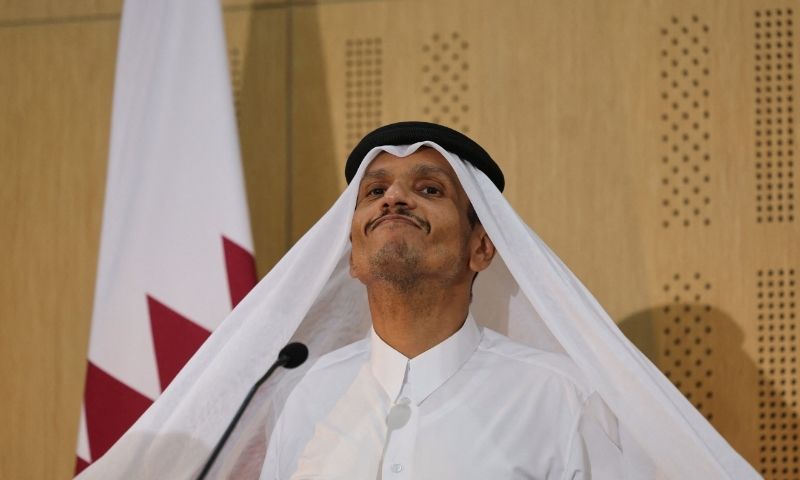
DOHA/DUBAI: Qatar’s prime minister Sheikh Mohammed bin Abdulrahman bin Jassim Al Thani will travel to Tehran on Thursday in a fresh attempt to revive diplomacy between Iran and the United States, as tensions persist despite a prolonged pause in direct hostilities.
Qatar, a US ally and neighbour of Iran, has acted as an intermediary between the two sides and helped broker a ceasefire in June that temporarily brought the fighting to an end. The Islamabad Memorandum of Understanding was signed on June 17, 2026, following Pakistan-facilitated diplomatic efforts between Iran and the United States. The agreement paved the way for the first formal high-level talks on its implementation in Bürgenstock, Switzerland, bringing together delegations from Iran, Qatar and the US.
Earlier this week Chief of Defence Forces and Chief of Army Staff Field Marshal Asim Munir met Iranian parliament speaker Mohammad Bagher Ghalibaf in Tehran during his visit to the Iranian capital, according to Iranian state broadcaster Press TV. Ghalibaf reaffirmed Iran’s commitment to the Islamabad Memorandum of Understanding and criticised the United States for failing to honour its commitments, saying this had undermined regional stability and trust in Washington. Munir said Pakistan would continue efforts to restore regional stability. Separately, Iran’s Supreme National Security Council secretary Mohsen Rezaei voiced distrust of Washington and called for practical action to implement the agreement.
Meanwhile Al Thani’s latest visit comes as the conflict approaches its sixth month, with military activity largely subdued but negotiations still stalled. Washington and Tehran remain divided over several issues, including arrangements for the Strait of Hormuz, a vital shipping route for global oil supplies.
The waterway, which lies between Iran and Oman, has become a key point of contention. Before the conflict began on February 28, about one-fifth of the world’s oil supply passed through the strait.
Although attacks have largely stopped, Washington has shifted towards economic pressure on Tehran. The US has announced plans to impose tougher sanctions aimed at cutting Iran off from trading partners.
Oil shipments through Hormuz have fallen sharply since the start of the conflict. Ship-tracking data showed around 5 million barrels per day passed through the strait on Monday, compared with roughly 20 million barrels per day before the war.
Iran’s Revolutionary Guards said on Wednesday that Tehran and Muscat had reached an understanding on how the waterway and its revenues would be managed. However, a senior Iranian source later said the two countries were still negotiating the details of any agreement.
Qatar’s mediation comes as both sides seek to resolve the impasse without a return to full-scale fighting, while uncertainty over Hormuz continues to affect global energy flows.
Despite an aerial bombardment earlier in the war that severely diminished Iran’s conventional forces, Tehran has maintained enough missile and drone capability to attack Gulf neighbours that house U.S. military bases and disrupt oil tankers in the strait.
The U.N.’s International Maritime Organization has reported 70 incidents in the Strait of Hormuz since February 28 that have killed 19 seafarers.
Thousands of others have died, mostly in Iran and Lebanon, since the U.S. and Israel attacked Iran with the stated goals of denying Iran a nuclear weapon, helping Iranians topple their government, and destroying Iran’s missile programme.
Mediation
Qatari Prime Minister Sheikh Mohammed bin Abdulrahman al-Thani will discuss the continuation of Qatar’s mediation efforts and other developments in the region during his visit to Tehran on Thursday, Iranian Foreign Ministry spokesperson Esmaeil Baghaei said.
Qatar’s Foreign Ministry spokesperson said on X that Sheikh Mohammed would also address freedom of navigation in the Strait of Hormuz and the need to return to the status quo before February 28, while also discussing with Iranian officials ways to “de-escalate tensions and create the conditions conducive to dialogue.”
The international waterway was open to free navigation before the war, but Iran has since clung to its control of the strait as leverage and a revenue source, seeking to charge ships a commission, which the U.S. has opposed.
“An agreement with Oman over the Strait of Hormuz has not been finalised,” the senior Iranian source told Reuters, adding that the talks were continuing on the details of an accord.
That seemed to contradict a statement by Brigadier General Hossein Mohebbi, a spokesperson for the Islamic Revolutionary Guard Corps, who said Iran and Oman had “reached results that are acceptable to both sides” on controlling the strait and its revenues.
Mohebbi said the strait would remain shut unless the U.S. met Tehran’s conditions under the interim ceasefire, or memorandum of understanding, that the two sides signed in June before it unravelled. Those conditions include an end to the U.S. blockade on Iranian ports, compensation and removal of sanctions.
Iran and Oman have held on-and-off talks for weeks about controlling traffic through the strait. Tehran and Washington have each tried to assert control over the channel, imposing separate blockades.
You May Also Like