- Web Desk
- 24 Minutes ago
Qatar PM urges dialogue as Pakistan–Taliban conflict threatens wider regional instability
-

- Web Desk
- Mar 10, 2026
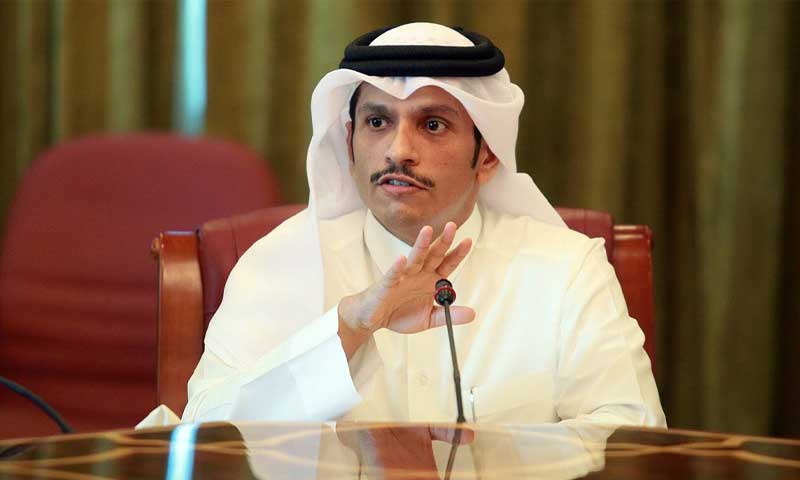
WEB DESK: Qatar’s Prime Minister and Foreign Minister, Mohammed bin Abdulrahman Al Thani, has called for urgent diplomacy to prevent a widening regional crisis as tensions between Pakistan and Taliban continue to escalate.
Speaking in an interview with Sky News on 8 and 9 March 2026, Al Thani described the situation as a “huge shake-up” to regional stability and warned that only dialogue could prevent the confrontation from spiralling into a broader catastrophe. His remarks come after Pakistan’s Defence Minister, Khawaja Asif, declared what he called an “open war” with the Afghan Taliban in late February following cross-border air strikes and militant attacks.
Border fighting between the two sides has now entered its twelfth day, with reports of continued clashes and thousands of civilians displaced from frontier areas. Al Thani stressed that sustained communication between Islamabad and Kabul was essential to avoid further escalation in an already volatile environment.
Iran conflict heightens fears of a broader regional crisis
The Qatari premier also linked the tensions on the Afghanistan–Pakistan frontier to the wider instability gripping the Middle East, particularly the intensifying confrontation involving Iran. Al Thani said Gulf states felt a “deep sense of betrayal” after Iranian strikes reportedly targeted regional interests shortly after the outbreak of a broader conflict in early March.
According to the Qatari leader, the simultaneous crises the Pakistan–Taliban confrontation and the escalating Iran war risk creating a dangerous overlap that could destabilise the entire region. He noted that Qatar, Türkiye and Saudi Arabia have been leading mediation efforts aimed at easing tensions between Kabul and Islamabad.
Through the Doha–Istanbul process in late 2025, the three countries helped facilitate talks that briefly produced a ceasefire in October. However, Al Thani acknowledged that a lasting breakthrough has remained elusive, largely because Pakistan continues to demand that the Afghan Taliban act decisively against militants from Tehrik‑i‑Taliban Pakistan, while the Taliban leadership rejects what it sees as external pressure on its sovereignty.
Despite the deep mistrust between the two sides, the Qatari prime minister said his country remains engaged in discussions with all parties, describing diplomacy as the last viable hope to prevent the conflict from merging with the wider regional crisis.
You May Also Like