- Aasiya Niaz
- 21 Minutes ago
Remembering Dr Ali Larijani: Asma Shirazi on the Iranian statesman who called Pakistan his second home
-

- Zoya Anwer
- 4 Minutes ago
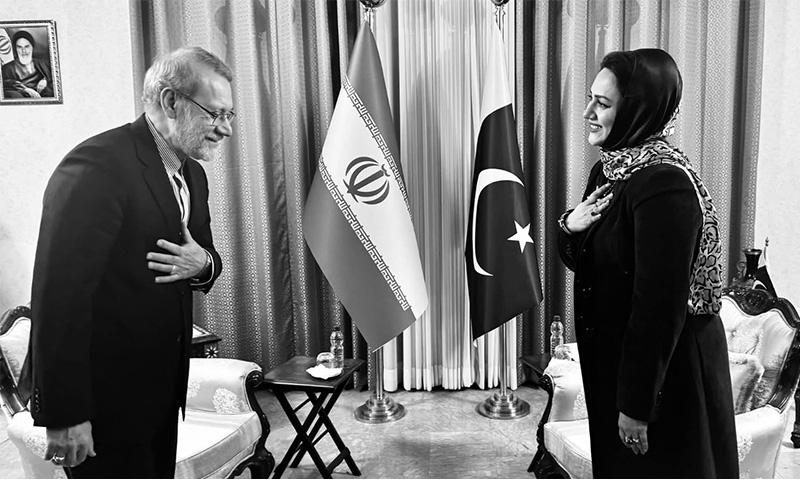
When veteran Pakistani journalist Asma Shirazi sat down with Iran security chief Ali Larijani during his visit to Pakistan in November 2025, she knew she was meeting one of Iran’s most important political figures. The encounter, however, stayed with her as deeply leaving a profound impact on her.
Months later, as the region reflects on Larijani’s death at the hands of Israeli military, Shirazi remembers not only the Iranian statesman’s strategic mind and political stature, but also the warmth, humility and intellectual depth that marked their meeting. For her, Larijani was not just a powerful official or a seasoned negotiator. He was, above all, a man of refinement, clarity and unusual grace.
“He declared Pakistan to be his second home,” Shirazi recalled. “He said, ‘It felt to me as if I have come to my own home.’” That sentiment, she said, was not performative diplomacy. It came across as sincere, personal and deeply felt.
A meeting that lingered
Shirazi had requested the interview well in advance, knowing Larijani’s importance within Iran’s political and security structure. He was close to Iran’s top leadership and occupied a central place in national decision-making. His visit to Pakistan had already drawn major attention, and many media outlets were eager for access.
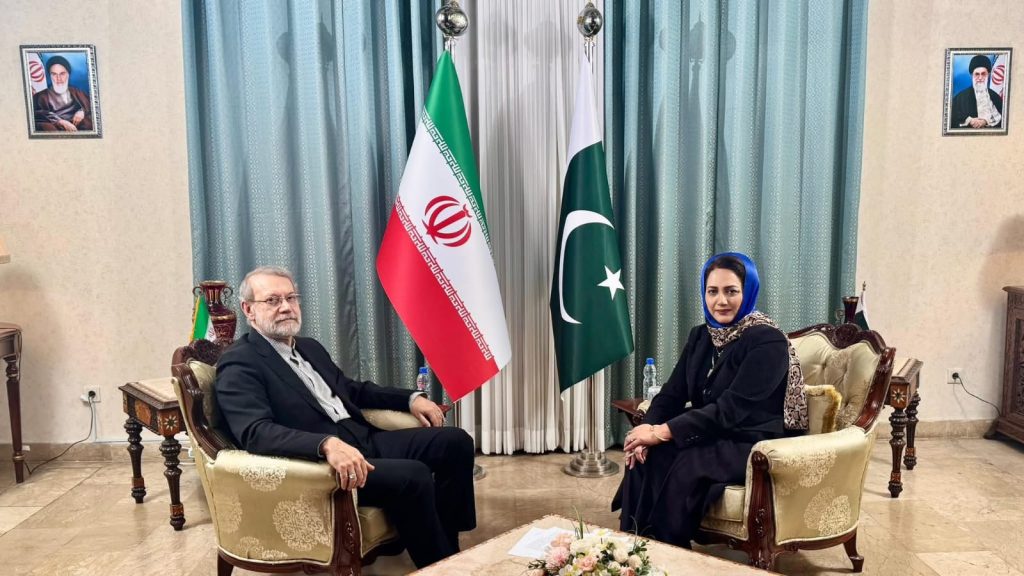
Yet what stayed with her most was not merely the significance of the guest, but the texture of the encounter itself.
Before the formal interview began, the two spoke privately for around ten minutes. After the cameras were off, they continued talking for another five to seven minutes. In those brief conversations, Shirazi said, she encountered not a distant power broker, but “a philosopher, a thinker, and a very learned personality.”
That impression only deepened during the interview. Larijani, she said, carried himself with poise and calm authority. He listened carefully, answered with precision, and seemed fully aware of the weight of every word he chose.
The diplomat who knew exactly what to say
For a journalist, one of the most telling signs of a seasoned political figure is how they handle difficult questions. Shirazi said Larijani did this with remarkable skill.
“He answered many questions with great clarity,” she said. But when the conversation moved toward areas he did not wish to address directly, he did not become defensive or evasive in the conventional sense. Instead, he shifted the discussion with elegance.
“It felt like he didn’t want to answer, yet he didn’t exactly refuse either,” she said. “He knew exactly which word to use, what to say, and how to conduct the conversation.”
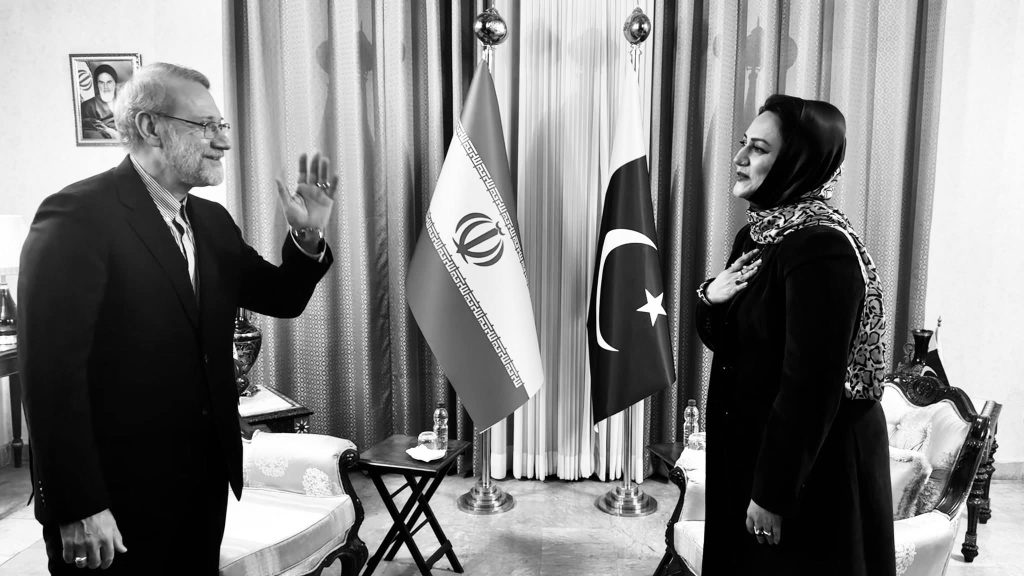
That balance, saying enough, without saying too much, reflected a man deeply experienced in both politics and media. Shirazi believes this was part of what made him such a compelling public figure. He understood not only diplomacy, but presentation. He knew how to engage the press without surrendering control of the narrative.
In her view, that sophistication was one reason Larijani commanded unusual respect in both Iranian and Pakistani media circles. Their interview, she noted, was later broadcast by television channels in Tehran, where Larijani remained a highly regarded figure.
A scholar in politics
For Shirazi, Larijani’s political importance cannot be separated from his intellectual life. She remembered him as a deeply scholarly man whose speech carried traces of both study and contemplation.
“He was a very refined personality whose conversation was full of erudition,” she said.
Larijani held a doctorate and had written several books. His academic work included research on the German philosopher Immanuel Kant, an uncommon reference point for a politician more often seen through the lens of regional security and statecraft. Shirazi said that scholarly grounding was visible in the way he spoke: measured, reflective and layered.
Rather than projecting harshness, she said, he came across as “soft-spoken, liberal and progressive.” In her recollection, he was not the rigid ideologue many might assume from his official roles, but someone whose temperament was defined by humility and seriousness.
“There was no harshness in him,” she said. “He spoke with great understanding and sincerity.”
That combination, intellectual depth alongside political discipline, made him memorable. Shirazi described him as a sophisticated and noble personality, someone whose manner suggested both education and emotional intelligence.
Pakistan, Iqbal and a sense of belonging
If there was one theme Larijani returned to repeatedly, Shirazi said, it was Pakistan.
She remembers his affection for the country as one of the defining features of the meeting. He did not speak about Pakistan as a routine ally or strategic partner alone. He spoke of it with familiarity and emotion.
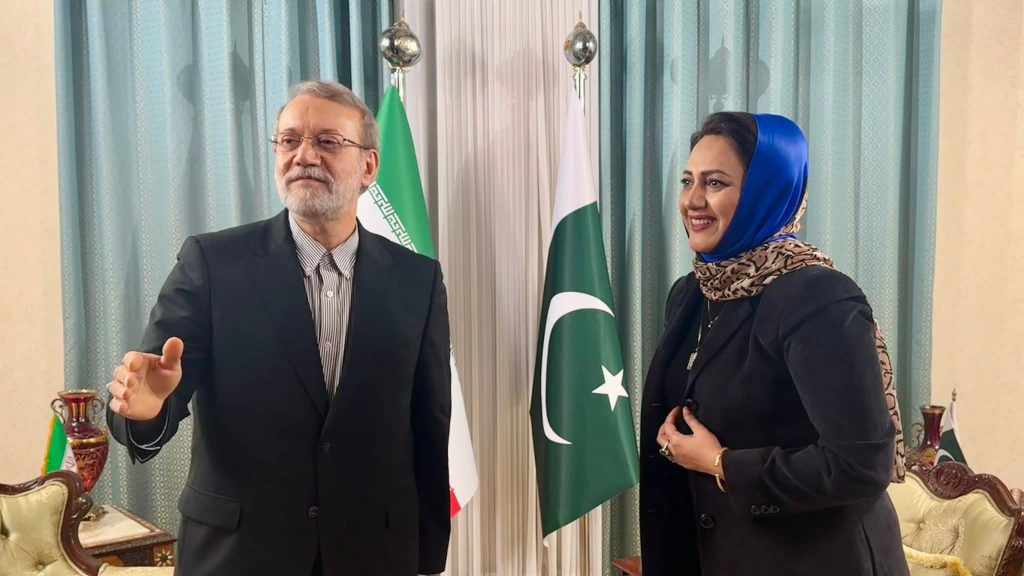
Shirazi said he repeatedly expressed gratitude for the support shown by Pakistan’s public and government during the war with Israel. He was, she recalled, visibly appreciative of the solidarity he believed Pakistan had extended to Iran at a critical time.
“He was very happy and grateful,” she said, adding that he kept returning to the warmth he felt from both the people and the state.
He also spoke often of Allama Iqbal, a figure whose philosophical and poetic legacy has long resonated in Iran. For Shirazi, this was especially striking. Larijani’s repeated references to Iqbal were not ornamental. They seemed to reflect a genuine intellectual and emotional affinity with Pakistan’s cultural imagination.
That, she said, is part of why the interview has remained so vivid in her mind: his extraordinary connection with Pakistan was inseparable from his admiration for Iqbal, and both shaped the emotional tone of the encounter.
The line she cannot forget
Among all the remarks Larijani made, one has remained etched in Shirazi’s memory.
During the interview, he said: “We give Pakistan a blank check; whatever Pakistan wants, it may write it on behalf of Iran.”
For Shirazi, this was one of the most striking moments of the conversation. She understood it not as a literal political offer, but as a metaphor for trust, intimacy and closeness. In her reading, Larijani was saying that Pakistan occupied such a secure place in Iran’s heart that it had full confidence, full latitude and full affection from Tehran.
“He used this term to show that Pakistan is so close to their hearts,” she said, explaining that he seemed to mean Pakistan had a kind of emotional ownership in the relationship.
Larijani also indicated, according to Shirazi, that this openness and goodwill toward Pakistan would endure.
More than a statesman
In the end, Shirazi’s remembrance of Ali Larijani is not confined to titles or offices. Yes, he was an influential insider, a security chief, former negotiator, parliamentary leader and trusted figure within Iran’s highest circles. But her portrait of him is more intimate than institutional.
She remembers a man who was intellectually serious but personally warm. A politician who understood the media, but did not seem performative. A senior official who carried power lightly and a statesman who could speak strategically, yet still make room for poetry, philosophy and affection.
“As a human being, he was a wonderful person,” she said.
It is perhaps that balance, between power and gentleness, calculation and culture, that made the encounter unforgettable. In remembering Larijani, Shirazi is not merely recalling an interview with a major Iranian figure. She is recalling a rare kind of public man: one who left behind not only political significance, but a distinctly human impression.
You May Also Like