
- Web Desk
- Now
RFK Jr.’s upside-down food pyramid puts steak and cheese at the top as backlash grows
-

- Aasiya Niaz
- Jan 08, 2026
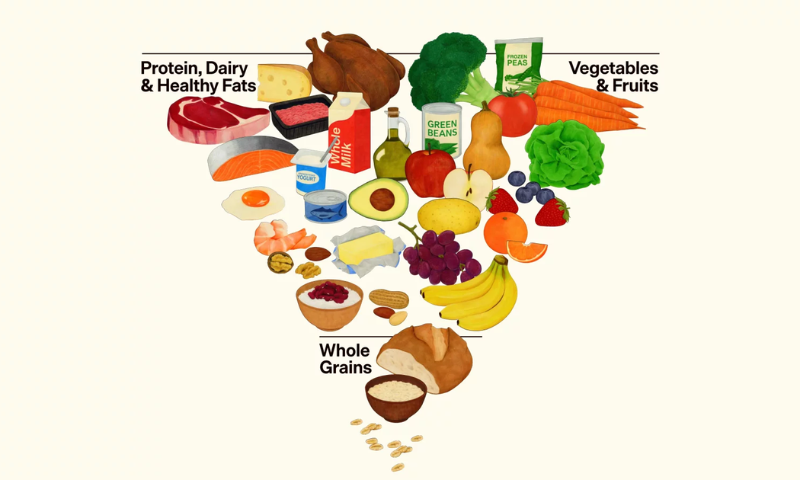
Robert F. Kennedy Jr. has sparked fresh controversy after unveiling a new food pyramid that places red meat, cheese, vegetables and fruit at the top, marking a sharp departure from decades of familiar nutrition messaging.
The redesigned pyramid was presented this week by the Trump administration as part of updated dietary guidelines that promote whole foods and protein, while discouraging what officials describe as an overreliance on highly processed products.
Kennedy framed the changes as a major reset in nutrition policy, arguing that earlier guidelines unfairly targeted certain foods. “Protein and healthy fats are essential,” he said, adding that the new approach brings an end to what he described as the “war on saturated fats”.
Why the pyramid looks different
Unlike previous versions, which encouraged grains as the dietary foundation, the updated pyramid prioritises protein, dairy and vegetables, with whole grains positioned at the bottom.
Kennedy and Agriculture Secretary Brooke Rollins said the shift is intended to reduce consumption of refined carbohydrates, added sugars and highly processed foods, which they argue have contributed to rising obesity rates in the United States.
The announcement quickly drew attention online, with supporters welcoming the emphasis on whole foods while critics questioned the message sent by placing red meat and cheese so prominently.
Critics push back
Nutrition experts were quick to raise concerns about the new visual hierarchy.
Christopher Gardner, a nutrition scientist at Stanford University and former member of the Dietary Guidelines Advisory Committee, said he was disappointed by the pyramid’s emphasis on red meat and saturated fat sources.
“It goes against decades of research,” Gardner said, adding that plant-based protein options such as beans and legumes have consistently been linked to positive long-term health outcomes.
Both the American Heart Association and the Academy of Nutrition and Dietetics continue to cite evidence linking excess saturated fat intake to higher rates of heart disease, even though the updated guidelines still recommend limiting saturated fat to 10 percent of daily calorie intake.
Cheese and dairy back in focus
One of the most debated aspects of the new pyramid is its elevation of dairy products, potentially opening the door to full-fat milk and cheese options in school meal programmes.
Some researchers have welcomed this change. Dariush Mozaffarian, director of the Food is Medicine Institute at Tufts University, said growing evidence suggests dairy foods can play a beneficial role in a balanced diet.
“Both low-fat and whole-fat dairy products have been associated with lower cardiovascular risk,” he said, noting that fat content alone does not appear to be the decisive factor.
A cultural flashpoint
While most Americans never read dietary guidelines directly, they heavily influence what is served in schools, on military bases and through federal food assistance programmes.
That reach, combined with Kennedy’s high-profile role and outspoken views, has turned the new food pyramid into a broader cultural flashpoint, touching on wellness trends, distrust of processed foods and the growing politicisation of diet advice.
For now, the image of steak and cheese sitting at the top of the pyramid continues to fuel debate well beyond nutrition circles.
You May Also Like