- Web Desk
- 4 Minutes ago
Ryan Routh sentenced after chilling Trump golf course plot
-

- Aasiya Niaz
- Feb 05, 2026
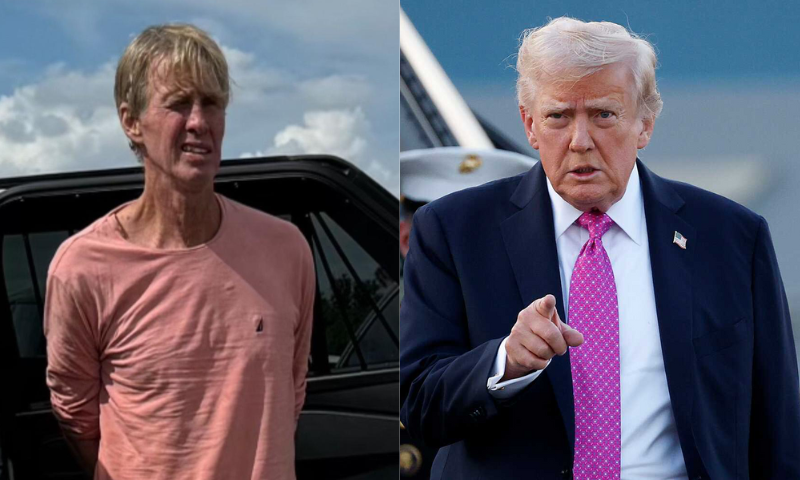
A Florida man who came dangerously close to assassinating Donald Trump during a round of golf in 2024 has been sentenced, closing one of the most unsettling political security cases in recent US history.
Ryan Routh was sentenced on Wednesday after being convicted on multiple federal charges linked to a foiled attack at Trump’s West Palm Beach golf course. The plot was stopped by a US Secret Service agent moments before it could unfold.
Prosecutors said Routh had spent weeks stalking the area around the golf course and Trump’s nearby Mar-a-Lago residence. On September 15, 2024, he positioned himself in a makeshift sniper’s nest behind a chain-link fence, just 126 feet from the sixth green, where Trump was expected to stand.
Trump, then a presidential candidate, was playing one hole back when a Secret Service agent conducting a security sweep noticed part of Routh’s face and the barrel of a rifle protruding through the fence. The agent fired several shots, forcing Routh to flee.
Routh was later arrested after a bystander, Tommy McGee, followed him long enough to record his licence plate and alert authorities. McGee later testified at trial and was credited with helping prevent a potentially fatal outcome.
A dramatic trial and sentencing
Routh was convicted in September after choosing to represent himself at trial, a decision that led to repeated clashes with the presiding judge, US District Judge Aileen Cannon. He was frequently reprimanded for straying beyond the scope of the case during questioning and arguments.
At sentencing, Routh addressed the court while shackled and dressed in a prison jumpsuit, making statements about global conflicts before being cut off by the judge.
Cannon described the plot as deliberate and dangerous, telling Routh he had clearly demonstrated an intent to kill and had come close to carrying out the attack.
Alongside the primary sentence, Routh received additional prison terms to be served concurrently. These include sentences for possession of a firearm during a violent crime, assault on a federal officer, possession of a firearm as a convicted felon, and possession of a weapon with an obliterated serial number.
The Justice Department had pushed for the maximum sentence, arguing that Routh showed no remorse and had prepared to use violence against anyone who stood in his way.
Evidence of planning
During the trial, prosecutors presented evidence showing Routh used burner phones to search for Trump’s upcoming rallies, Palm Beach traffic cameras, and possible escape routes out of Florida.
Investigators also uncovered a handwritten letter in which Routh admitted he had tried to assassinate Trump and offered $150,000 to anyone willing to complete the act. Authorities said there was no evidence he had access to such funds.
After the sentence was read, Routh reportedly looked into the courtroom gallery, smiled and winked at someone he knew as he was led away by federal marshals.
The case has drawn renewed attention to the security risks surrounding high-profile political figures, particularly during public appearances and private outings.
You May Also Like