- Web Desk
- Mar 18, 2026
Sacrifices on the frontier: Pakistan’s defenders confront a pre-9/11-style crisis
President Asif Ali Zardari’s recent warning that Afghanistan under Taliban rule has reverted to conditions “similar to or worse than pre-9/11” reflects growing concern in Islamabad over a rapidly deteriorating regional security environment. His remarks, delivered in the aftermath of the February 6 suicide bombing at the Khadijah al-Kubra Imambargah in Islamabad which killed more than 36 people and was claimed by Daesh highlight Pakistan’s long-standing assertion that militant sanctuaries across the Afghan border are enabling renewed violence within its territory.
Afghanistan’s security vacuum and the resurgence of cross-border militancy
The continued existence of cross-border sanctuaries has enabled groups like the Tehrik-i-Taliban Pakistan (TTP) to rebuild their operational capabilities and escalate attacks. Authorities contend that, without coordinated regional and international efforts to dismantle these networks, the progress made through years of counter-terrorism operations could be undermined. In this context, President Zardari’s reference to pre-9/11 conditions serves not merely as alarmist rhetoric but as a strategic call for renewed international engagement on Afghanistan’s security challenges.
Relations between Islamabad and Kabul remain strained. Pakistani authorities continue to accuse the Taliban administration of tolerating, if not facilitating, TTP activity, while Afghan officials reject these allegations and point instead to Pakistan’s internal governance and security challenges. Mutual recriminations have been compounded by disagreements over border incidents and the absence of meaningful progress on joint mechanisms for intelligence sharing or coordinated border management, reinforcing a cycle of mistrust amid escalating violence.
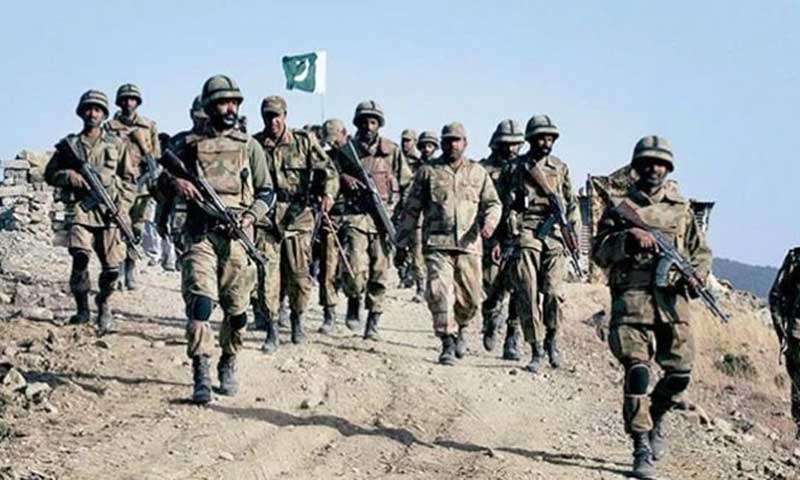
Despite these constraints, Pakistan has pursued an assertive internal security posture. Security forces including the armed services, paramilitary formations, provincial police, and specialised counter-terrorism units have intensified intelligence-based operations in Balochistan and Khyber Pakhtunkhwa. These efforts build on earlier nationwide campaigns such as Operation Radd-ul-Fasad, launched in 2017, which aimed to dismantle residual militant infrastructure and disrupt logistical networks. According to official accounts, recent operations have resulted in the neutralisation of hundreds of militants, significantly degrading their ability to mount coordinated attacks.
Pakistan’s counter-terrorism response and the challenge of external interference
In Balochistan, operations have focused on separatist groups that Pakistani authorities formally designate as Fitna-tul-Hindustan, a term introduced by the Ministry of Interior in May 2025 for outfits accused of receiving support from India and its intelligence agencies as part of a broader strategy to destabilise the province and undermine Pakistan’s sovereignty.
These operations have imposed a substantial human cost.
Security personnel have continued to suffer casualties, particularly during high-risk intelligence-driven raids in urban and semi-urban environments. The response to the Islamabad imambargah attack illustrates this dynamic. In the days following the bombing, the Counter-Terrorism Department (CTD) Peshawar, working in coordination with Khyber Pakhtunkhwa police, conducted raids across Peshawar and Nowshera districts. These operations led to the arrest of four facilitators and an Afghan national identified by investigators as the Daesh (IS-KP)-linked planner of the attack. The arrests, however, followed the death of an assistant sub-inspector and injuries to other officers, underscoring the operational risks inherent in counter-terrorism work.
These developments make it clear that Pakistan’s security challenges are inseparable from regional dynamics, but they also underscore the resilience and unity of the nation. Our armed forces, law enforcement, and counter-terrorism agencies stand unwavering on the frontlines, defending every citizen and upholding the sovereignty of the homeland. True and enduring stability will come only through dismantling cross-border militant networks and ensuring robust cooperation from regional and international partners.
President Zardari’s warning is not merely a caution it is a rallying call for collective vigilance and action, a reminder that the defence of Pakistan is a shared duty, and that the courage and sacrifice of our security forces demand our unwavering support and resolve.
You May Also Like