- Web Desk
- 22 Minutes ago
Saudi says missiles launched towards Riyadh as Iran widens threat to Gulf infrastructure
-

- Web Desk
- 5 Minutes ago
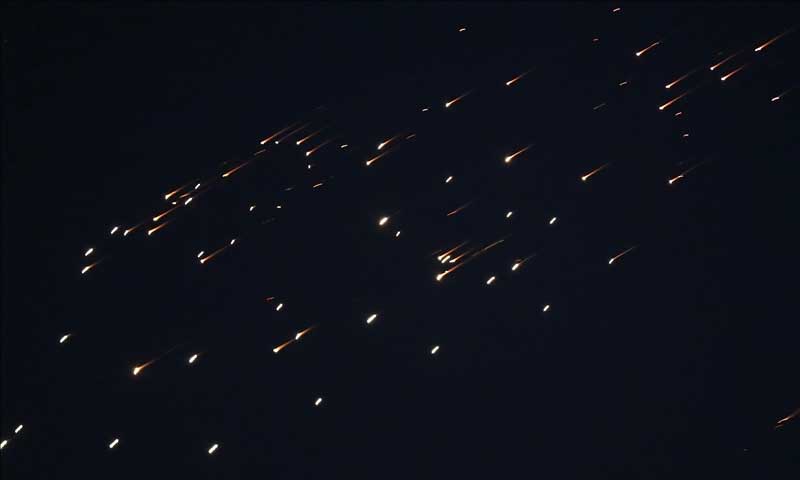
Saudi Arabia’s defence ministry said two ballistic missiles were launched towards Riyadh, with one intercepted and the other falling in an uninhabited area, as tensions across the Middle East escalated further amid threats by Iran to target energy and water infrastructure in Gulf states if its own power grid comes under attack.
The Saudi alert added a new layer of alarm to an already volatile regional confrontation centred on Iran, Israel and the United States. It came as Tehran warned that any strike on its electricity infrastructure would trigger retaliation against vital installations across the Gulf, including power networks, information technology systems and desalination plants. The warning has intensified fears that the conflict could spread beyond military targets and disrupt the civilian systems that keep Gulf economies functioning.
Iran’s threat followed a sharp ultimatum from US President Donald Trump, who said Washington would strike Iranian power plants unless Tehran fully reopened the Strait of Hormuz within 48 hours. The waterway, one of the world’s most important energy chokepoints, carries roughly a fifth of global oil and liquefied natural gas shipments. Any prolonged disruption there has immediate implications for oil prices, shipping routes and wider market stability.
Tehran, however, has sent mixed signals on the status of the strait. Iranian officials have said the route remains open to shipping except for vessels linked to what they describe as Iran’s “enemies”, while also insisting that security arrangements must be coordinated with Tehran. Ship-tracking data cited in reports suggested that a limited number of vessels, including Indian-flagged ships and a Pakistani oil tanker, had negotiated safe passage, though most ships have remained stalled.
Gulf infrastructure fears grow
Iran’s latest warning has drawn particular attention because of the vulnerability of Gulf states to disruptions in electricity and water supply. In several countries in the region, desalination plants are essential to daily life, supplying the bulk of drinking water needs. Bahrain and Qatar depend entirely on desalinated water, while the United Arab Emirates and Saudi Arabia also rely heavily on the technology to meet domestic demand.
That means any strike on such facilities would carry consequences far beyond the battlefield. Analysts and officials fear that attacks on desalination plants, power systems or digital infrastructure could trigger a humanitarian and economic crisis across some of the region’s most densely populated and highly urbanised centres.
Iranian military spokesman Ebrahim Zolfaqari said attacks on Iran’s fuel and energy systems would prompt retaliation against equivalent infrastructure linked to the United States and its regional allies. Parliament Speaker Mohammad Baqer Qalibaf reinforced the message, warning that critical infrastructure and energy facilities in the Middle East could face irreversible destruction if Iranian power plants were hit.
The Saudi missile incident underscored how rapidly the confrontation is widening. While Riyadh did not immediately identify the source of the missiles in the alert cited by media, the development will heighten concerns that Gulf capitals are increasingly exposed as the conflict expands.
Hormuz crisis deepens market anxiety
At the centre of the crisis remains the Strait of Hormuz, where Iran’s Revolutionary Guards have warned that the route would remain completely shut until destroyed Iranian power plants were rebuilt. That position appears tougher than earlier statements suggesting only selective restrictions on hostile shipping, and it has added to confusion over the actual operating status of the waterway.
The uncertainty has already rattled markets. Oil trading opened choppily in Asia, while European gas prices had already surged sharply last week amid fears over supply disruptions. Market analysts described Trump’s ultimatum as a fresh shock that placed a new deadline over an already fragile situation.
Meanwhile, the wider war continues to intensify. Iran has kept up missile strikes despite weeks of heavy US and Israeli bombardment that officials say have significantly reduced its capabilities. Israeli forces said they had carried out fresh strikes on Tehran targeting military facilities, while Iranian media reported casualties in Bandar Abbas and air defence activity in eastern Tehran.
With missiles now reported over Riyadh, the threat to Gulf infrastructure growing, and the Strait of Hormuz still at the centre of a global energy standoff, the confrontation is entering a more dangerous phase — one in which civilian systems and regional economies are increasingly in the line of fire.
You May Also Like