- Atif Hussain
- August 18, 2026
SC acquits three convicts in Kasur Christian couple burning case
-

- Javed Soomro
- August 18, 2026
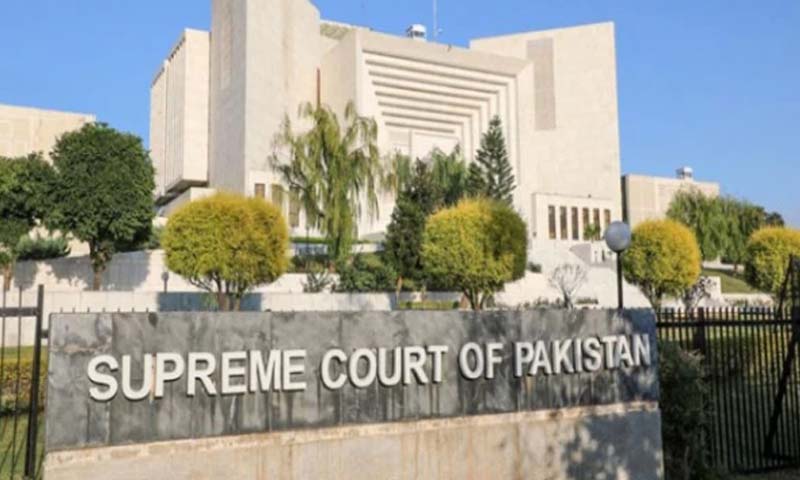
ISLAMABAD: The Supreme Court has acquitted three men sentenced to death for the 2014 killing of a Christian couple who were beaten and thrown into a brick-kiln furnace in Kot Radha Kishan in Kasur, observing that material contradictions in the prosecution evidence had created serious doubts about their involvement.
A three-member bench comprising Justice Malik Shahzad Ahmad Khan, Justice Aqeel Ahmad Abbasi and Justice Shakeel Ahmad allowed the appeals of Muhammad Irfan, Muhammad Riaz and Mehdi Khan and set aside the judgments of the trial court and Lahore High Court.
The apex court also dismissed the Punjab government’s challenge against the acquittal of 102 other accused, holding that the prosecution evidence contained material contradictions and that the acquitted accused were entitled to the presumption of innocence.
The Supreme Court directed that the three petitioners be released forthwith if they were not required in any other case.
The detailed judgment, authored by Justice Malik Shahzad Ahmad Khan, was issued on July 9, 2026.
Court calls 2014 killings ‘most shocking and brutal’
The Supreme Court described the incident as “most shocking and brutal”, in which two members of the Christian community were killed by being thrown into a brick-kiln furnace.
The court noted that the victims were targeted by a mob of around 500 to 600 people over an allegation that they had defiled or burnt the Holy Quran.
However, the bench observed that the trial court had already found that there was no convincing evidence to establish that the victims had committed the alleged act.
The Supreme Court made it clear that even if such an offence had been committed, private individuals could not take the law into their own hands instead of reporting the matter to police and allowing legal proceedings to take their course.
“It is very unfortunate that two innocent persons of Christian community were murdered by the mob of 500/600 persons merely on the basis of the above-mentioned suspicion,” the court said.
It observed that the Christian community was a valuable part of the nation and that Islam did not permit such brutal treatment of any member of a minority community merely on the basis of suspicion and without due process of law.
At the same time, the bench stressed that the heinous nature of the incident could not replace the requirement for reliable evidence.
The court said its duty was to determine whether the prosecution had proved its case beyond reasonable doubt, adding that an innocent person could not be sentenced to death in the absence of dependable evidence.
Prosecution evidence found contradictory
The court found the prosecution case to be “self-contradictory”, particularly regarding the identities and roles of those who allegedly dragged the victims to the furnace and threw them into the fire.
According to the judgment, the FIR lodged by police officer Muhammad Ali did not name Muhammad Irfan at all, despite naming 59 accused persons.
The FIR specifically attributed the role of dragging the victims from the brick-kiln office and throwing them into the furnace to seven accused, including Mehdi Khan. Six of those seven accused were subsequently acquitted.
The court noted that Muhammad Riaz was named in the FIR but was not assigned the specific role of dragging the victims to the furnace and throwing them into the fire.
The private witnesses, who were relatives of the deceased, later gave a different account before the trial court. They attributed the role of throwing the victims into the furnace specifically to Muhammad Irfan, while also naming several other accused for dragging them towards the furnace.
The bench noted that 10 of the 11 people whom these witnesses accused of dragging the victims to the furnace had already been acquitted.
The accounts given by police witnesses also differed from those of the private witnesses and the FIR.
According to the judgment, police witnesses alleged that 12 accused had dragged the victims from the office and thrown them into the furnace, whereas the private witnesses attributed the specific act of throwing the couple into the fire only to Muhammad Irfan.
The court held that these were not minor discrepancies but material contradictions concerning the central question of who had committed the killings.
Irfan’s name absent from FIR
The Supreme Court gave particular weight to the fact that Muhammad Irfan’s name was missing from the FIR.
The court noted that the complainant had not subsequently submitted a supplementary statement naming Irfan.
The relatives of the deceased told the trial court that they had been present when the complainant prepared the FIR at the brick kiln and that they had given him the names of the accused.
However, the witnesses acknowledged that they had never approached senior police officers to complain that Irfan’s name had been omitted from the FIR.
The court found it difficult to accept that the witnesses would have identified Irfan as the person who alone threw both victims into the furnace, yet would not have objected when his name was omitted from the FIR.
The bench also noted that, apart from one police witness, the other police eyewitnesses did not name Irfan in their statements before the trial court.
Acquittal of co-accused creates further doubt
The court also examined the prosecution’s failure to distinguish the cases of the three petitioners from those of their acquitted co-accused.
The trial court had acquitted 93 co-accused and convicted 10 others on different charges. The Lahore High Court subsequently acquitted those 10 co-accused but upheld the death sentences of Irfan, Riaz and Mehdi.
The Supreme Court noted that the prosecution had relied on essentially the same eyewitness evidence against the petitioners and the acquitted co-accused.
The court held that evidence already disbelieved against other accused could not simply be relied upon against the three petitioners without independent corroboration.
“No petition against the acquittal of the co-accused of the petitioners has been filed by any legal heir or relative of both the deceased persons,” the judgment noted.
The Supreme Court also separately rejected the Punjab government’s petition challenging the acquittal of 102 accused, saying the lower courts had acquitted them on valid grounds.
It observed that an accused acquitted by a competent court enjoys a double presumption of innocence and that very strong and exceptional grounds were required to overturn an acquittal.
Court questions eyewitness accounts
The bench also questioned whether the private eyewitnesses could have safely remained at the scene during an attack by a mob of 500 to 600 people.
The witnesses belonged to the same Christian community as the victims, while police witnesses had themselves stated that the mob attacked and injured them.
The court said this raised doubts about whether the private witnesses could have remained at the spot to observe the entire incident.
The bench further noted that the statements of the private witnesses changed at different stages of the proceedings.
In statements recorded by police under Section 161 of the Criminal Procedure Code, the witnesses had jointly attributed the allegation of throwing the victims into the furnace to a larger group of accused, including all three petitioners.
However, during the trial, they attributed the specific act of throwing the couple into the furnace only to Muhammad Irfan.
The court described this shift as another factor making their evidence unreliable.
No burn injuries on accused
Another factor considered by the Supreme Court was the absence of burn injuries on the petitioners.
During cross-examination, prosecution witnesses said workers operating the furnace normally wore wooden shoes and wet clothes to protect themselves from the intense heat.
The witnesses also acknowledged that the furnace area was extremely hot and that objects placed near it could catch fire.
The court noted that there was no evidence that any of the three petitioners had been wearing such protective clothing or footwear or had suffered burn injuries while allegedly opening the furnace and throwing the victims into it.
The bench said this circumstance further weakened the prosecution case against the petitioners.
Trial court had rejected alleged blasphemy motive
The Supreme Court also noted that the trial court had already disbelieved the prosecution evidence regarding the alleged motive that the victims had defiled or burnt the Holy Quran.
Similarly, the trial court had disbelieved the prosecution’s evidence regarding certain recoveries, including wooden sticks or “dandas”.
The Supreme Court held that the same evidence could not be relied upon to sustain the petitioners’ capital convictions without independent corroboration.
2014 incident
The incident occurred on November 4, 2014, at a brick kiln in Chak 59, Kot Radha Kishan, Kasur district.
According to the FIR, police received information that a large crowd had gathered at the kiln and was beating members of a Christian family.
When police reached the site, they encountered a mob of around 500 to 600 people. The FIR alleged that members of the mob attacked police personnel, dismantled the roof of the kiln office and dragged the couple, identified in the judgment as Sajjad Masih and Saima alias Shama, towards the furnace.
The two victims, Shehzad Masih and Shama Bibi, were then allegedly thrown into the fire and burned to death.
The Supreme Court judgment noted that the trial court had tried 106 accused in the case.
In November 2016, the Anti-Terrorism Court convicted and sentenced several accused to different punishments, including death sentences for Irfan, Riaz and Mehdi on two counts each under the Pakistan Penal Code and Anti-Terrorism Act.
The Lahore High Court, in its May 16, 2019 judgment, acquitted the other 10 co-accused while maintaining the convictions and death sentences of the three petitioners.
The Supreme Court has now set aside both the trial court and High Court judgments insofar as they concerned Irfan, Riaz and Mehdi, acquitting them of all charges on the basis of benefit of doubt.
Supreme Court reiterates principle of benefit of doubt
The bench reiterated that even a single circumstance creating reasonable doubt in the prosecution case was sufficient to entitle an accused to acquittal as a matter of right.
It cited earlier Supreme Court judgments establishing that the benefit of doubt was not a concession or act of grace but a legal right of an accused.
“In the light of the above discussion, we have come to this irresistible conclusion that the prosecution has failed to prove its case against the petitioners beyond the shadow of doubt,” the court concluded.
The three men were consequently acquitted of all charges and ordered to be released from jail unless required in another case.
You May Also Like

- WEB DESK
- August 18, 2026
PM directs coordinated measures to boost youth employment
- WEB DESK
- August 18, 2026