- Web Desk
- 6 Hours ago
Scenes from the polls: Bangladesh votes amid high hopes for stability and reform
-

- Web Desk
- Feb 12, 2026
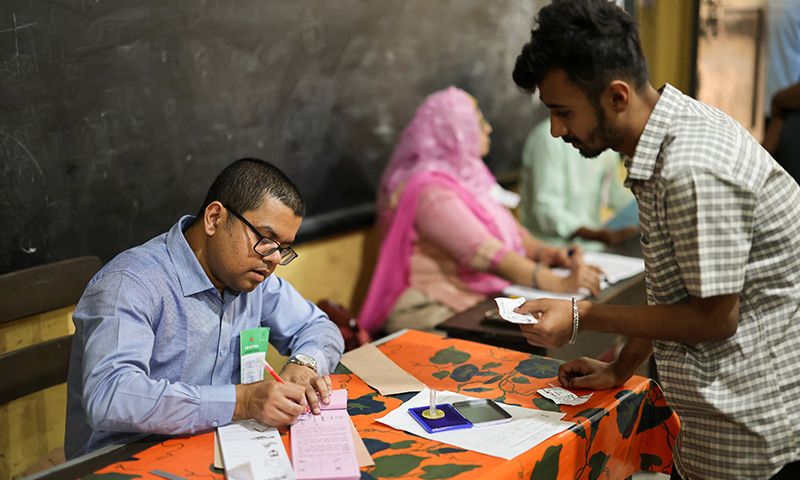
DHAKA: Bangladesh goes to the polls today for its 13th Parliamentary election, alongside a referendum on the July National Charter, in what many observers describe as a defining moment for the country’s political future.
Addressing the nation ahead of the vote, interim government chief Professor Muhammad Yunus called on candidates to put national interest above party loyalties. Speaking to the Muslim-majority country of over 170 million people, the Nobel laureate reminded political leaders that both victory and defeat are natural features of democratic life. He urged all sides to accept the people’s verdict with grace and work collectively toward building a more just, democratic, and inclusive Bangladesh.
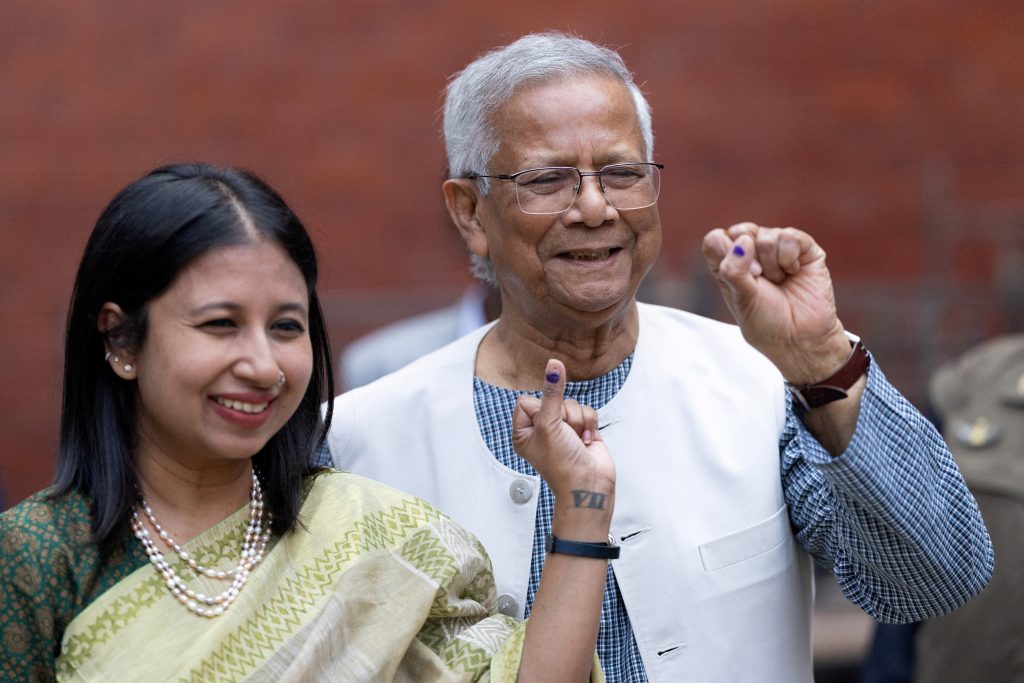
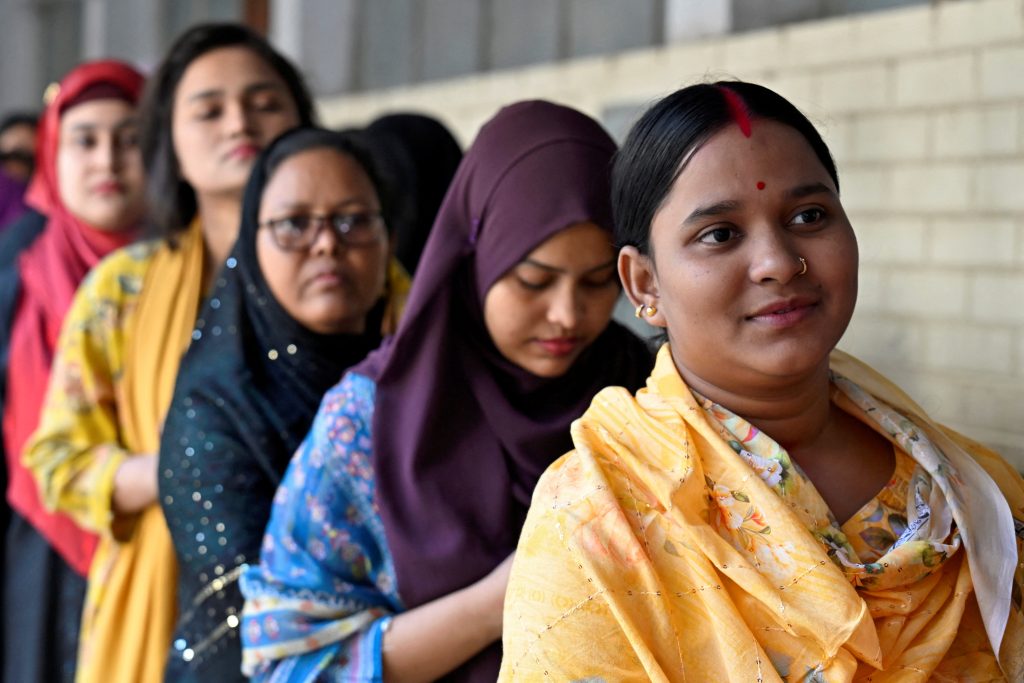
Professor Yunus also encouraged citizens to participate enthusiastically, describing the vote as a celebration of democratic renewal. He made a special appeal to women and young voters, many of whom, in the past, felt sidelined or discouraged from participating, to turn out in large numbers and help shape a new chapter for the nation.
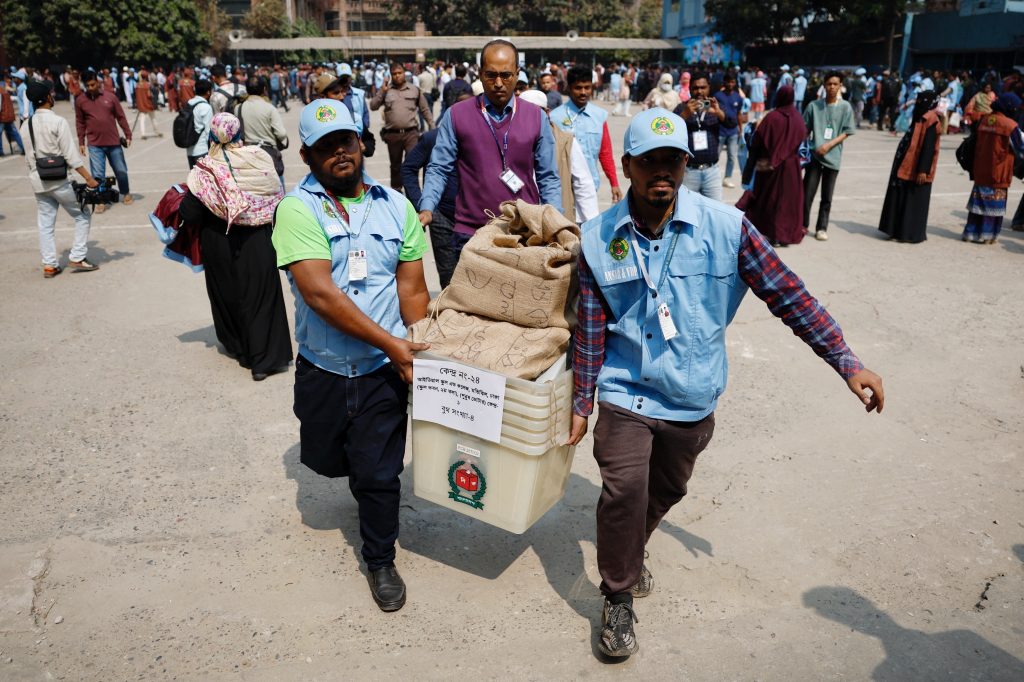
Campaigning, which began on 22 January, concluded on 10 February. Authorities imposed restrictions on rallies and public gatherings 96 hours before and after polling day to ensure peace and order. Voting began at 7:30 AM and will continue until 4:30 PM. The government has declared a two-day general holiday to facilitate voter participation, followed by the regular weekend break.
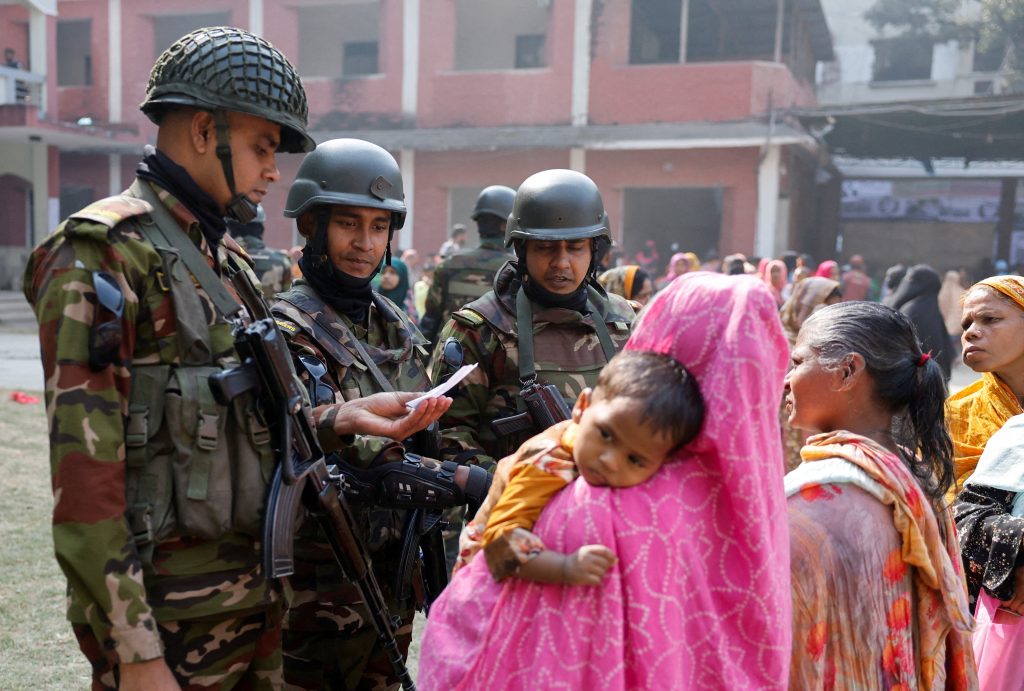
International attention on the election is significant. Nearly 400 foreign observers, including around 200 journalists from 45 global media organisations, are present in the country. This marks a noticeable increase compared to the previous general election in January 2024. Invitations were extended to numerous countries and international organisations, including the European Union, Commonwealth Secretariat, Organisation of Islamic Cooperation, and other regional and global bodies, reflecting the interim administration’s stated commitment to transparency.
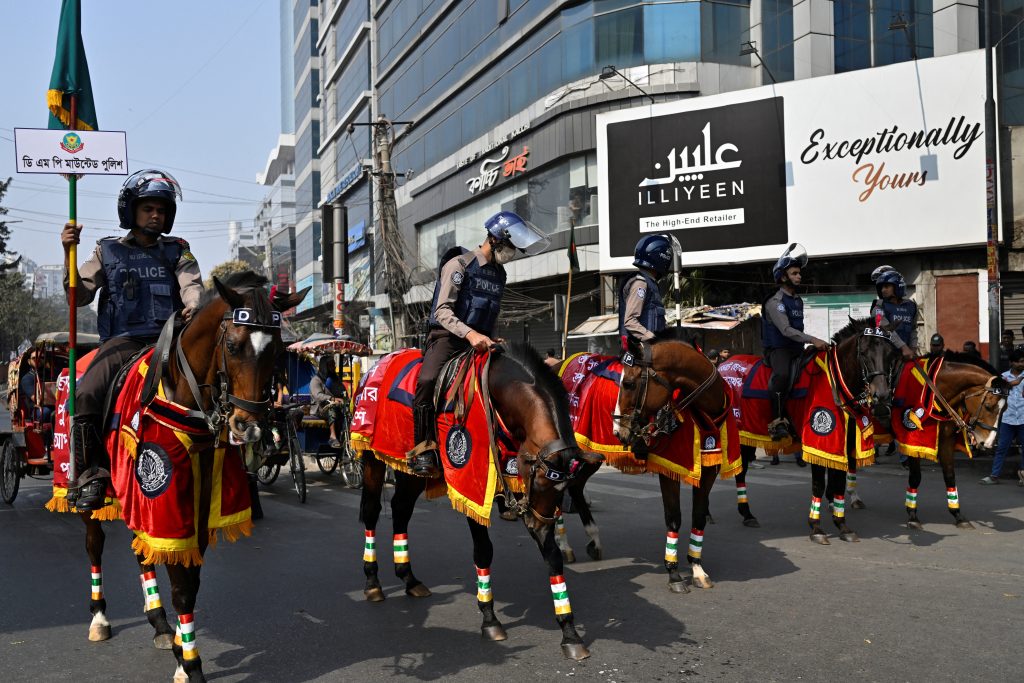
In a major political development, the Awami League, led by former Prime Minister Sheikh Hasina, is not participating in the election following the dramatic political upheaval that unfolded after the January 2024 polls. A student-led mass movement last year led to the fall of the previous government and paved the way for the current interim setup. As a result, the Bangladesh Nationalist Party (BNP) and its allies are widely seen as key contenders in this election.
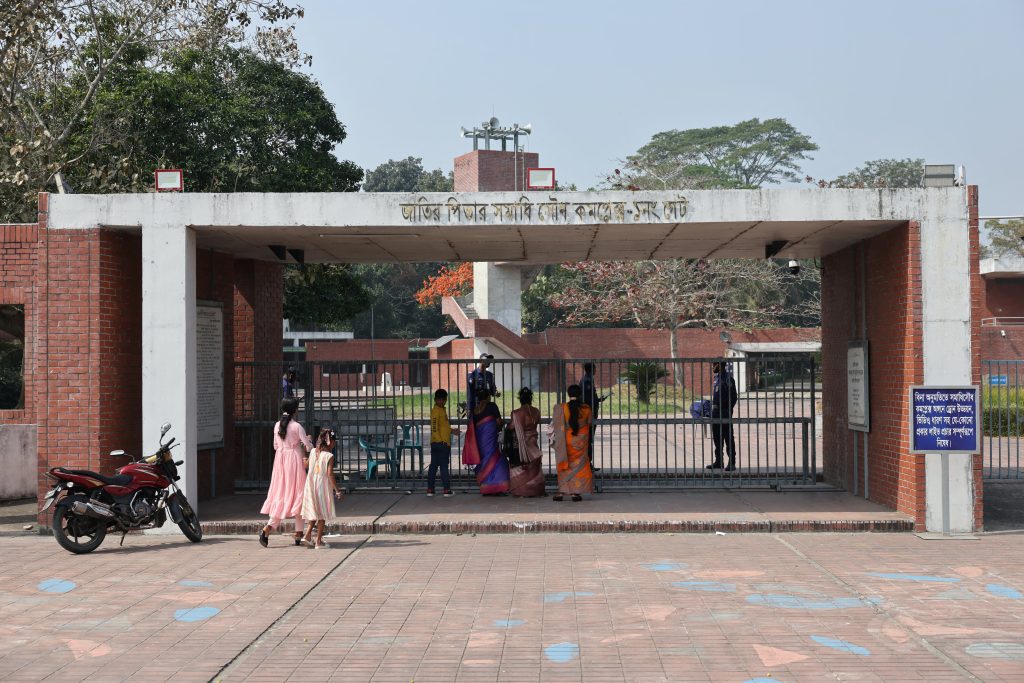
Meanwhile, global media watchdogs have raised concerns about press freedom and the safety of journalists during the election period. The New York-based Committee to Protect Journalists (CPJ) has called on political parties to publicly commit to protecting media workers and refraining from intimidation or misuse of laws. The organisation noted that journalists have faced mounting pressures in recent months, including attacks on media offices and online harassment.
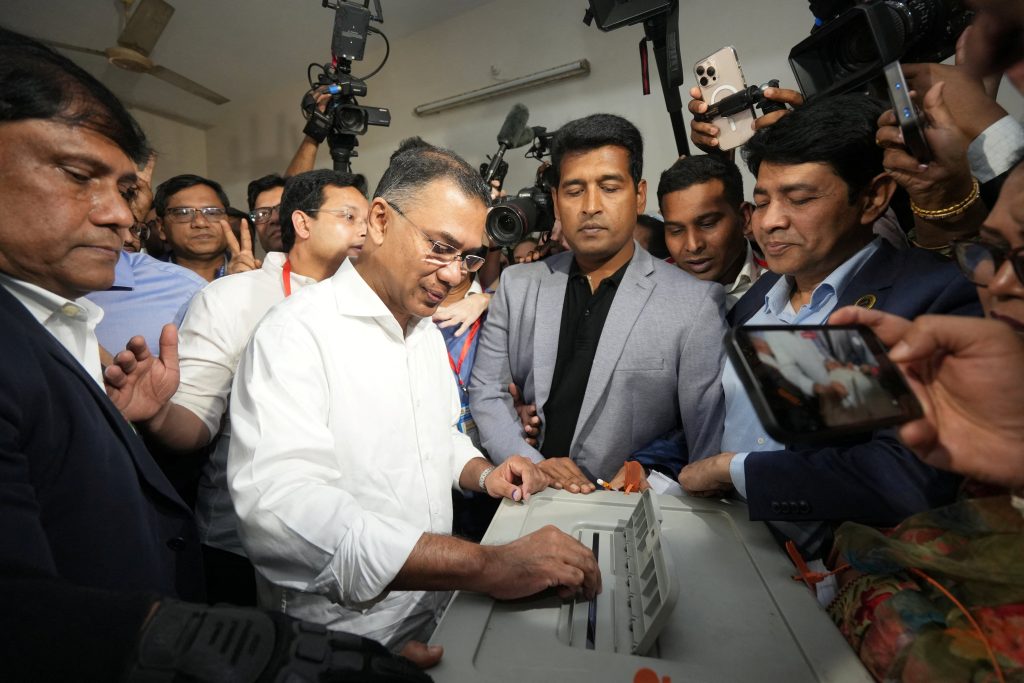
CPJ representatives stressed that a free press is vital to credible elections, enabling voters to make informed choices. They also pointed to longstanding concerns about violence against journalists and urged meaningful reforms to ensure transparency and accountability.
Similarly, the Geneva-based Press Emblem Campaign condemned recent attacks on journalists and called for thorough investigations. Bangladesh’s Editors’ Council has appealed to authorities to guarantee the safety of media professionals, especially during the sensitive election period.
Despite these challenges, there is a palpable sense that the country stands at a crossroads. Western media outlets have suggested that the BNP-led alliance is currently leading in public opinion surveys. Party chairman Tarique Rahman, who returned to Bangladesh in December after 17 years abroad, has drawn large crowds at rallies. In his speeches, he has reiterated job creation, technological advancement, youth empowerment, and a governance model rooted in rule of law and freedom of expression.
The passing of former Prime Minister Begum Khaleda Zia late last year marked the end of an era, and the government observed three days of national mourning. Her death further reshaped the political landscape ahead of this vote.
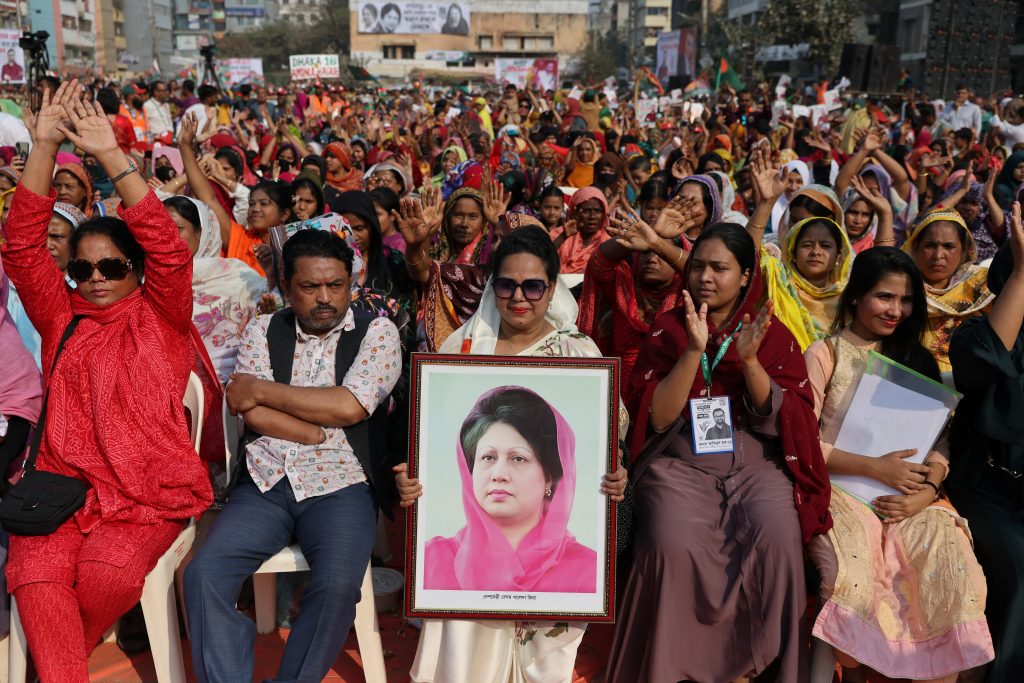
International publications, including major American and British outlets, have projected a strong electoral performance for Rahman. At campaign events, he has spoken about building a Bangladesh founded on trust, mutual respect, and shared prosperity, messages that resonate with a population eager for stability after a turbulent period.
As voters cast their ballots today, many in the region, including in Pakistan, are watching closely. For Islamabad, a stable and democratically empowered Bangladesh holds the promise of renewed regional cooperation and economic engagement. The coming hours will determine not just the outcome of an election, but the direction of a nation seeking to redefine its political path.
You May Also Like