
- Reuters
- October 27, 2026
Scientists find vast climate-resilient coral reef spanning 64,000 sq miles
-

- Zafar Ali
- June 16, 2026
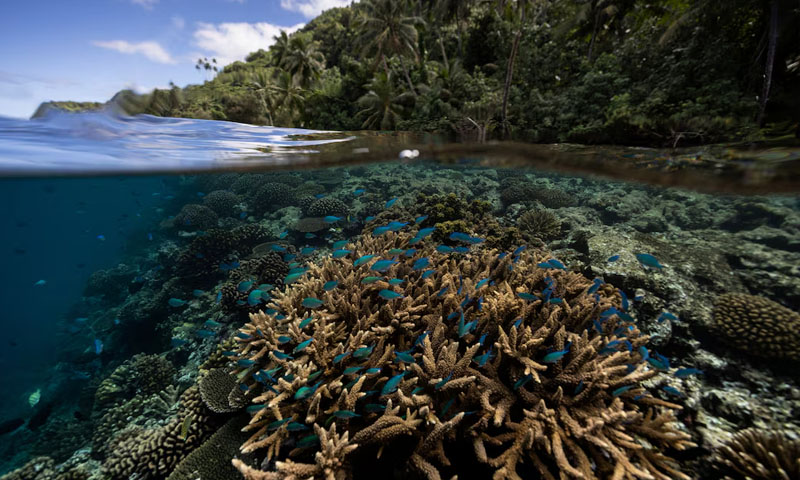
SINGAPORE: In a major breakthrough for marine conservation, scientists have identified nearly 166,000 square kilometres (64,000 square miles) of coral reefs capable of surviving and recovering from the climate crisis — three times more than previously estimated.
The findings, released on Tuesday, offer a powerful ray of hope for the world’s marine ecosystems, which have long been framed as facing an inevitable, irreversible decline.
The world’s coral reefs are vital to planetary health, sustaining a quarter of all marine life. However, they have come under severe stress in recent decades due to violent tropical storms, localised pollution, and mass “bleaching” events triggered by soaring ocean temperatures.
Mapping the Reefs of Hope
To find these resilient sanctuaries, researchers conducted a massive analysis combining 45,000 coral surveys with decades of climate and ocean data. The study successfully mapped climate-hardy reefs across 71 countries and 100 territories, unearthing previously unrecognized resilient pockets in parts of the Caribbean as well as the Pacific and Atlantic oceans.
“Coral reefs are often framed as ecosystems beyond saving,” said Emily Darling, director of coral conservation at the Wildlife Conservation Society (WCS) and one of the report’s main authors. “This research shows otherwise: we know where the hope is, and what we need now is political will.”
A Blueprint for ’30 by 30′
The timing of the study is critical. Governments worldwide are currently drawing up strict action plans to bring 30% of their land and marine environments under formal protection by 2030—a global conservation target known as “30 by 30.”
This new data provides a precise roadmap for policymakers to integrate high-priority, resilient coral sanctuaries into their national climate strategies. Currently, the gap between what is safe and what is protected remains wide.
“Only 28% of these resilient reefs currently fall within protected and conserved areas, so the opportunity is clear, and so is the urgency, especially as we face an upcoming super El Niño event,” Darling warned during a media briefing.
Deploying Limited Funds: The Reality of Triage
Stacy Jupiter, co-author of the study and executive director of the WCS’s Global Marine Program, emphasized that the data will empower governments to make hard, data-driven decisions on where to deploy limited conservation funds to maximize survival rates.
However, Jupiter also noted that the data brings a sobering reality for severely degraded marine zones.
“In certain cases, where reefs are below certain benchmarks for ecosystem function, it may be a case of triage, where we may need to leave those places behind,” she stated, underscoring the need to aggressively protect the coral systems that actually stand a fighting chance against global warming.
You May Also Like



- WEB DESK
- October 27, 2026
Punjab govt moves to provide life insurance cover to employees

- AFP
- October 27, 2026