- Web Desk Zahid Gishkori
- Yesterday
Second round of Pak-Afghan talks begin in Istanbul
-

- Web Desk
- Oct 25, 2025
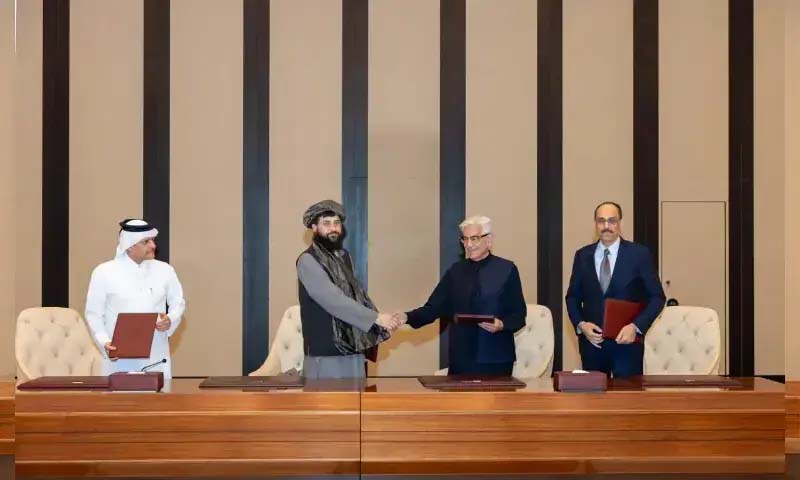
ISTANBUL: The second round of talks between Pakistan and Afghan Taliban resumed in Istanbul, following recent border clashes between the two countries. The negotiations are being held under the mediation of Qatar and Turkiye.
According to source, formal talks between Pakistani officials and the Afghan Taliban are taking place at a hotel in Istanbul.
Diplomatic sources said that Pakistan’s seven-member delegation includes Defence Minister Khawaja Asif, senior military, intelligence, and Foreign Office officials, while Afghanistan’s seven-member team is being led by the deputy interior minister.
Turkish news agency Anadolu said that the Afghan interim government’s spokesperson, Zabihullah Mujahid, confirmed that Deputy Interior Minister Mullah Rahmatullah Najib is heading the Afghan delegation.

He had earlier stated in a social media post that unresolved issues with Pakistan would be discussed during the meeting.
Earlier, during the first round of talks held in Doha under Qatari and Turkish mediation, both countries agreed to an immediate ceasefire after a week of intense and bloody border clashes.
In that meeting, Pakistan and Afghanistan had also agreed to hold follow-up sessions to ensure the continuation and monitoring of the truce through a credible and sustainable mechanism.
According to a statement issued by the Foreign Office, the second round of Pakistan-Afghanistan talks is being held today in Istanbul.
The statement reiterated that Pakistan does not seek tensions with Afghanistan but urged the Taliban to honour their commitments to the international community and take decisive action against banned groups, including Tehreek-e-Taliban Pakistan (TTP) and Fitna al-Hindustan.
In his weekly briefing, Foreign Office Spokesperson Tahir Hussain Andrabi expressed hope that a “concrete and verifiable monitoring mechanism” would be established in today’s meeting in Istanbul to prevent terrorist threats emerging from Afghan soil and to protect Pakistani lives.
The earlier negotiations in Qatar, held on 18 and 19 October, aimed to reduce border tensions, with both sides presenting their respective concerns.
In an interview, Defence Minister Khawaja Asif stated that a joint agreement signed by Pakistan, Afghanistan, Turkiye, and Qatar clearly stipulates that there will be no border violations, and the ceasefire will remain effective unless that agreement is breached.
He said that the TTP has carried out attacks inside Pakistan with the “collusion” of Afghan Taliban elements, though Kabul has denied the allegations.
Asif further noted that the primary purpose of the ceasefire agreement is to “eliminate the threat of terrorism,” which has affected the Pakistan-Afghanistan border regions for years.
It is worth noting that ground fighting and Pakistani airstrikes along the 2,600-kilometre disputed border began after Islamabad demanded that Kabul rein in militants allegedly operating from safe havens inside Afghanistan.
On the night of 11–12 October, Taliban security forces fired on Pakistani positions without provocation, prompting a strong response from the Pakistan Air Force.
Pakistani security forces later carried out successful strikes against TTP militants in Afghanistan’s Kunar, Nangarhar, Paktika, Khost, and Helmand provinces, targeting several Taliban border posts and killing dozens of Afghan Taliban fighters.
Following these setbacks, the Taliban government requested an immediate ceasefire, after which Pakistan announced a 48-hour temporary truce on 15 October. The Taliban later sought an extension, and Pakistan agreed to maintain the ceasefire until peace talks conclude.
You May Also Like