
- Web Desk
- Mar 24, 2026
Senate approves 27th Constitutional Amendment amid opposition ruckus
-

- Web Desk
- Nov 10, 2025
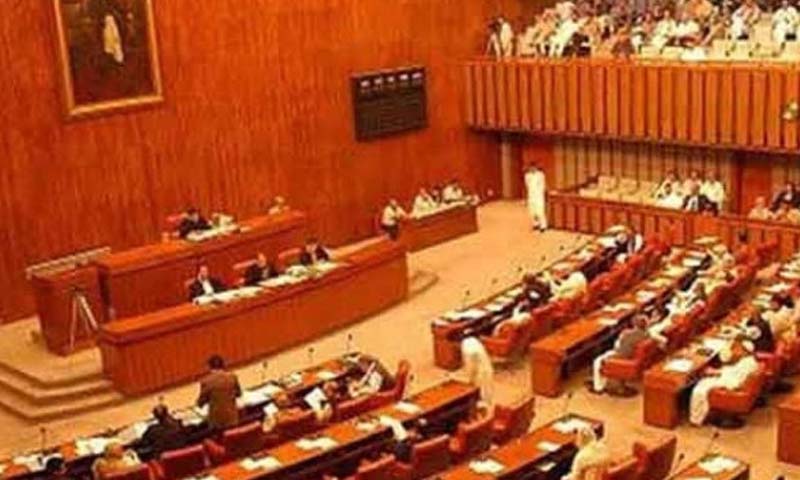
ISLAMABAD: The Upper House of Parliament (Senate) has approved all 59 clauses of the 27th Constitutional Amendment by a majority vote.
Law Minister Azam Nazeer Tarar moved the motion for the bill’s approval. Senate Chairman Syed Yousaf Raza Gilani chaired the Senate session with various lawmakers expressing their views on the amendment.
During the session, PTI senators staged a strong protest, tearing copies of the bill and scattering them, while opposition members gathered in front of the Senate chairman’s dais.
Amidst the opposition’s uproar, during the clause-by-clause approval of the 27th Amendment Bill, PTI Senator Saifullah Abro did not join the protest and voted in favour of the amendment. JUI Senators Ahmad Khan and Naseema Ehsan also voted in favour.
The government successfully secured a two-thirds majority for the 27th Constitutional Amendment. The amendment to Article 42 under the 7th Constitutional Amendment Bill was passed by a majority, with 64 votes in favour and only 2 against.
Following objections from the opposition, a recount was conducted. The amendment to Article 42 regarding the establishment of a Constitutional Court was approved by a majority, as was the amendment to Article 59.
The Senate chairman stated that 64 votes were cast in favour of the amendment. The amendment to Article 63A replaced the word “Supreme” with “Federal Constitutional Court,” and Article 68 was amended to include reference to the Federal Constitutional Court in parliamentary debates.
The amendment to Article 78, adding the Federal Constitutional Court to the relevant paragraph, was also passed, during which PTI members left the chamber.
The amendment to both paragraphs of Article 81 to include the court was also approved. Only PTI Senator Saifullah Abro remained in the house, voting in favour of the amendment.
Amendments granting the prime minister authority to appoint seven advisers under Article 93 and replacing the word “Supreme” with “Federal Constitutional Court” in Article 100 were approved.
Senators Falk Naz Chitrali and Fauzia Arshad continuously chanted slogans in protest.
Amendments were passed to include the Federal Constitutional Court in Article 114, increase the number of chief ministers’ advisors in Article 130M, add the Federal Constitutional Court in Article 165A, include it in the definition under Article 175, and make related changes to Article 175A of the Constitution of Pakistan.
Amendments were approved for the reconstitution of the Judicial Commission, including the inclusion of one senior judge each from the Supreme Court and Federal Constitutional Court, changes in Article 175A for appointments in the higher judiciary, and making the Chief Justice of the Federal Constitutional Court a member of the Judicial Commission.
Under the approved amendment, the Chief Justice of the Supreme Court will also be a member of the Judicial Commission, along with one senior judge each from the Supreme Court and the Federal Constitutional Court.
The amendment to Article 175D was passed by a majority, including a provision for judges of the Constitutional Court to take a renewed oath according to the Third Schedule of the Constitution.
According to the approved amendment, the decisions of the Federal Constitutional Court will apply to all courts in Pakistan, including the Supreme Court, while Supreme Court decisions will not apply to the Federal Constitutional Court. Public interest cases in constitutional benches will be transferred to the Federal Constitutional Court.
Under the amendment, a High Court judge with at least five years of service may be appointed as a member of the Federal Constitutional Court.
Amendments were approved to include the Chief Justice of the Federal Constitutional Court in the Judicial Commission, and the suo motu powers of the Supreme Court were removed and transferred to the Constitutional Court, with Article 184 deleted from the Constitution.
Amendments to delete Articles 186 and 191A were approved, as was the amendment to Article 200 limiting the President’s powers for judge transfers.
Under the amendment, the President may transfer High Court judges upon recommendation of the Judicial Commission. The Chief Justice of the relevant High Court will be a member of the Judicial Commission for such transfers.
The amendment granting the Supreme Judicial Commission the power to oversee judge transfers was approved. Chief Justices of High Courts cannot be transferred, nor can a judge whose seniority is higher than a Chief Justice in another court. Transferred judges will not be senior to the Chief Justice of the receiving court.
If a judge refuses a transfer, a reference will be filed against him/her in the Supreme Judicial Council. Amendments were approved to provide pensions and benefits to judges for the specified period upon retirement.
If a judge refuses to join the Federal Constitutional Court, a reference may be filed in the Supreme Judicial Council against the relevant judges of the Supreme Court or High Court. Judges will be given access in the Supreme Judicial Council, and pensions and benefits will be granted for the specified period after retirement.
Amendments to Article 209 were approved, requiring new rules for the Supreme Judicial Council within 60 days. The Chief Justices of the Federal Constitutional Court and Supreme Court, along with two senior judges from each, will be members of the Judicial Council.
A judge of the Federal Constitutional Court or Supreme Court may be appointed jointly by the Chief Justice of the Supreme Court or Chief Justice of the Constitutional Court for two years. Two senior High Court judges will also be members of the Judicial Council, and the senior Chief Justice among the Supreme Court and Federal Constitutional Court will be the head of the Council.
Amendments to Article 243 were approved, including seven new clauses after Clause 4, and the position of Chief of Army Staff was renamed to Commander of Defense Forces.
The president, on the advice of the prime minister, will appoint the Commander of Defence Forces, similar to the appointments of Air Chief and Naval Chief. The position of Joint Chief of Staff Committee will be abolished from November 27, 2025. The prime minister, on the recommendation of the army chief, will appoint the Commander of National Strategic Command. Appointments will be made from among Pakistan Army members, with salaries and allowances determined. The federal government may promote military officers to the ranks of Field Marshal, Air Marshal, or Admiral Chief, with uniforms and privileges for life. These officers will be considered national heroes and cannot be removed without Article 47.
The federal government will determine the responsibilities of Field Marshal, Air Marshal, and Admiral Chief, who will receive legal immunity under Article 248.
Amendments to Article 248 grant the president lifetime immunity; no legal action may be taken against the president after retirement. However, immunity for holding any public office will cease after retirement.
Amendments to the Third Schedule of the Constitution were approved, including the inclusion of “Chief Justice of the Federal Constitutional Court” in the oath for the Chief Justice of the Constitutional Court.
The Senate approved all 59 clauses of the 27th Constitutional Amendment by a majority, after which Law Minister Azam Nazeer Tarar presented the bill in the Senate for final approval.
Voting on the amendment began with the chamber doors closed, bells rung for two minutes, after which final counting for the constitutional amendment took place.
The final voting on the 27th Constitutional Amendment was completed, with members casting their votes in favour.
You May Also Like