
- Reuters
- September 9, 2026
Senate panel flags discrepancies in Rs216bn tax exemptions granted to 1,256 firms
-

- Zahid Gishkori
- September 9, 2026

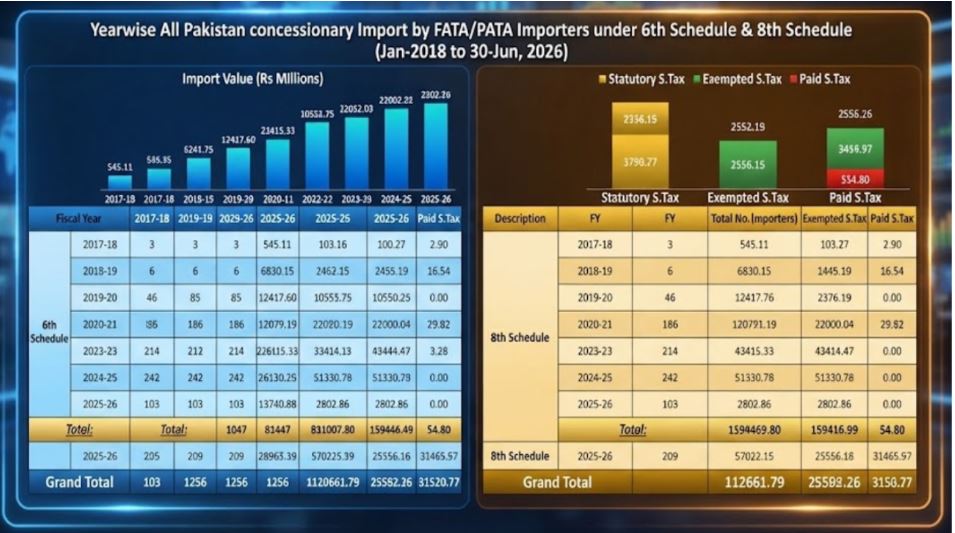
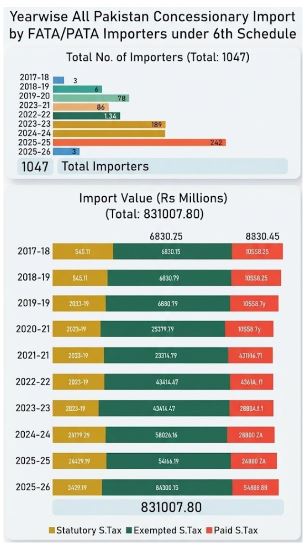
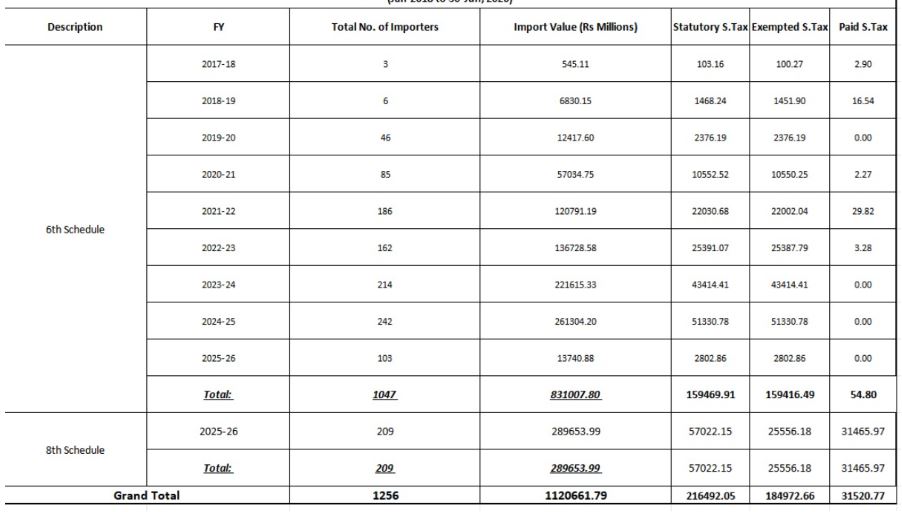
ISLAMABAD: A Senate penal was told that as many as 1,256 private companies received tax exemptions worth Rs216 billion between 2018 and 2026 under the Sixth and Eighth Schedules of Pakistan’s tax laws.
According to the documents submitted by Federal Board of Revenue (FBR) to the Senate Standing Committee on Interior, the companies imported goods worth around Rs1.12 trillion during the period while collectively paying about Rs35 billion in taxes, according to the documents available with HUM English.
The documents were earlier presented before a subcommittee headed by Senator Saifullah Abro and subsequently placed before the Senate Standing Committee on Interior.
According to the FBR, the tax concessions were originally intended to encourage industrialisation, investment and economic activity in the former Federally Administered Tribal Areas (FATA) and Provincially Administered Tribal Areas (PATA), where tax incentives were provided as part of the post-merger economic transition.
However, the documents did not specifically say whether some companies receiving the concessions actually conducted their production activities in the tax-exempt areas.
Companies showed FATA, PATA operations
According to the documents, 1,047 private companies received tax exemptions of around Rs160 billion under the Sixth Schedule during the nine-year period.
Another 209 companies availed exemptions worth Rs26 billion under the Eighth Schedule.
The beneficiaries included some of the country’s well-known brands, which imported various goods under the tax concessions.
The documents said some factories obtaining consumption certificates for imported goods had registered business addresses in tax-exempt areas but were actually conducting their production activities in other parts of the country.
These locations included major industrial and commercial centres such as Karachi, Lahore and Faisalabad, among other cities, according to the documents.
The discrepancy has raised concerns about whether tax-exempt imported materials were actually consumed in the areas for which the concessions were intended.
Rs750bn in imports not reflected in FBR records
The documents said the companies imported goods worth approximately Rs1.12 trillion during the period.
However, Inland Revenue officials at the Regional Tax Office (RTO) Peshawar issued consumption certificates for imported goods worth only about Rs389 billion.
This left roughly Rs750 billion worth of imported goods that could not be accounted for in the FBR’s records, the documents show.
There was also no confirmation that the remaining imported material had actually been consumed within the designated tax-exempt areas, according to the documents presented to the committee.
The discrepancy prompted the Senate panel to question how the imported goods were monitored and whether the tax concessions were being used for their intended purpose.
The committee said factories paying full taxes and those unable to access the concessions faced an unfair competitive disadvantage if companies operating elsewhere were able to benefit from exemptions meant for industries located in the former FATA and PATA areas.
FBR disputes revenue-loss
FBR’s Inland Revenue Operations officials told the committee that the exemptions had not caused any loss to the national exchequer because the applicable sales tax was secured through security instruments.
The committee, however, disagreed with that position, saying that the ability to confiscate or encash a security instrument could not be treated as equivalent to actual collection of tax revenue.
The committee sought details of the number and value of security instruments still pending, particularly in cases where applications for consumption certificates had either been approved or rejected.
FBR officials said that affected parties had obtained stay orders from the Peshawar High Court in several cases.
In some cases, the Supreme Court had also restrained the authorities from encashing security instruments, they said, adding that some of those restrictions had remained in place for nearly a year.
Tax exemptions continued after FATA merger
The tax concessions continued even after the 25th Constitutional Amendment, under which the former FATA areas were merged with Khyber Pakhtunkhwa.
According to FBR officials, the exemptions were subsequently extended until 2026.
From July 1, 2025, a 10 per cent sales tax was imposed on goods supplied within the tax-exempt areas, while goods supplied outside those areas were subject to a 16 per cent sales tax, the officials told the committee.
Income-tax exemptions also continued until July 1, 2026, after which the former FATA’s tax-exempt status ended.
The end of the exemption regime was intended to bring the merged districts into the country’s broader tax framework after the transition period.
What the schedules provide
The Sixth Schedule of the Sales Tax Act provides full sales-tax exemptions on specified goods and categories.
The Eighth Schedule, by contrast, provides reduced sales-tax rates on certain goods or transactions instead of a complete exemption.
The concessions relating to the former FATA and PATA were designed to support industries established in those areas by allowing eligible units to import machinery, plant and raw materials without bearing the normal tax burden.
The Senate committee raised concerns over the monitoring of eligible businesses, consumption certificates and the actual destination and use of imported goods.
The disclosures are likely to intensify scrutiny of how tax incentives granted for regional development were administered and whether companies outside the designated areas benefited from concessions intended exclusively for industries operating in the former tribal regions.
You May Also Like


- WEB DESK
- September 9, 2026
Gold prices rise in Pakistan after two-day slide

- WEB DESK
- September 9, 2026