- Web Desk
- Mar 13, 2026
Senate panel summons CDA chairman over tree cutting in Islamabad
-

- Web Desk
- Jan 13, 2026
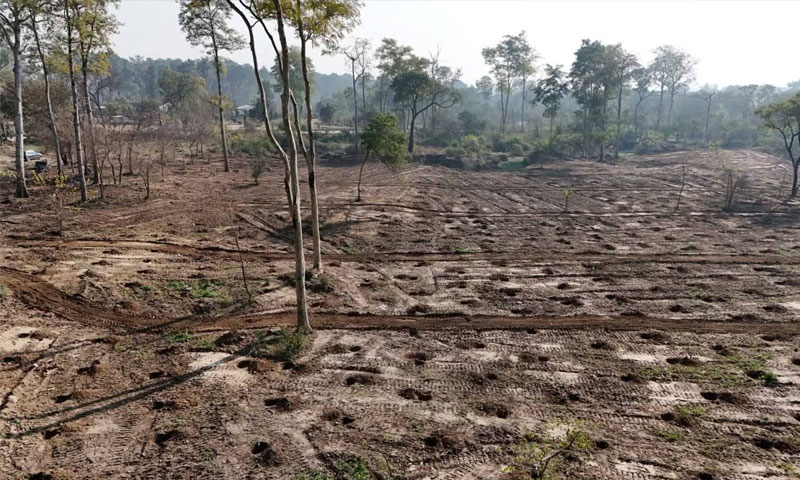
ISLAMABAD: The Senate Standing Committee on Environment has summoned the Capital Development Authority (CDA) chairman widespread cutting of trees in Islamabad, calling it “deeply concerning and unacceptable”.
Committee Chairperson Sherry Rehman has summoned the CDA chairman for a hearing on January 22, warning that removing green cover from the capital cannot be allowed.
She said that stricter laws will be formulated to halt further tree felling and protect the city’s environmental character.
The Senate panel has taken notice after social media reports on the cutting of trees in several key areas, including in H-8, the Islamabad Expressway, Shakarparian Hills and F-9 Park.
In a related debate in the National Assembly, Federal Minister of State for Interior Talal Chaudhry defended the tree cutting, saying that criticism was misplaced.
He argued that certain measures were unavoidable for infrastructure improvement and urban redevelopment.
According to Chaudhry, trees that cause pollen allergy were cut down to protect residents from health problems.
Why Trees Have Been Cut?
The CDA and the federal government assert that the tree-cutting campaign in Islamabad is part of a broader plan to tackle allergy and respiratory issues linked to wild mulberry (shehtoot) trees, which release large amounts of pollen that can trigger allergic reactions and asthma in residents.
Talal Chaudhry stated that approximately 29,115 trees have been removed across the Islamabad Capital Territory under this programme, with plans to plant more trees than have been felled to restore the capital’s greenery.
Environmental and Public Pushback
Environmental groups, including WWF-Pakistan, have raised alarms that the removal appears to extend beyond targeted mulberry trees and is linked to wider infrastructure development activities that have cleared extensive vegetation.
They said that satellite images and field observations indicate sections of the capital have seen significant loss of green cover, with exposed soil and barren land in areas previously densely vegetated.
Critics argue that such large-scale clearance without adequate ecological safeguards could exacerbate urban heat island effects, reduce groundwater retention, degrade air quality, and harm biodiverse city environments.
The CDA maintains the tree-cutting is lawful and part of a structured plan under official guidance.
The authority says it is documenting the process, targeting only trees identified as high pollen-producers, and that compensatory plantation programs are underway to plant new saplings of indigenous species to maintain, and eventually enhance, the city’s green footprint.
Officials have emphasised that the removal is not indiscriminate but follows scientific assessment and legal directives, with commitments to expand replantation and environmental monitoring.
Political and Parliamentary Reaction
The issue has attracted attention from lawmakers. Besides the Senate committee’s demand for CDA accountability, the National Assembly has debated the matter, reflecting concerns over environmental conservation, public health, and urban planning.
You May Also Like