- Aasiya Niaz
- 25 Minutes ago
Severe smog challenge continues to persist in Lahore
-

- Web Desk
- Nov 29, 2023
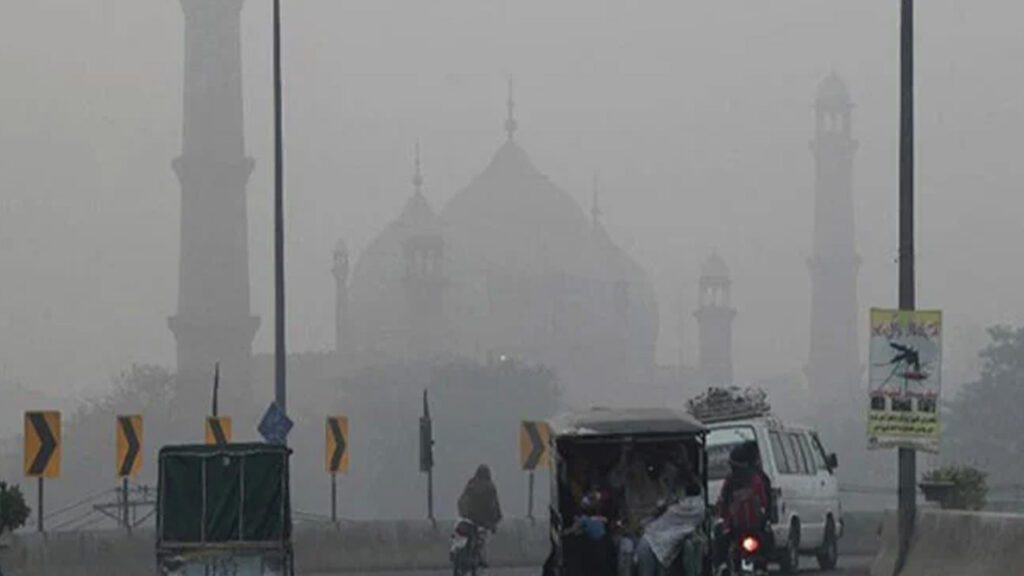
LAHORE: In the ongoing battle against a severe smog crisis, Lahore found itself back in the global spotlight as the world’s most polluted city on Wednesday.
Despite a recent three-day smart lockdown, Lahore witnessed a troubling surge in smog levels, with the air quality index (AQI) reaching a staggering 414 on Wednesday morning.
The smart lockdown, initially a bold move by the caretaker Punjab government covering 10 districts, failed to curb the relentless rise of smog.
The atmospheric cocktail of smoke and fog became even denser, defying expectations and posing a significant challenge to the city’s residents.
Punjab govt all set to launch E-bikes to prevent city smog intensity
As per IQAir’s AQI measurements, the hazardous smog levels peaked at 580 around DHA Phase 3, 517 in Lahore’s cantonment area, and 477 at Amir Town and The Mall. Even the lowest recorded AQI around Aitchison College lingered dangerously at 350, underscoring the severity of the air pollution crisis.
Adding to the city’s woes, plans by the Punjab government for artificial rain to alleviate pollution in Lahore have faced an unexpected delay of four to six weeks. Technical difficulties and suboptimal project performance by experts were cited as primary reasons, with the unavailability of aircraft emerging as a key factor contributing to the setback.
With such an alarming situation of smog, the three day school holidays are likely to be announced by the provincial government.
Lahore Weather
Amid these environmental challenges, Lahore experienced partially cloudy weather, with the maximum temperature hovering at 25 degrees Celsius and the minimum recorded at 14. The humidity level remained at a stifling 77 percent, exacerbating the overall atmospheric conditions.
According to met office, there are chances of rain tomorrow, which would hopefully be helpful in reducing the smog.
Health Hazards of Smog
Beyond the inconvenience caused to daily life, the hazardous smog poses severe health risks and environmental implications. Respiratory and cardiovascular diseases, such as asthma and bronchitis, are exacerbated, while visibility diminishes, and quality of life deteriorates.
The impact extends to agriculture, greenery, and infrastructure, contributing to global warming and acid rain.
In response, experts emphasize the critical need for stricter emission standards and regulations across various sectors, including transportation, industries, power plants, and brick kilns.
You May Also Like