- Web Desk
- 34 Minutes ago
Shamima Begum: woman who left Britain to join ISIS is now igniting citizenship debate
-

- Web Desk
- Nov 12, 2025
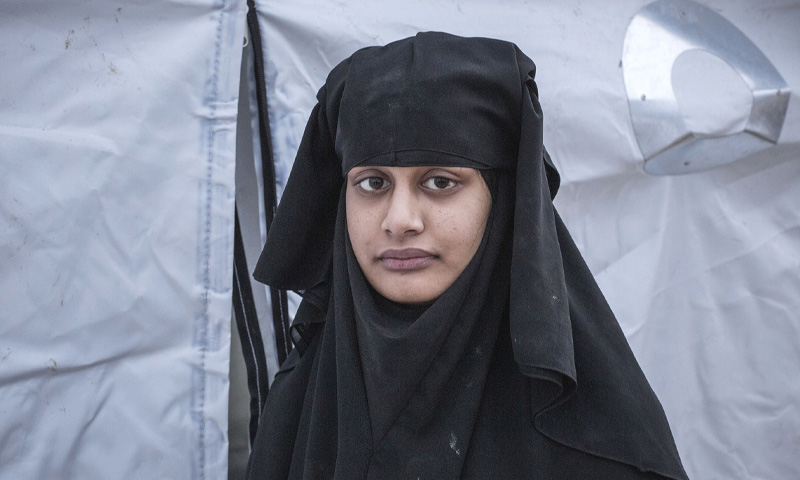
An independent review of the UK’s counterterrorism policies has concluded that Shamima Begum, who left London as a teenager to join the so-called Islamic State (ISIS), should be allowed to return to Britain, along with other UK-linked detainees held in Syrian camps.
The Independent Commission on UK Counter-Terrorism Law, Policy and Practice, which carried out the three-year review, said that leaving British nationals in camps such as al-Hol and Roj in northeast Syria was “unsustainable” and could turn them into “Britain’s Guantanamo.”
According to the report, conditions in these facilities amount to “inhuman and degrading treatment.” It warned that detaining people indefinitely in such circumstances breaches the UK’s international human rights obligations.
“The government should facilitate the voluntary repatriation of British nationals, including those who have been stripped of citizenship,” the commission stated. It also recommended appointing a special envoy to oversee returns and to ensure that returnees are informed of any potential legal consequences they might face upon their arrival.
FORMER NORTHERN IRELAND CHIEF JUSTICE WEIGHS IN
Sir Declan Morgan, the former Lord Chief Justice of Northern Ireland and chair of the commission behind the report, said the UK government’s decision to revoke Shamima Begum’s citizenship was a mistake.
Speaking at the report’s launch at the Royal United Services Institute in Westminster on Tuesday, Morgan told Middle East Eye that under the commission’s proposed reforms, Begum’s citizenship could not have been removed.
He criticised the current policy as “unsustainable and inconsistent with our human rights obligations,” urging the government to repatriate all British nationals held in Syrian camps – including those with dual citizenship.
Begum, who left her home in east London at age 15 to join ISIS in 2015, has been detained in a Syrian camp since the fall of the so-called caliphate. The UK government stripped her of citizenship in 2019, arguing that she was entitled to Bangladeshi nationality through her parents. Bangladesh has denied this claim.
Her legal team has since challenged the decision, arguing she was a trafficking victim who was failed by British authorities. The Supreme Court last year refused to hear her appeal.
CALLS FOR REFORM OF CITIZENSHIP LAWS
The commission’s report criticises the UK’s use of citizenship deprivation powers, noting that over the past two decades, the legal threshold for removing citizenship has been “steadily lowered” and that the policy disproportionately affects ethnic minority Britons.
“Although the law prohibits statelessness, in practice deprivation may proceed where another nationality is merely presumed,” the report says. “This results in unequal protection among British citizens, as only those with potential claims to another nationality are vulnerable to deprivation.”
It also recommends that no one born or registered as a British citizen should ever lose that status, and that the power to revoke citizenship on grounds of the “public good” should be re-examined to avoid arbitrary application.
The report argues that the UK’s approach to repatriating citizens from conflict zones leaves it “an outlier” among Western allies. Former attorney general Dominic Grieve, another member of the commission, pointed out that countries like the US, Canada, and Australia have successfully repatriated many of their nationals from Syria.
“Several women were also children when they departed the UK with their families,” the report notes, “and therefore could be considered victims of human trafficking.”
Jonathan Hall, the UK’s independent reviewer of terrorism legislation, praised the commission’s work, calling it “a far-reaching and impressive document that is not full of wafty generalities but shows a real commitment to making practical recommendations.”
You May Also Like