- Reuters
- September 3, 2026
Sindh Assembly passes resolution opposing new provinces, administrative units
-

- Atif Hussain
- September 3, 2026
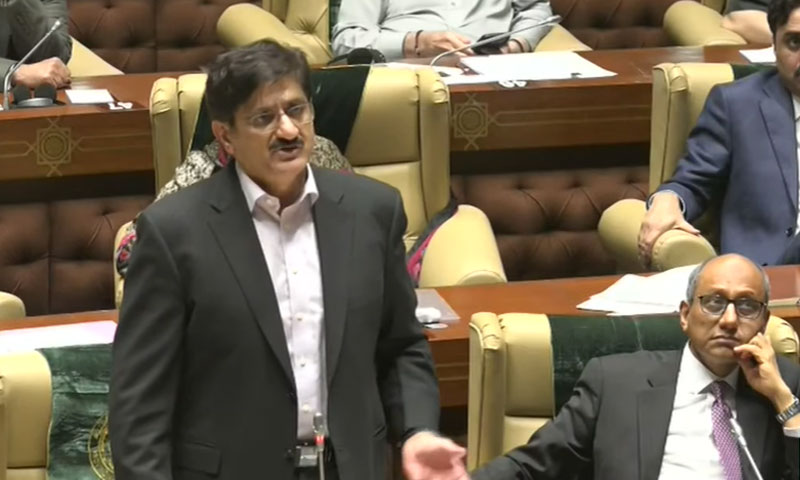
KARACHI: The Sindh Assembly on Thursday passed by a resolution with a majority vote opposing the creation of new provinces and administrative units in Sindh.
Pakistan People’s Party (PPP) leader Nisar Ahmed Khuhro presented the resolution in the provincial assembly, which said the assembly “categorically and unequivocally rejects” any proposal to divide Sindh or create a new province.
“Sindh is one and will remain one,” the resolution said, declaring every district and division of the province an indivisible part of Sindh.
The resolution said the assembly would not accept any plan to separate any part of Sindh or place any area under federal control.
It maintained that, under the Constitution, the boundaries of a province could not be altered without a two-thirds majority of the provincial assembly.
The Sindh Assembly reaffirmed its commitment to protecting the geographical unity of the province by exercising its constitutional powers.
It also urged the federal government, parliament and state institutions to respect the democratic aspirations of the people of Sindh and called on the federal government to refrain from any proposal that could affect the province’s geographical status.
Following the passage of the resolution, the session was adjourned until 2:30pm on Friday.
Murad Ali Shah warns against any move to ‘divide’ Sindh
Earlier, speaking on the provincial assembly floor, Sindh Chief Minister Murad Ali Shah warned that any attempt to divide Sindh would be unacceptable, while the provincial assembly witnessed a heated debate over the creation of new provinces and administrative units.
The debate followed an adjournment motion moved by Khuhro, which the PPP leadership decided to discuss in detail to allow lawmakers from both treasury and opposition benches to put forward their positions on the sensitive issue.
Shah said the debate had provided an opportunity to bring different viewpoints before the house, arguing that issues concerning Sindh should be discussed and decided in the Sindh Assembly rather than on television programmes or other forums.
He accused Opposition Leader Ali Khursheedi of adopting contradictory positions, saying that while the opposition claimed to oppose the division of Sindh, proposals concerning administrative units could potentially alter the province’s existing geographical and political structure.
The chief minister said the distinction between administrative units and new provinces needed to be clearly defined. He said there was no objection to creating additional administrative units for governance purposes, but warned that if such units were given separate assemblies, chief executives and extensive provincial powers, they could effectively become new provinces.
Shah said the creation of divisions and districts for administrative purposes was already within the provincial government’s authority. Sindh had three divisions in the past, he said, but now had seven, while Karachi’s districts had increased from three to seven.
He also stressed that strengthening local governments and devolving administrative powers was a separate issue from dividing the province.
The chief minister said proposals for new provinces had recently gained momentum after discussions at a seminar in Lahore about new provinces and administrative units. He criticised political leaders for debating the issue at rallies and on television rather than bringing it to the relevant assemblies.
He also referred to statements by MQM leaders Mustafa Kamal, Khalid Maqbool Siddiqui and Farooq Sattar in support of empowering existing divisions as administrative units.
Shah questioned whether such proposals could remain merely administrative if each unit were given separate political and executive structures.
“Name them provinces or administrative units, creating separate administrative structures and powers would lay the foundation for a new provincial system,” he argued.
Shah said population growth alone could not be used as the basis for creating new provinces, stressing that administrative requirements and ground realities should determine such decisions.
He also recalled Sindh’s historical role in the creation of Pakistan. He said the Sindh Muslim League had passed a resolution in Karachi in 1938 supporting the creation of a separate homeland for Muslims, while the Sindh Assembly passed a resolution in 1943 in favour of Pakistan.
He said the Sindh Assembly had subsequently passed a historic resolution on June 26, 1947, making Sindh the first province whose assembly decided to join Pakistan. The resolution was approved by 33 members, while 20 voted against it, he said.
Shah said Sindh had repeatedly defended its territorial unity and recalled that the assembly had adopted resolutions against the province’s division on several occasions, including in 2006, 2012, 2014 and 2019.
He warned the National Assembly that any attempt to divide Sindh or alter its geographical boundaries without the consent of its elected assembly would not be acceptable.
“The decisions about Sindh’s future should be made by its elected representatives,” he said, adding that the Sindh Assembly would not surrender its constitutional right concerning the province’s geographical integrity.
Shah said the PPP had decided to end the adjournment-motion debate through a resolution so that the assembly’s position on the issue could be formally recorded.
He said the proposed resolution would state that dividing Sindh “in any manner, shape or form” was unacceptable. He urged opposition members to join the government in adopting a joint resolution on the issue.
However, the opposition proposed that the resolution should also address the creation and empowerment of administrative units. Shah said the issue could be discussed separately through a specific resolution but should not be mixed with the main subject of the adjournment motion, which was the division of Sindh.
Opposition Leader Ali Khursheedi
Opposition Leader Ali Khursheedi, meanwhile, said his party did not want Sindh to be divided and argued that the assembly should speak with one voice on the issue.
He questioned why another resolution was needed when the assembly had already passed several resolutions against the province’s division.
Khursheedi said the Sindh Assembly represented the entire province and should rise above party politics when dealing with matters concerning Sindh. He urged the government to incorporate opposition proposals into a comprehensive and unanimous resolution.
He said the real issue was effective devolution of administrative and financial powers rather than the creation of new provinces.
According to Khursheedi, Sindh’s six existing divisions could be empowered as administrative units, allowing decision-making and resources to be transferred closer to the people. He said the 18th Amendment’s spirit required meaningful devolution of powers from the centre and provincial governments to lower levels.
The opposition leader said decisions about roads, parks and other local development projects should not have to be taken by the provincial cabinet, arguing that greater financial and administrative powers for district administrations could help resolve problems from Karachi to Obaro.
At the same time, Khursheedi rejected allegations that his party wanted to divide Sindh, saying the Muttahida Qaumi Movement had consistently voted against such proposals.
The debate also exposed tensions between the treasury and opposition benches. MQM lawmakers walked out of the assembly after failing to reach agreement on the proposed resolution, despite the speaker asking the opposition leader not to leave.
Shah criticised the walkout, saying lawmakers who claimed to oppose the division of Sindh should demonstrate their position through their actions as well as their statements.
The chief minister also rejected attempts to portray Karachi as separate from Sindh, saying Karachi was the provincial capital and an integral part of Sindh. He urged political leaders to avoid terminology that created a distinction between Karachi and the rest of the province.
Shah said Sindh’s unity was more important than the political interests or personal positions of individual leaders.
“We may or may not be here, but Sindh must remain intact,” he said, stressing that the province should continue to exist as a united entity for future generations.
The chief minister ultimately called for the resolution on Sindh’s unity to be brought before the house, saying the seriousness of the issue required the assembly to put its position on record rather than simply conclude the debate and leave the matter to the government.