- WEB DESK
- October 27, 2026
Sindh govt constitutes medical board to exhume businessman Mir Raza Ali’s body
-

- Monis Siraj
- August 6, 2026
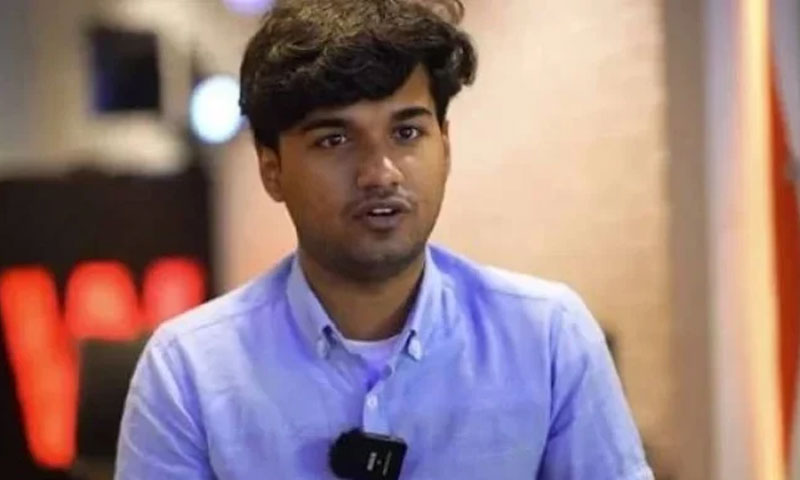
KARACHI: The Sindh government has constituted an eight-member medical board to supervise the exhumation and fresh medico-legal examination of young businessman Mir Raza Ali’s body, following a court order issued earlier in the day in the high-profile death case.
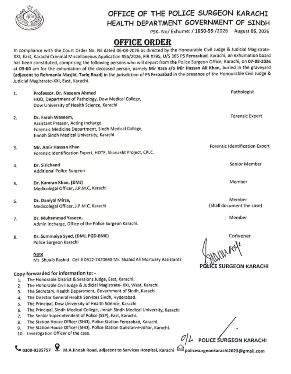
The board was formed on the directions of the Sindh health secretary after a judicial magistrate ordered the exhumation of the body to address concerns raised over the initial post-mortem examination.
According to the notification, Professor Dr Naseem Ahmed, Head of the Department of Pathology at Dow Medical College, has been appointed to head the medical board.
The board also includes Dr Farah Waseem, Assistant Professor of Forensic Medicine at Sindh Medical College; Dr Shari Chand, Additional Police Surgeon; Dr Kamran Khan, District Medico-Legal Officer at Jinnah Postgraduate Medical Centre (JPMC); Dr Daniyal Mirza, Medico-Legal Officer at JPMC; Dr Muhammad Yaseen, Administrative In-charge of the Karachi Police Surgeon’s Office; Karachi Police Surgeon Dr Summaiya Syed; and Aamir Hasan Khan, a forensic identification expert associated with the Citizens-Police Liaison Committee (CPLC).
The board has been tasked with overseeing the exhumation and conducting a comprehensive forensic and medico-legal examination to help determine the circumstances surrounding Mir Raza Ali’s death.
Court ordered exhumation
The development comes after a judicial magistrate in Karachi accepted a petition filed by the victim’s father seeking exhumation of the body.
The court directed the Sindh health secretary to constitute a medical board and ensure that the exhumation is carried out as soon as possible.
During the hearing, the petitioner’s counsel argued that serious deficiencies had been identified in the initial post-mortem report and that a fresh forensic examination had become necessary.
The prosecution informed the court that it had no objection to the exhumation, prompting the magistrate to approve the request.
Autopsy under scrutiny
The case took a dramatic turn after Karachi Police Surgeon Dr Summaiya Syed highlighted multiple shortcomings in the original post-mortem examination in a letter addressed to the Senior Superintendent of Police (SSP) East.
Among the concerns raised were the absence of gunpowder residue analysis, failure to conduct X-rays, lack of an internal examination of the skull and neck, inadequate forensic photography, and the failure to collect DNA samples despite the body’s condition.
The police surgeon also questioned the documentation of the alleged entry and exit wounds, the bullet trajectory and the overall forensic methodology adopted during the examination.
However, the investigation team rejected the criticism, maintaining that the police surgeon had not personally conducted the autopsy and that the official cause of death would only be determined after completion of all legal and forensic procedures.
The constitution of the medical board is expected to pave the way for a fresh medico-legal examination aimed at addressing the concerns surrounding the initial autopsy and assisting investigators in establishing the exact cause and circumstances of Mir Raza Ali’s death.
You May Also Like
- AFP
- October 27, 2026