
- Aasiya Niaz
- 30 Minutes ago
Sky Duel or Sky disaster? The Fatal Plunge of a U.S. Tanker in Western Iraq
-

- Web Desk
- 3 Minutes ago
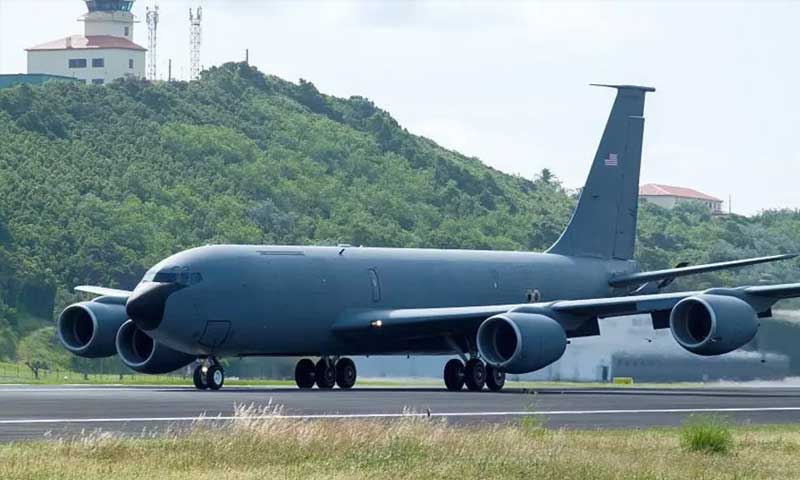
WEB DESK: The vast, sun-scorched expanse of western Iraq became the centre of an intense information battle on Thursday, 12 March 2026, after a Boeing KC‑135 Stratotanker operated by the United States Air Force plunged from the sky near the desert frontier close to Trebil Border Crossing.
In a conflict where control of the skies remains decisive, the loss of a tanker often described as a “flying petrol station” that allows combat aircraft to remain airborne for extended missions represents a significant operational setback.
Yet even as smoke reportedly still rises from the crash site, two sharply different narratives have emerged, each competing to shape international perception of what actually happened.
The Pentagon’s account: A mid-air tragedy
According to officials speaking from the headquarters of United States Central Command, the aircraft was not destroyed by hostile fire but was instead lost in a catastrophic mid-air collision during a complex aerial refuelling operation linked to the ongoing campaign known as Operation Epic Fury.
The second tanker involved in the incident reportedly managed to divert and conduct an emergency landing at Ben Gurion Airport. Photographs circulating online appear to show the aircraft missing its vertical stabiliser the tail fin damage analysts say is consistent with a collision rather than the fragmentation patterns typically associated with a surface-to-air missile strike.
CENTCOM has maintained a firm position that the loss was accidental, while search and rescue teams continue combing the desert for the five crew members believed to have been on board the downed tanker.
The resistance claim: “Intercepted and Destroyed”
At almost the same time, the Iran-aligned militia network known as the Islamic Resistance in Iraq issued a statement asserting that the aircraft had been deliberately targeted. According to the group, its air-defence units successfully intercepted and shot down the American refuelling aircraft using what it described only as the “appropriate weapon”, claiming the strike was carried out in defence of Iraqi sovereignty.
The timing of the incident has fuelled speculation across the region, coming amid a fortnight of escalating military activity following the outbreak of hostilities between the United States and Iran on 28 February. Indeed, the tanker loss marks the fourth crewed American aircraft incident since the conflict began, including the accidental destruction of three McDonnell Douglas F‑15E Strike Eagle aircraft earlier this month by Kuwait’s air-defence systems in a friendly-fire episode.
For now, the truth remains obscured by the fog of war drifting across the deserts of western Iraq. While available evidence from the damaged tanker that landed in Israel appears to support the collision theory, the symbolic impact of the incident has already been seized upon by resistance groups eager to portray the loss as a battlefield success. As investigators and rescue teams search the wreckage scattered across the Anbar desert, the world is waiting for the first clear images from the crash site images that may ultimately determine which version of events proves closer to reality.
You May Also Like