- Aasiya Niaz
- 15 Minutes ago
Sovereignty VS accountability: who is actually responsible for Karachi consulate shooting?
-

- Web Desk
- Mar 08, 2026
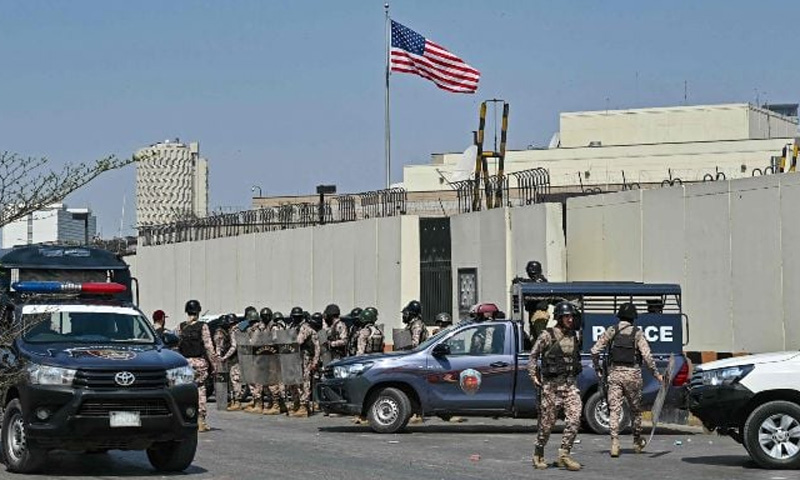
The violent incident at the United States consulate in Karachi on March 1, 2026, has drawn attention not only for its tragic human toll but also for the intricate legal questions it poses under international law.
The unrest erupted as hundreds of protesters gathered outside the consulate, angered by the assassination of Iran’s Supreme Leader Ayatollah Khamenei in strikes by Israel and the US. The crowd overwhelmed the consulate’s outer defences, resulting in gunfire that left at least 10 dead and dozens injured.
US officials confirmed that Marines stationed at the mission had opened fire, though it remains unclear whether their rounds struck anyone or whether local police or private security also fired during the chaos.
At the heart of the debate is a common misconception: many assume foreign consulates are sovereign territory of the sending state. Legal experts clarify that under international law, including the Vienna Convention on Consular Relations (1963), consular premises remain part of the host country, in this case Pakistan, while enjoying “inviolability.” This protection prevents intrusion or disturbance by the host state, but it does not confer sovereignty.
Speaking to DAWN News, Oves Anwar, director at the Research Society of International Law said, “The idea that an embassy or consulate becomes foreign soil is a persistent myth,” adding, “Violent attacks on diplomatic premises can even constitute terrorism under Pakistan’s Anti-Terrorism Act.”
Another central issue is the use of lethal force. In situations outside armed conflict, the response by security personnel falls under law enforcement standards. Force must be necessary, proportionate, and a last resort. Human rights frameworks, including the Basic Principles on the Use of Force and Firearms by Law Enforcement Officials, require restraint and prioritise the preservation of life.
“Turning weapons on civilians, particularly when they are unarmed, risks violating international human rights law,” said Baqir Sajjad Syed, Foreign Affairs correspondent for DAWN News. “The mere breach of a consulate gate does not automatically justify deadly force.”
The question of jurisdiction and accountability further complicates the picture. Under the Vienna Convention on Diplomatic Relations (1961), mission staff enjoy immunity for acts performed in official capacities. While Marine Security Guards are not diplomats, they may be classified as technical staff, granting them functional immunity. This limits Pakistan’s ability to prosecute or detain them unless the US government waives immunity – a step considered highly unlikely.
Experts note that compensation for victims is also uncertain. It may be offered as a diplomatic gesture by either the US or Pakistan, but no legal obligation exists under international law.
The Karachi consulate shooting underscores the tensions inherent in protecting diplomatic missions while respecting host state sovereignty, and highlights the narrow, often politically constrained pathways for accountability when violence erupts at foreign compounds. The incident leaves unresolved questions about the balance between self-defence, human rights, and legal responsibility in one of the world’s most densely populated cities.
You May Also Like