- Web
- 18 Minutes ago
SpaceX IPO signals arrival of the space economy
-

- Web
- 1 Minute ago
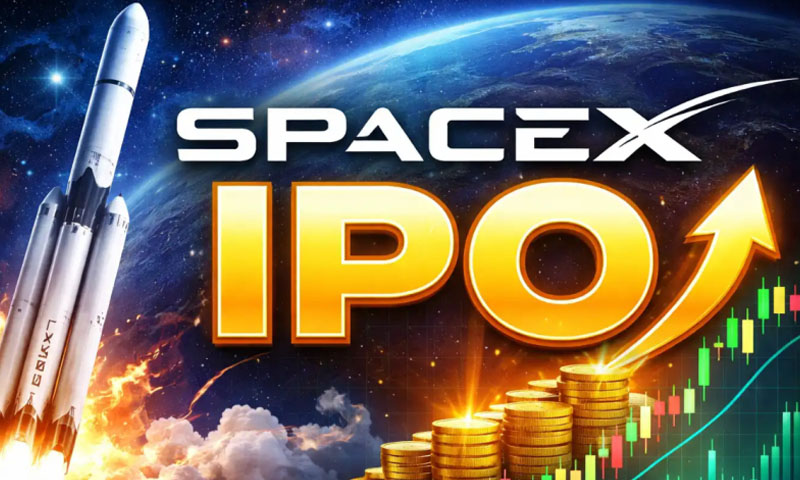
The planned public listing of SpaceX isn’t just another blockbuster IPO; it may mark the moment the global economy expands beyond Earth.
With a potential valuation of $1.75 trillion, SpaceX’s debut could become the largest in history. But more importantly, it reflects a deeper shift: space is no longer just the domain of governments and exploration, it is becoming a полноценный economic sector.
For decades, space activity was driven by national pride and scientific discovery, led by agencies like NASA. Today, that model is rapidly changing.
Private companies are building a new space economy with cheaper launch systems, global satellite networks, and growing commercial partnerships replacing government dominance.
At the center of this transformation is SpaceX, whose reusable rockets have turned space access from rare and expensive into increasingly routine.
SpaceX’s real impact goes far beyond launches.
Its satellite network, Starlink, already provides internet connectivity across the globe, including remote and underserved regions. This is infrastructure in the same way railways and fibre optics once were, only now, it operates in orbit.
The company’s integration with xAI hints at the next phase: combining space-based systems with artificial intelligence to create a new layer of digital infrastructure.
There are even ambitions to deploy vast numbers of satellites that could function as orbital data centres, moving computation beyond Earth itself.
Investors have long treated space as a high-risk, futuristic bet. That perception is shifting.
SpaceX is not just visionary, it is profitable, with billions in revenue and strong demand from both governments and commercial customers. A public listing would allow everyday investors to participate in an industry that was previously out of reach.
It could also open the floodgates. Other major tech players, including OpenAI, are reportedly exploring IPOs, suggesting a broader wave of next-generation companies entering public markets.
The implications go beyond finance.
As governments rely more on private partners and competition grows, space is becoming a strategic asset for national security, a platform for communication and data, and a hub for future industries.
What railroads were to the 19th century and the internet to the 21st, space infrastructure could become for the decades ahead.
Led by Elon Musk, SpaceX has played a defining role in making this shift possible. Its IPO could crystallise what has been building quietly for years: the transition of space from ambition to economy.
If successful, the listing won’t just make history on Wall Street; it will signal that the space economy is no longer theoretical.
It has arrived.
You May Also Like