
- Reuters
- October 27, 2026
SpaceX public debut sparks market frenzy as investors weigh hype and risks
-

- Zafar Ali
- June 12, 2026
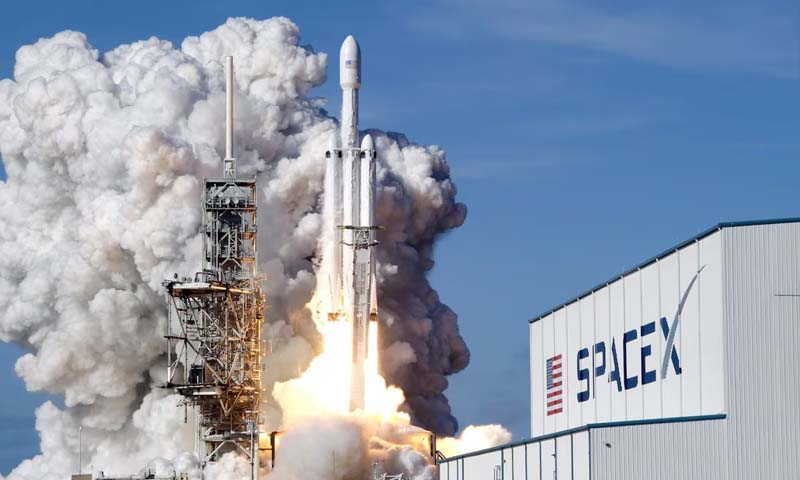
BOISE, Idaho, June 12: SpaceX’s long-rumoured public debut has triggered intense speculation across global markets, with investors divided over the valuation, growth prospects and risks tied to the Elon Musk-led rocket and satellite company.
The company, which has been privately valued at about $1.8 trillion in recent investor estimates, has been the subject of repeated expectations that it could one day list on public markets, though no official listing has been confirmed.
Chief Executive Elon Musk told an audience of employees and guests that the company’s ambitions extend beyond Earth, including future missions to the Moon and Mars.
“SpaceX wants to be able to take you to the moon,” Musk said. “With the incredible team we have, I am confident we will do that.”
He said he initially assigned a low probability of success to the company in its early days, adding that SpaceX was built on turning “science fiction into an inspiring future.”
The company has not formally announced any public offering or listing timetable, but investor speculation has intensified amid its rapid expansion in satellite internet services through Starlink and continued development of its Starship rocket programme.
SpaceX has historically relied on private funding rounds and secondary share sales rather than public markets, with its most recent private valuation estimated at around $210 billion in late-stage transactions before rising sharply in subsequent years.
Analysts say any future listing would rank among the largest in history, given the company’s scale, revenue base and strategic role in commercial space infrastructure.
However, questions remain over profitability, capital intensity and reliance on a limited number of core revenue streams, particularly Starlink.
The company reported billions in losses in recent years as it continued to invest heavily in rocket development and satellite deployment, even as revenue grew steadily.
Unlike most large technology firms, SpaceX would also face index inclusion constraints if it were to go public, including profitability requirements for benchmarks such as the S&P 500.
Under recent changes to Nasdaq rules, large new listings could be included in the Nasdaq-100 more quickly than before, potentially accelerating passive fund exposure in the event of a future IPO.
Long road to Wall Street speculation
Talk of a SpaceX listing has circulated for more than a decade, with Musk repeatedly signalling and then downplaying the possibility of a public offering.
In earlier remarks, Musk suggested that Starlink could eventually be spun off or listed once its revenues stabilised, though he later said public markets were not suitable for companies with irregular cash flows.
More recently, he has cited regulatory scrutiny and legal pressures on public companies as reasons to remain private, even as SpaceX’s valuation and capital requirements have expanded significantly.
Despite ongoing speculation, no formal filing for an initial public offering has been announced.
You May Also Like



- WEB DESK
- October 27, 2026
Punjab govt moves to provide life insurance cover to employees

- AFP
- October 27, 2026