
- Web Desk Faizan Khan
- 4 Hours ago
Supreme Court reclassifies rape case as “consensual fornication”
-

- Ahsan Wahid
- Dec 18, 2025
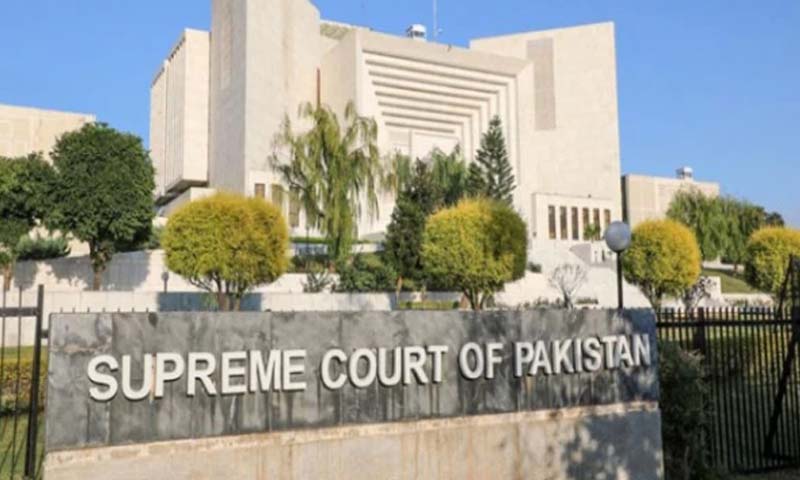
WEB DESK: The Supreme Court (SC) of Pakistan has overturned a rape conviction, ruling that the 2015 Bhakkar case involved consensual sexual intercourse rather than forcible rape. A six-page verdict authored by Justice Malik Shahzad Ahmed Khan, issued as a majority decision alongside Justice Naeem Akhtar Afghan, reclassified the offence as fornication under Section 496-B of the Pakistan Penal Code. Justice Salahuddin Panhwar recorded a dissenting note.
The case originally involved an FIR filed by a woman alleging she was raped at gunpoint in a forest near her home around 5:30am. The FIR, however, was lodged seven months after the alleged incident. The trial court had convicted the accused under Section 376 PPC, sentencing him to 20 years in prison and imposing a Rs500,000 fine, which was upheld by the Lahore High Court.
In its verdict, the Supreme Court noted several ‘gaps’ in the prosecution’s case. As per the SC, the complainant did not resist during the incident, no injuries were recorded in the medical report, and her clothes were not produced to show any damage. Additionally, the court questioned how the accused could have known she would be at the forest at that specific time. The court also observed that despite the incident occurring near a residential area, no alarm was raised, and family members were not informed immediately.
While DNA evidence confirmed that the accused was the biological father of a child born from the encounter, the court refrained from commenting on the authenticity of the test, citing that issue to be decided in another case. Based on the complainant’s statement and medical evidence, the court acknowledged that sexual intercourse had occurred, but found no proof of force.
As a result, the Supreme Court reduced the accused’s sentence from 20 years to five years of rigorous imprisonment and lowered the fine from Rs500,000 to Rs10,000. Failure to pay the fine would result in an additional two months of imprisonment.
The court also noted that in cases of consensual fornication, the complainant is technically liable under law, but as no charges were framed against her, she could not be punished. The ruling underscores the distinction between rape and consensual sexual acts under Pakistani law, highlighting the role of evidence, timing, and conduct in such cases.
You May Also Like