- WEB DESK
- October 6, 2026
Taiwan presses US for arms support after Trump signals uncertainty over sales
-

- Zafar Ali
- May 16, 2026
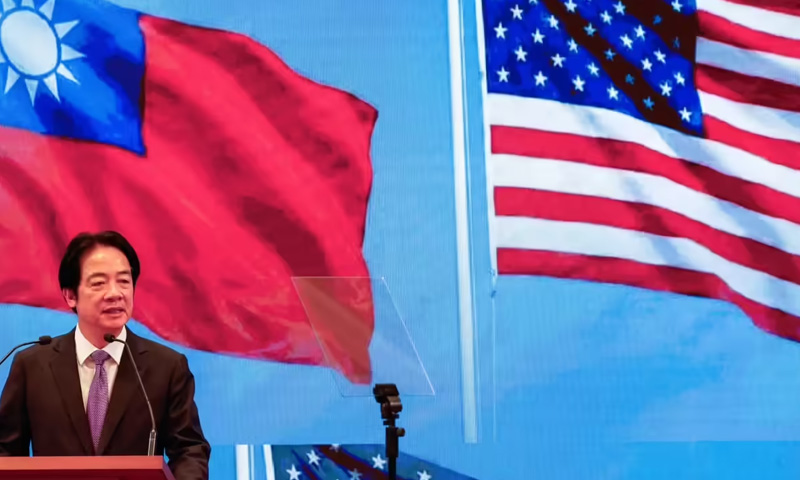
TAIPEI: Taiwan’s government on Saturday urged continued US arms support, saying defence cooperation is grounded in US law and serves as a key deterrent, after President Donald Trump said he had not yet decided on new weapons sales.
The comments came after Trump, following a summit with Chinese President Xi Jinping in Beijing, said he was undecided on a major arms package for Taiwan, raising questions over future US commitments.
Despite lacking formal diplomatic ties, the United States remains Taiwan’s most important international backer. Washington is legally bound under the Taiwan Relations Act to provide defensive arms to the island.
In a statement, Taiwan President Lai Ching-te’s spokesperson Karen Kuo said China’s military pressure remained the “sole destabilising factor” in the Indo-Pacific region, including the Taiwan Strait.
“Military sales between Taiwan and the US are not only a reflection of the US security commitment to Taiwan as stipulated in the Taiwan Relations Act, but also serve as a mutual deterrence against regional threats,” she said.
She added that Taipei appreciated Trump’s “long-standing and continued support” for security in the Taiwan Strait and continued to deepen cooperation with Washington.
Trump’s remarks followed uncertainty over a proposed multi-billion-dollar arms package for Taiwan. In December, his administration approved an $11 billion package, while another package worth about $14 billion is still pending approval, according to reports.
Taiwan Deputy Foreign Minister Chen Ming-chi said in Taipei that the government would continue communication with Washington but declined to comment on pending sales.
Opposition-led budget constraints in Taiwan’s parliament have also complicated defence spending plans, with lawmakers approving reduced allocations while earmarking funds specifically for US arms procurement.
US lawmakers from both major parties have urged the administration to continue weapons sales to Taiwan.
Kuo Yu-ren, vice president of Taiwan think tank Institute for Policy Research, said Trump could delay a decision until after planned diplomatic engagements with Beijing later this year.
Trump also suggested he may speak directly with Taiwan’s leadership regarding the proposed arms deal, saying: “I have to speak to the person … that’s running Taiwan.”
Asked about the remarks, Chen said Taipei was trying to clarify the “true intent” of Trump’s statement.
A senior Taiwan security official, speaking on condition of anonymity, said the implication was clear that any discussion on arms sales would involve Taiwan directly.
“The party with whom arms sales are to be discussed is Taiwan, not Beijing,” the official said.
China, which claims Taiwan as its territory, has not ruled out the use of force and continues near-daily military activity around the island.
Taiwan’s government rejects Beijing’s sovereignty claims, saying the island is a “sovereign, independent democratic country.”